

How energy-efficient is a boiling water tap
More and more households are asking themselves: how much energy does a Quooker actually use? On this page, we explain how energy-efficient a Quooker is, compare it to a traditional kettle, and provide tips to further reduce energy consumption. This way, you know exactly what to expect in terms of costs and efficiency.
How much energy does a Quooker consume?
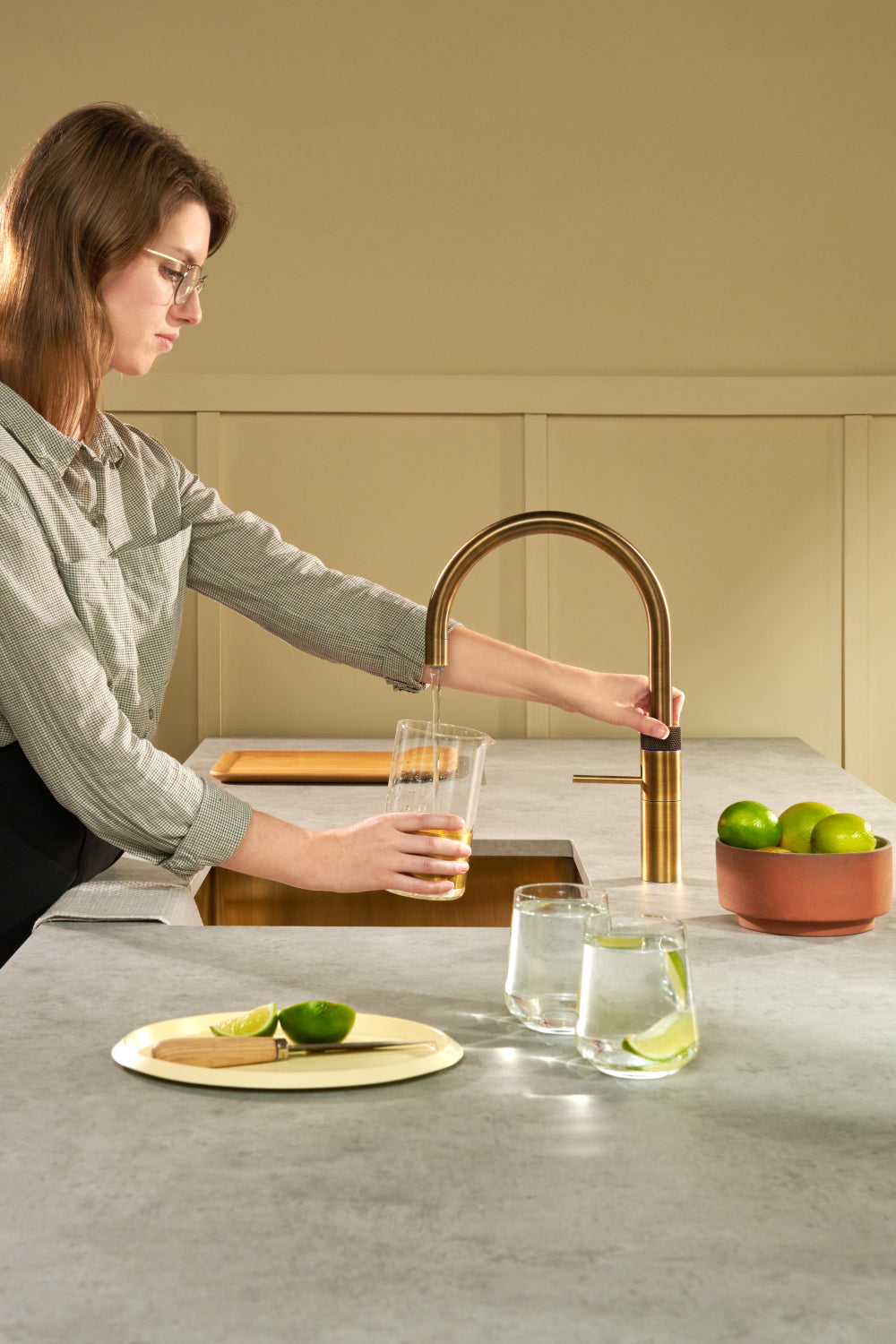
A Quooker is known for its surprisingly low energy consumption. The reservoir keeps the water at a constant temperature of 110°C, but thanks to high-quality vacuum insulation, virtually no heat is lost. This makes a Quooker much more energy-efficient than many people think.
-
Stand-by consumption: an average of only €0.05 per day (about 10 watts), which amounts to approximately €20 per year.
-
Consumption during use: comparable to or even lower than a traditional kettle, because with a Quooker, you never boil more water than you actually need.
In short: the energy consumption of a Quooker is minimal, while you benefit from the convenience of instant boiling, cold, chilled, and sparkling water.
Quooker vs. kettle | which is cheaper?
A Quooker costs a little more in stand-by, but saves energy because you never waste water again.
Instant boiling water
Energy-efficient & sustainable
Waste less water
More convenience & comfort
Quooker
Kettle
Warm-up time
Instant boiling water
±2-3 minutes
Standby costs
±€20 per year
None
Average use
More precise, less waste
Often too much water
Ease & comfort
Very high
Limited
How much do you save with a Quooker?
Suppose an average family boils about 4 litres of water daily. With an electric kettle, that amounts to approximately 160 kWh per year, which translates to an energy bill of over €64. A Quooker PRO3 uses only 116 kWh for the same amount, which comes to about €47. If you add the standby consumption of approximately €20 per year, you end up at around €67.
The difference in cost between an electric kettle and a Quooker is therefore minimal. The great advantage of a Quooker does not lie in direct energy savings, but in the convenience, the speed, and the fact that you never waste water by boiling too much.
Tips for saving energy with your Quooker
A Quooker boiling water tap is already energy-efficient by design, but you can reduce consumption even further with a few simple tips. This way, you get the most out of your Quooker, lower your costs, and contribute to a more sustainable household.
Reservoir out for vacation
Are you going on holiday or will you be away from home for a longer period? Then turn off the Quooker tank. This prevents unnecessary standby consumption and can easily save you a few euros per month.
Choose the right reservoir
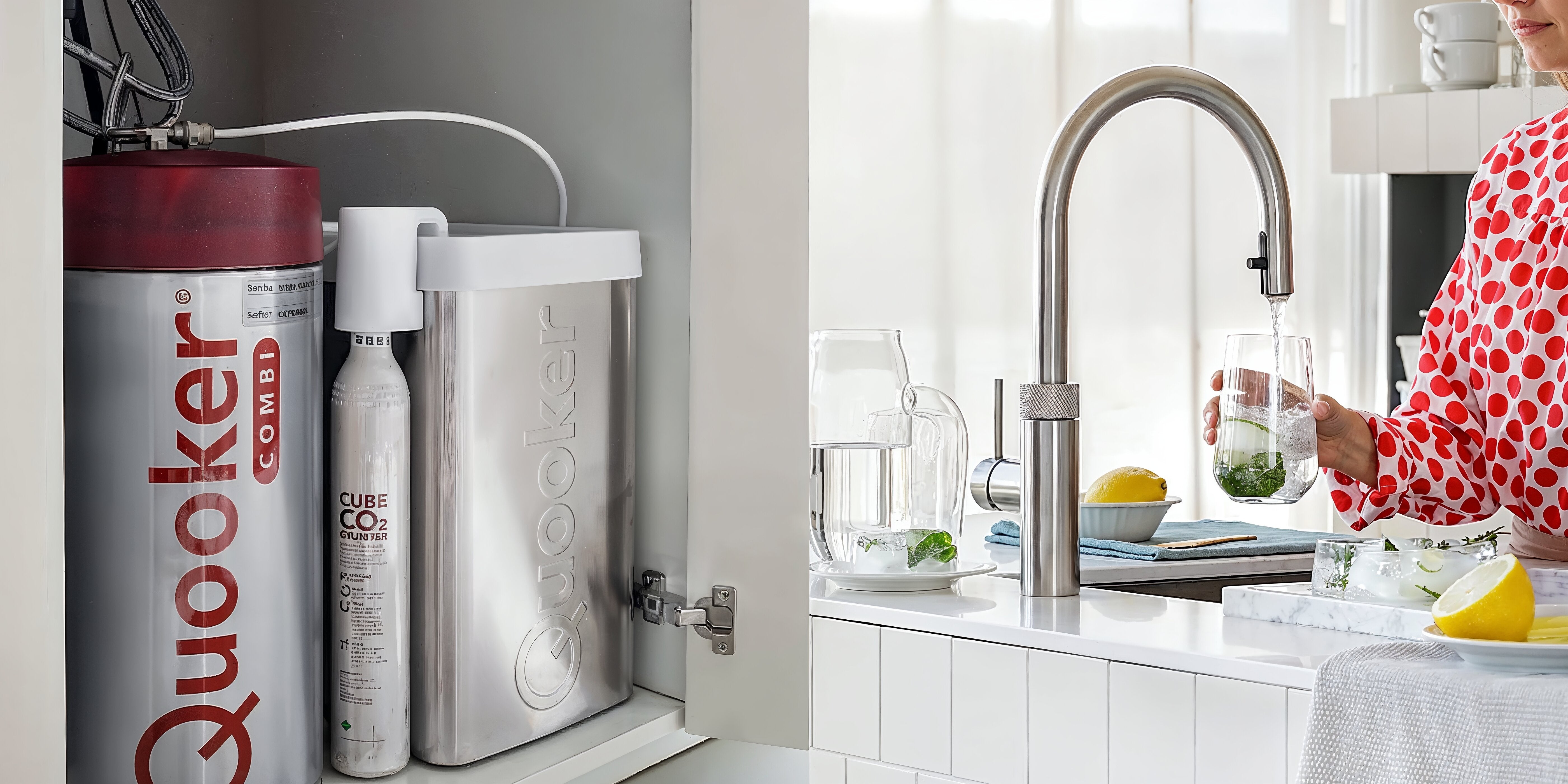
Not every household has the same needs. The PRO3 reservoir is the most energy-efficient and suitable for most kitchens. Do you have a greater demand for hot water? Then the COMBI or COMBI+ are a better choice. The right reservoir prevents unnecessary energy consumption.
Combine with the Quooker CUBE
With the Quooker CUBE, you can dispense chilled and sparkling water directly from the tap. This saves energy (and space), as you no longer need to use separate appliances like a soda maker or a bottle fridge.
Tap exactly what you need
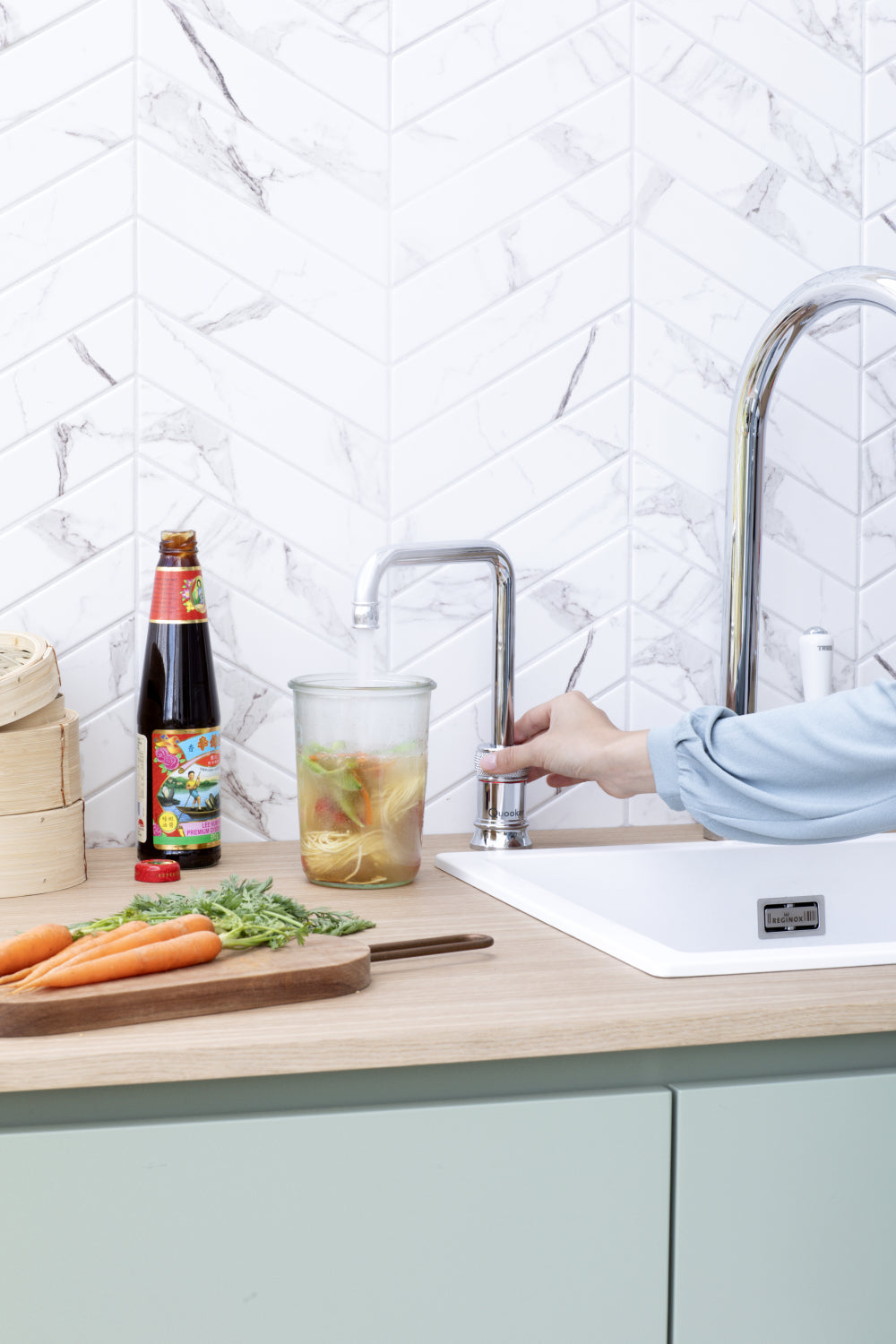
A major advantage of the Quooker is that you can always take exactly the right amount of water. While an electric kettle often uses too much water, the Quooker prevents waste. This not only saves energy, but also water costs.
What customers tell us
Frequently asked questions about Quooker energy consumption
Does a Quooker consume more energy than a kettle?
No, the difference is minimal. Often, a Quooker is even more efficient, because you never boil too much water.
How much does a Quooker cost in energy per year?
On average around €20–30 per year in standby costs.
Is a Quooker sustainable?
Yes, thanks to insulation and efficient heating, it is an economical choice. If you combine it with a CUBE, you also replace other appliances.
Can I reduce my Quooker's energy consumption myself?
Yes, by switching off the reservoir during holidays, choosing the right type of reservoir, and drawing only the amount of water needed.
Is a Quooker more cost-effective than bottled water or a SodaStream?
Yes, the Quooker CUBE saves you energy and money, because you no longer need separate appliances or bottled water.
Quooker energy consumption: efficient, smart and practical
A Quooker is not just a smart addition to the kitchen due to the convenience of instant boiling water, but it is also surprisingly energy-efficient. Many people think a boiling water tap consumes much more energy than a kettle, but in practice, the difference is minimal. Thanks to the high-quality insulation of the reservoir, the water stays at temperature with only a small standby consumption of an average of €20 per year.
How does a Quooker compare to a kettle?
At first glance, a kettle seems cheaper because there is no standby consumption. However, you often boil more water than you need with it, which leads to the waste of both water and energy. With a Quooker, you always dispense exactly the right amount. As a result, you often use just as much or even less energy on balance.
Smart energy savings with your Quooker
Would you like to further limit consumption? Turn off the reservoir during holidays, choose the right type of reservoir (for example, the Quooker PRO3 for small households), and, if possible, combine your system with the Quooker CUBE. This also gives you instant chilled and sparkling water, without needing separate appliances.
Sustainable and future-oriented
A Quooker contributes not only to convenience but also to a more sustainable household. No unnecessary waste, fewer plastic bottles, and appliances that become redundant—all of which make the Quooker a smart long-term investment.
Conclusion
The energy consumption of a Quooker is surprisingly low and certainly not higher than that of a kettle. The real advantage lies in convenience, sustainability, and the prevention of waste. This way, you enjoy comfort in the kitchen every day without your energy bill rising noticeably.
