Filtering PFAS from drinking water is a growing priority due to the harmful effects of these persistent substances. PFAS, or per- and polyfluoroalkyl substances, are chemical compounds that hardly break down in the environment and often end up in our tap water. In this guide, we explain how various water filter systems tackle the challenge of PFAS removal and which technologies are most effective for this purpose. This will provide you with insight into how you can reliably ensure clean and safe drinking water.
What are PFAS and why is filtering PFAS so important?
The characteristics of PFAS
PFAS are a collection of thousands of synthetic chemicals used in products such as firefighting foam, non-stick coatings, and water-repellent coatings. What makes PFAS dangerous is that they are extremely resistant to degradation in the environment and therefore remain persistent in groundwater and drinking water. They are also known as ‘forever chemicals’.
Health risks of PFAS in drinking water
Long-term exposure to PFAS has been linked to hormonal disruptions, a weakened immune system, liver problems, and an increased risk of certain types of cancer, among other issues. Therefore, filtering PFAS from drinking water is essential to protect health, especially since these substances are often invisible and odorless.
The technical challenges of filtering PFAS
Why removing PFAS is not simple
PFAS molecules are small and have a water-repellent nature, making them more difficult to filter than many other contaminants. Many standard water filters are incapable of removing these substances completely. It therefore requires specific technologies aimed at effectively binding or blocking PFAS particles.
Factors influencing filtration
- Chain length of PFAS (long chains are easier to remove than short chains)
- The concentration and combinations of different PFAS in the water
- Water pressure and flow rate in the filter
- The filtration technology used and filter maintenance
Effective filtration technologies for filtering PFAS
Activated carbon filters
Activated carbon (GAC - Granular Activated Carbon) is a popular and proven technology for binding PFAS molecules. The large surface area of activated carbon absorbs PFAS and thus significantly reduces concentrations. Long-chain PFAS in particular, such as PFOS and PFOA, are effectively removed from the water using this method.
Reverse osmosis
Reverse osmosis (RO) is one of the most powerful techniques for removing PFAS. In this process, water is forced under high pressure through a semi-permeable membrane, which blocks virtually all contaminants, including small PFAS molecules. RO is often combined with activated carbon for optimal filtration.
Other advanced techniques for filtering PFAS
Ion exchange
Ion exchange uses special resins that attract and hold PFAS molecules by replacing them with harmless ions. This is effective for various types of PFAS, including short chains, and offers a good complement to activated carbon and RO systems.
Combination systems
By combining different technologies, such as activated carbon, reverse osmosis, and ion exchange, the chance of maximum PFAS removal is increased. Such systems are often larger and more expensive, but provide the best protection against a wide range of contaminants.
Practical tips for choosing a water filter for filtering PFAS
What should you pay attention to?
- Certifications and test results: Choose filters that have been independently tested for PFAS removal, for example by NSF, TÜV, or other inspection bodies.
- Type of PFAS: Check whether the system can also remove short-chain PFAS, as these are harder to block.
- Ease of maintenance: Filters lose effectiveness over time. Replace them on time according to the instructions.
- Capacity and flow rate: For a larger family, it is important that the filter provides sufficient water capacity without losing speed.
- Installation location: There are under-sink systems, faucet filters, and central filter systems for the entire house. Choose what best fits your situation.
Maintenance and lifespan
Regular replacement of filter cartridges is crucial to ensure effectiveness. Many systems provide a signal or warning when replacement is needed. Also, ensure that you can easily order replacement filters.
The role of innovative water filters such as The Flow 3-way faucet
What is The Flow 3-way filtered water faucet?
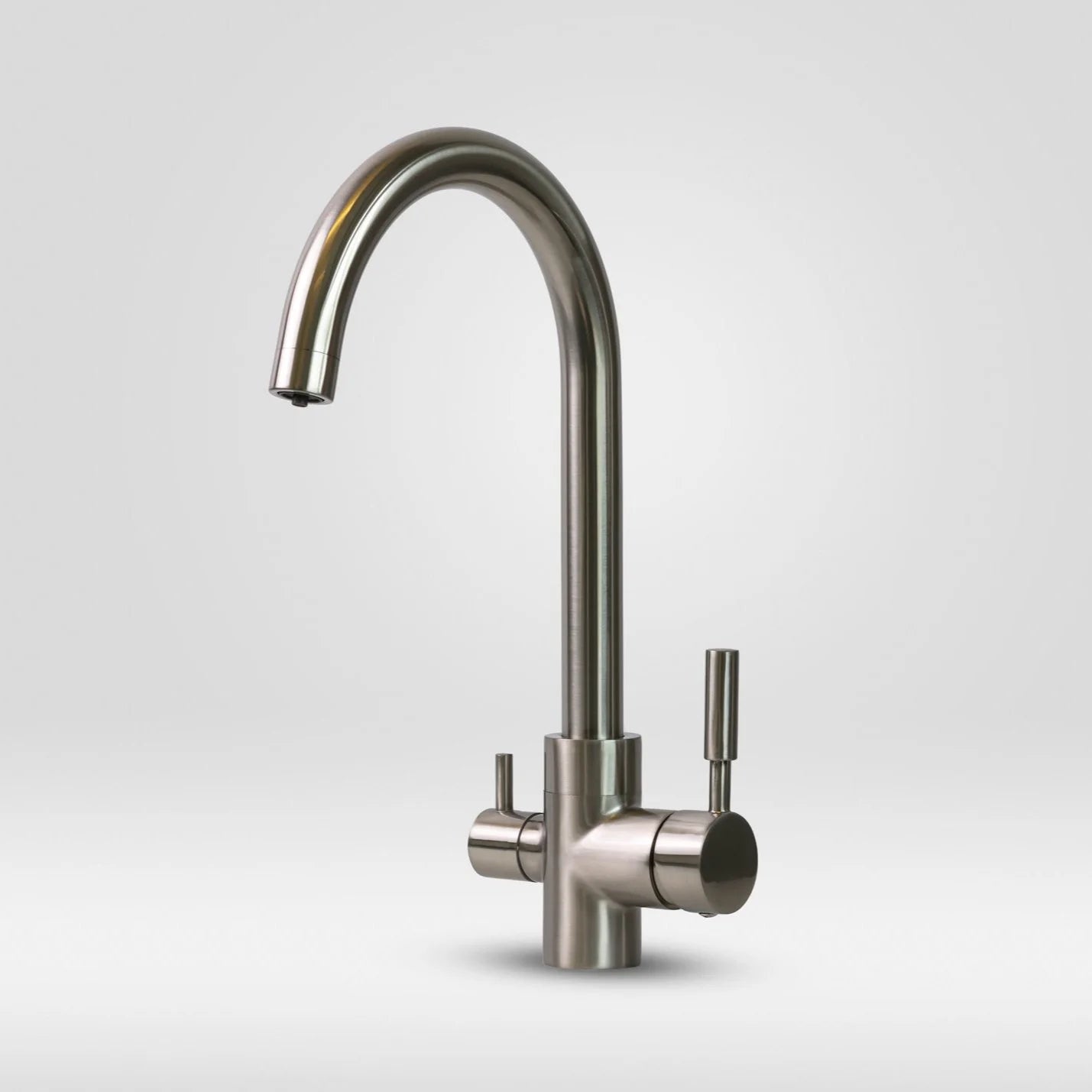
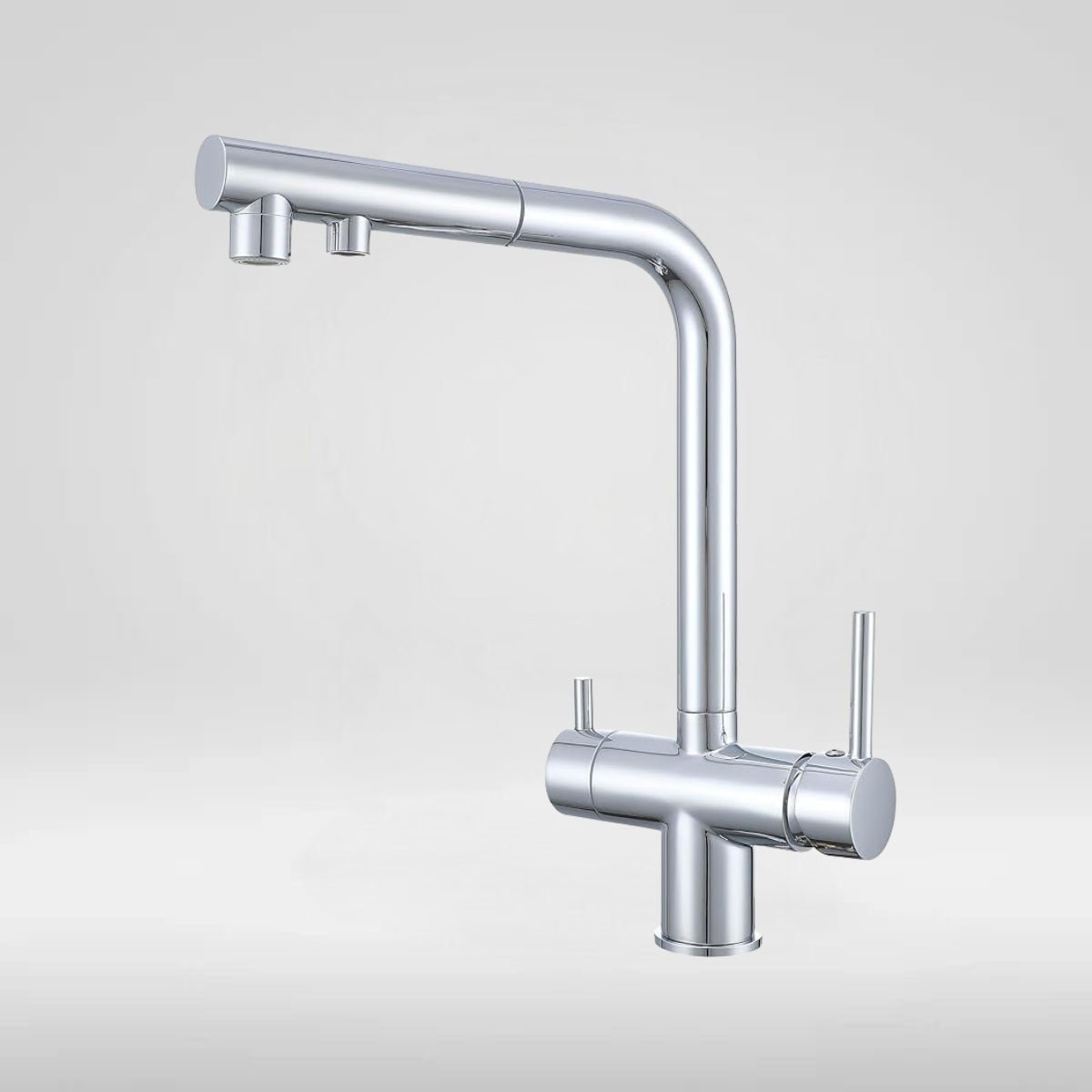
The Flow is an innovative water filter system that is easy to install under the kitchen sink, featuring a special 3-way faucet. This allows you to draw filtered water directly, which effectively removes PFAS using a combination of filtration techniques, including activated carbon and potentially membranes.
Advantages of The Flow system
- Simple installation without extra electricity
- Specifically developed to remove PFAS and other contaminants such as chlorine and bacteria
- Water with improved taste and odor
- No maintenance costs for cooling elements or electricity
- Suitable for daily use with a flow rate of up to 8.6 liters per minute
Such a system offers a practical and sustainable way to safely filter PFAS at home without any hassle.
Summary and recommendations for filtering PFAS
Filtering PFAS from drinking water is crucial due to the health risks of these persistent substances. Effective removal requires technologies such as activated carbon filters, reverse osmosis, and ion exchange. By paying close attention to certifications, maintenance, and filter type, you ensure that your water filter works optimally. Innovative solutions such as The Flow 3-way filtered water faucet system offer a modern and user-friendly option to safely remove PFAS from your tap water. You can immediately view an osmosis system with a faucet to see what fits your kitchen. Do you want to thoroughly protect your drinking water against PFAS? Delve deeper into available filters and consider a system that is specifically tested for PFAS removal for your situation.
Discover more about the possibilities of water filtration and how you can easily improve your drinking water with reliable PFAS filters, so that you and your family can enjoy pure water safely and healthily.