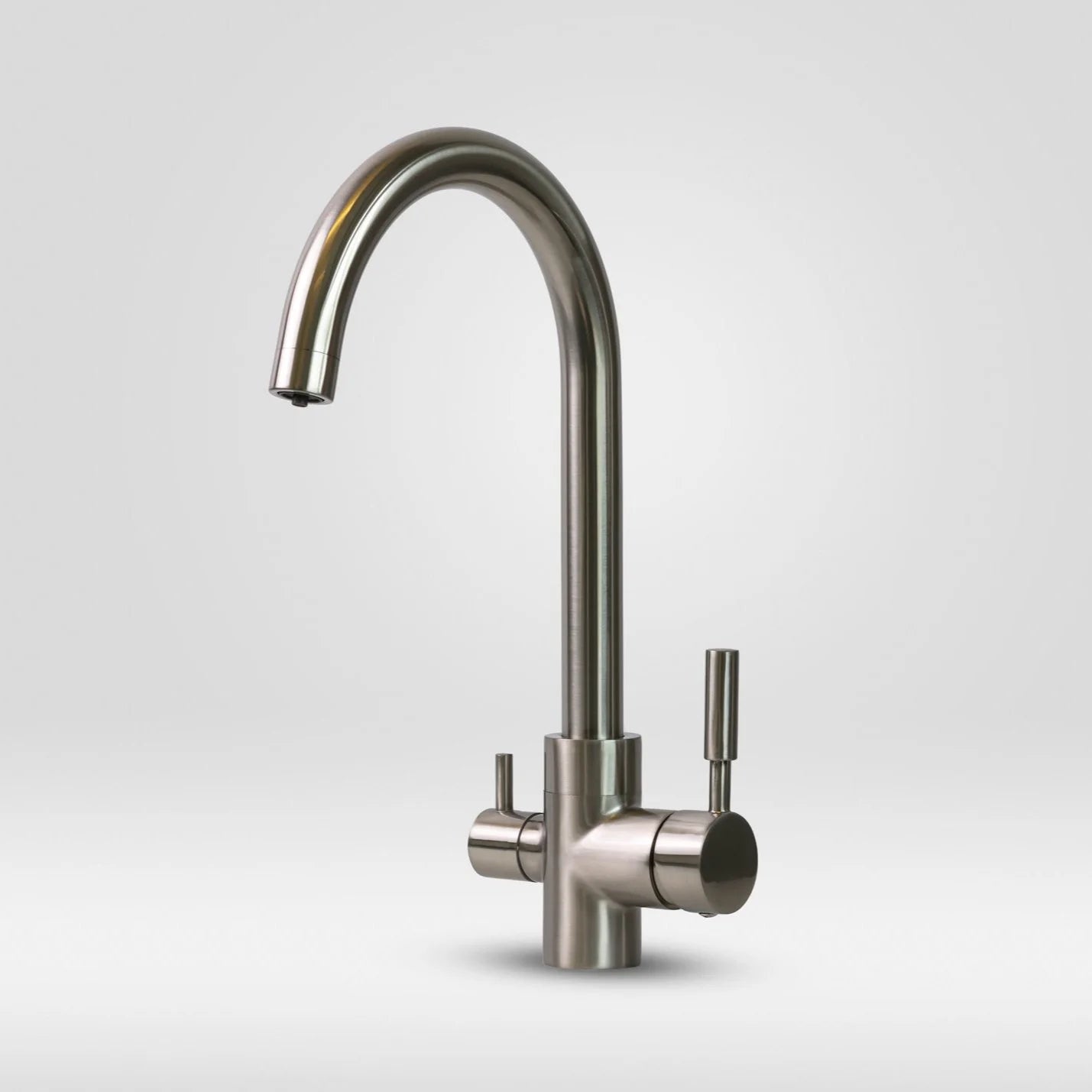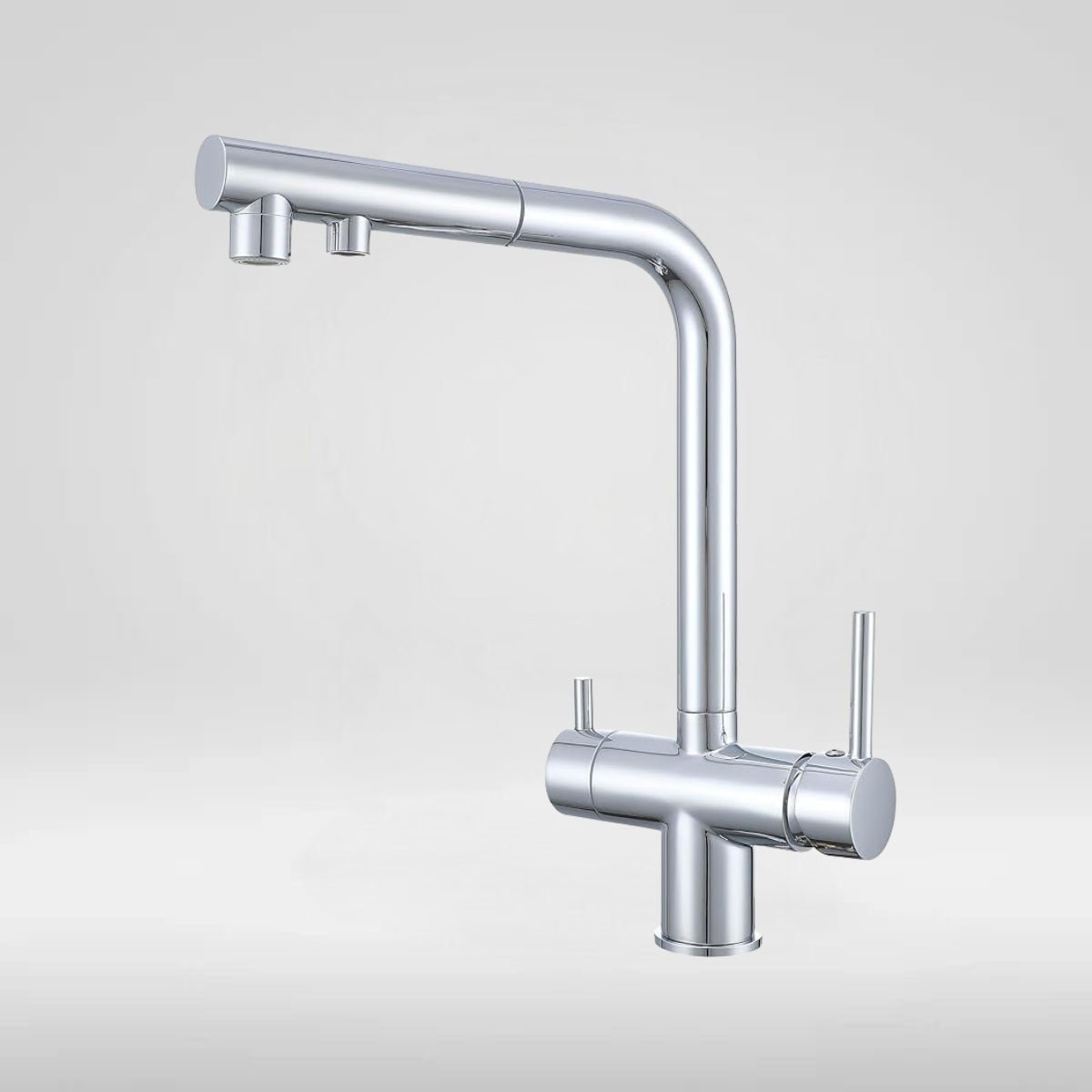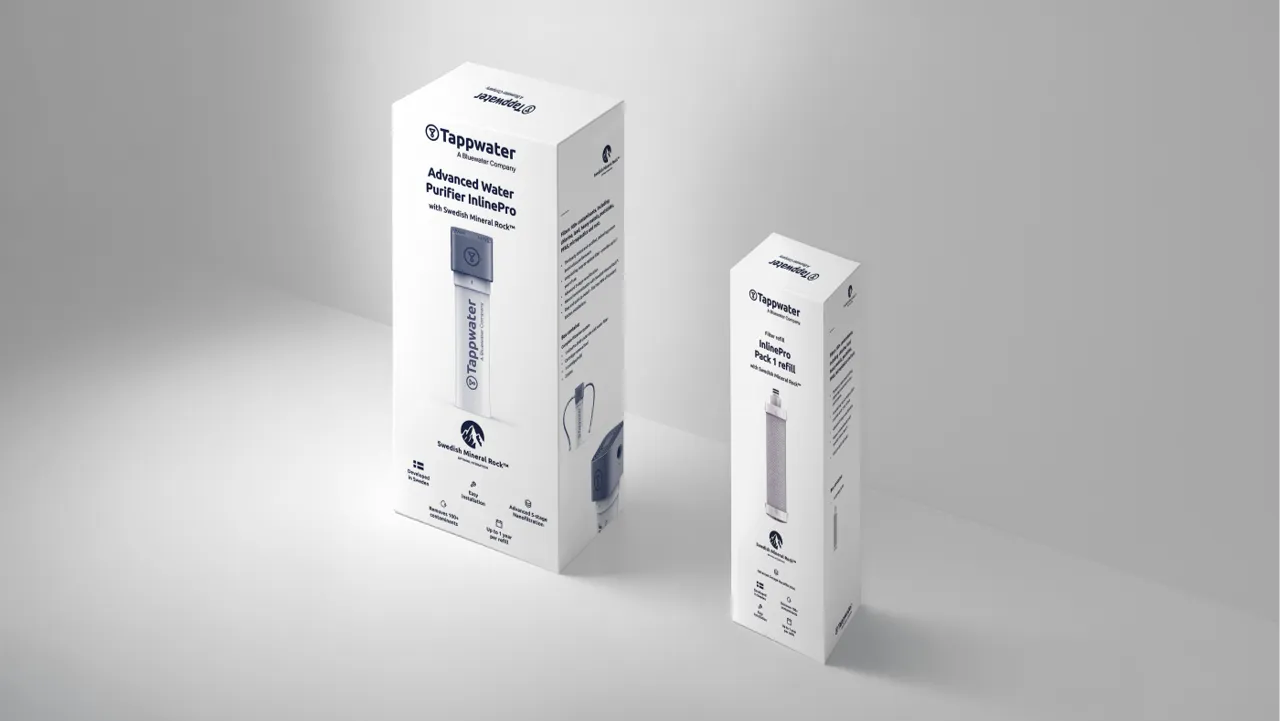
Installing a water purifier in combination with a Quooker or other boiling-water tap is technically feasible and offers many advantages. By connecting a water filter system to your Quooker, you'll enjoy purified water that's free of unwanted substances and tastes better. Installation does require specific attention to compatibility and proper connection to the water system. Let's delve deeper into the possibilities and considerations.
How does a water purifier work in combination with a Quooker?
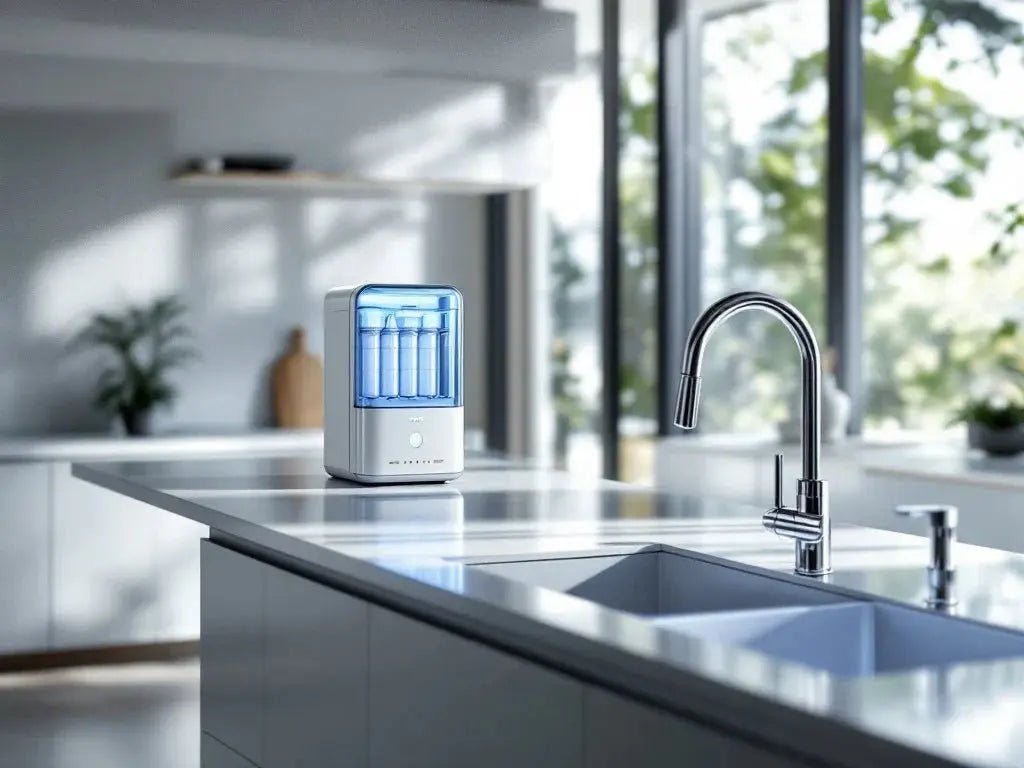
A water purifier like our 'The Source' system operates on a sophisticated water circuit that integrates seamlessly with a Quooker system. The filtration process takes place before the water reaches the Quooker , ensuring only purified water reaches the Quooker tank.
It works as follows: the water filter system is connected to the cold water line that normally feeds the Quooker. The water first goes through the filtration process, which removes up to 99% of unwanted substances. The purified water then flows to the Quooker tank, where it is further heated to the desired temperature.
This configuration offers several advantages. First, it improves the taste of the water, which is especially noticeable with tea and coffee. It also prevents the buildup of limescale and other minerals in the Quooker system, which can extend the appliance's lifespan. Furthermore, modern water filter systems like The Source automatically detect any leaks, providing additional safety when combined with a boiling-water tap.
There are various configuration options, depending on available space and specific needs. The system can be installed under the counter, next to the Quooker, or in a nearby kitchen cabinet. The installation is compact and takes up minimal space, which is important in the often limited space under a countertop.
Which types of water purifiers are suitable for a boiling water tap?
Not all water filter systems are equally suitable for use with a Quooker or other boiling-water tap. Reverse osmosis systems like The Source offer the most complete purification and are perfectly compatible with boiling-water taps.
Reverse osmosis (RO) systems filter water through a semi-permeable membrane that removes virtually all contaminants, including heavy metals, pesticides, chlorine, and limescale. This thorough purification is ideal for Quooker systems because it prevents limescale buildup and significantly improves the taste of the water.
Carbon filters are another option. These are less elaborate than RO systems but are effective at removing chlorine, pesticides, and organic compounds. They are compact and easy to install, but offer less protection against limescale than RO systems.
UV purification systems are sometimes used as a supplement to other filter technologies. They kill bacteria and viruses, but do not remove physical contaminants or minerals. For boiling-water taps, they are only suitable in combination with other filter systems.
When choosing a water purifier for your Quooker, it's important to consider its certifications. Systems with IAMPO NSF/ANSI 58 certification, such as our The Source, offer proven safety and effectiveness, which is crucial when you use the water not only for drinking but also for cooking.
What are the costs of a water purifier for your Quooker?
Investing in a water purifier for your Quooker involves several cost components. The purchase price varies depending on the type and quality of the system chosen.
For a high-quality reverse osmosis system like The Source, you should expect a basic investment that more than justifies the long-term benefits. These systems offer the most complete water purification and the highest level of protection for your Quooker.
In addition to the purchase price, there are installation costs. At PureAqua, we provide professional installation by certified technicians who ensure your water purifier works correctly with your Quooker system. This prevents problems and guarantees optimal performance.
You also need to consider maintenance costs. Filters need to be replaced periodically, usually every 6-12 months, depending on water consumption and water quality in your area. These costs are relatively low compared to the benefits you receive.
In the long run, a water purifier for your Quooker will yield several savings. The reduced limescale buildup extends the life of your Quooker and reduces the risk of costly repairs. You'll also save on bottled water, which is beneficial both financially and environmentally. Finally, our system reduces water waste by up to 500% compared to traditional filtration methods, which benefits your water bill.
Investing in a water purifier for your Quooker means choosing healthier water, better taste, and a more sustainable lifestyle. With a PureAqua water filter system, you're guaranteed quality, reliability, and excellent service throughout the product's entire lifespan.