Quick answer
Demineralized water is water from which dissolved minerals and salts have been removed, usually via ion exchange or reverse osmosis. "Demi" water is exactly the same: demi is the abbreviation for demineralized. Osmosis water and distilled water are related, but not identical, types. This low-mineral water is ideal for appliances. If you want to drink it, a mineral filter is needed to add calcium and magnesium back in.
Table of contents
- What is demineralized water?
- Demineralized, demi, osmosis or distilled water: what is the difference?
- What do you use demineralized water for?
- Benefits of demineralized water
- Important considerations: can you drink demineralized water?
- Comparison table: the water types side by side
- Buying advice: which pure water is right for you?
- Frequently asked questions
- Conclusion
What is demineralized water?
Demineralized water is water from which dissolved minerals, salts, and ions have been removed. Think of calcium, magnesium, sodium, chloride, and other substances normally found in tap water. What remains is almost pure water with very low conductivity and virtually no limescale.
The term is often abbreviated to "demi" water. The two terms mean exactly the same thing: "demi" simply stands for demineralized. You often encounter the term in connection with irons, car batteries, boilers, and laboratories, because low-mineral water does not cause limescale or malfunctions there.
There are two main ways to make it. With ion exchange, water flows through resin beads that exchange mineral ions for hydrogen and hydroxide ions. With reverse osmosis, water is forced under pressure through a membrane that blocks up to 99% of dissolved substances. Both produce low-mineral water, with a small difference in purity.
Definition
Demineralized water (demi water): water from which almost all dissolved minerals and salts have been removed, usually via ion exchange or reverse osmosis. It contains almost no limescale and has a conductivity close to zero.
Demineralized, demi, osmosis or distilled water: what is the difference?
The terms are easily confused, while the difference lies mainly in the production method and the degree of purity. Below, we list them for you.
Demineralized water and demi water
These are two names for the same product. Demineralized water is made by removing ions from the water, usually via an ion exchanger. The minerals are replaced by hydrogen and hydroxide ions, which together form water again. The result is low-mineral water that you often find in stores as demi water.
Osmosis water
Osmosis water is created by reverse osmosis. The water is forced under pressure through a semi-permeable membrane that blocks approximately 95 to 99% of dissolved substances. Technically, osmosis water is also low-mineral, but it still contains a small residue of ions. In practice, people therefore often call osmosis water a form of demineralized water.
Distilled water
Distilled water is made by boiling water and catching and condensing the vapor. Salts, minerals, and most impurities are left behind. Distilling takes a lot of energy because the water must first be brought to a boil, which makes it more expensive than demineralized water created via ion exchange or osmosis.
In short: demi water and demineralized water are identical. Osmosis water is closely related and usually just a bit less pure. Distilled water is generally the purest, but also the most expensive to produce. That difference in mineral content also affects the pH value of tap water and osmosis water.
What do you use demineralized water for?
Because demineralized water contains almost no limescale or salts, it is ideal for applications where minerals actually cause problems. The most important applications are:
- Irons and steam systems: no limescale that clogs the steam holes, which makes the appliance last longer.
- Car batteries and cooling systems: low-mineral water prevents deposits and conducts less, which prevents malfunctions.
- Boilers and central heating systems: filling with demi water limits limescale formation in pipes and the boiler.
- Aquariums and plants: enthusiasts use osmosis water to accurately set water values.
- Washing windows and cars: without minerals, the water dries spot-free, without limescale streaks.
- Laboratories and industry: for measurements and processes that require absolutely pure water.
At PureAqua, we see that customers who make osmosis water at home often use it for multiple purposes at once: pure drinking water at the tap and low-mineral water for the iron or plants. One system, multiple applications. Also check out all the jobs for which osmosis water is suitable.
Benefits of demineralized water
Low-mineral water has a number of clear advantages, especially regarding limescale, purity, and the longevity of your appliances:
- No limescale: without calcium and magnesium, no limestone is formed in appliances and pipes.
- Longer lifespan of appliances: irons, coffee machines, and boilers last measurably longer.
- Very pure: via reverse osmosis, up to 99% of dissolved substances are removed, including PFAS, microplastics, drug residues, and pesticides.
- Neutral taste and odor: without dissolved salts, the water has no limescale or chlorine taste.
- Versatile: one source covers ironing, washing cars, aquariums, and, with a mineral filter, drinking water too.
Do you want osmosis water not only for appliances but also as delicious drinking water? Then a mineral filter adds essential minerals such as calcium and magnesium back in for a natural, fresh taste. You simply select that filter with any pure water tap with filter system.
Important considerations: can you drink demineralized water?
Pure demineralized or distilled water is not toxic, but it is not ideal to drink as a regular water source. The reason is simple: it lacks the minerals that your body absorbs through water.
According to the World Health Organization (WHO), drinking water contributes to the daily intake of calcium and magnesium. Water with almost zero minerals does not provide that contribution and can also taste a bit bland. For incidental use, a sip is no problem, but as a regular drinking water source, low-mineral water is less suitable.
That is why a good reverse osmosis system works with an extra step. It first filters the water until it is almost pure, after which a mineral filter adds calcium and magnesium back in. This way, you get water that is pure but still retains a natural taste and essential minerals. At PureAqua, The Source does exactly that, completely without electricity. We list what else is involved with this technique in the considerations of osmosis filtration.
Comparison table: the water types side by side
| Water type | How made? | Minerals? | Suitable for drinking? | Best for |
|---|---|---|---|---|
| Demineralized / demi water | Ion exchange | No, virtually none | Not as a regular source | Iron, battery, boiler |
| Osmosis water | Reverse osmosis | No, small residue | Yes, with mineral filter | Drinking water and appliances |
| Distilled water | Boiling and condensing | No, very pure | Not as a regular source | Laboratory, industry |
| Tap water | From the water mains | Yes, including limescale | Yes | Daily use |
| Osmosis water + mineral filter (The Source) | Reverse osmosis plus mineralization | Yes, added back | Yes, with fresh taste | Pure drinking water at the tap |
Buying advice: which pure water is right for you?
If you only occasionally want low-mineral water for your iron or battery, a bottle of demi water from the store is sufficient. If you use it more often or also want pure drinking water, making osmosis water yourself is often cheaper and more sustainable than buying bottles every time. Also check out where you can get osmosis water and what it costs per liter.
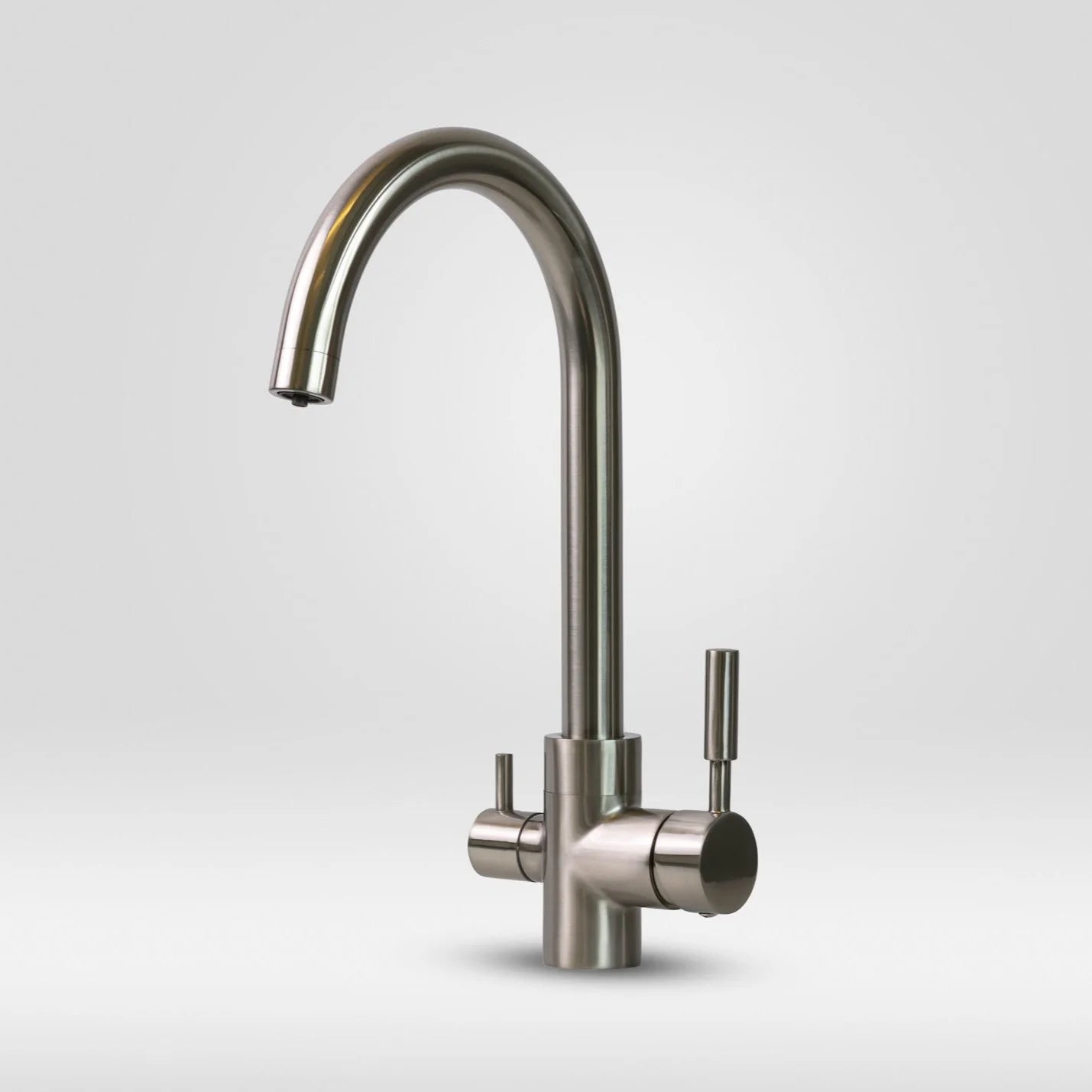
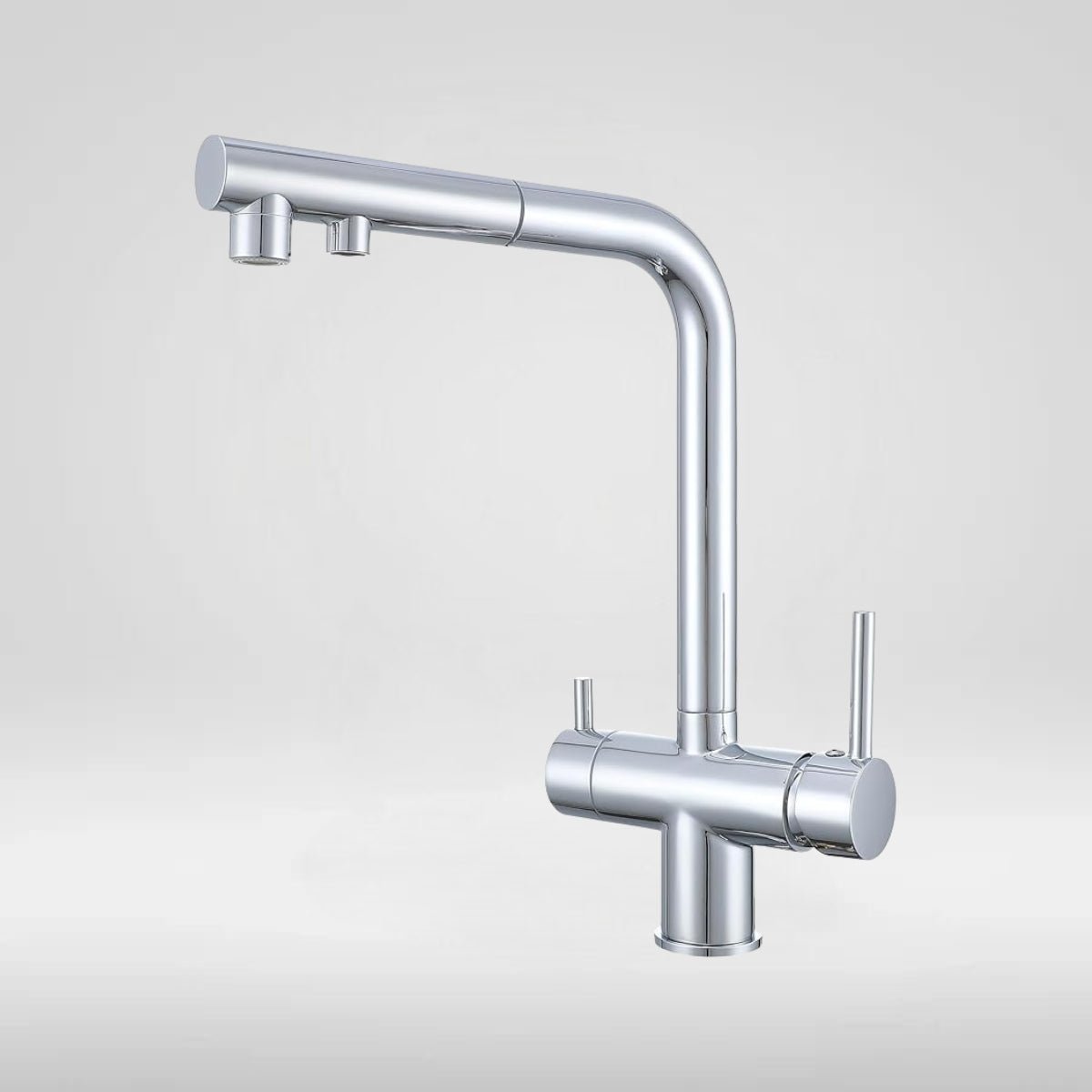
If you are looking for a plug-and-play solution without installation, the Countertop RO is a handy choice: you put it on the kitchen counter and draw osmosis water directly. You can read exactly how such a device works in our explanation about osmosis on the counter without a plumber. If you would rather have an invisible system in the kitchen cabinet with a stylish pure water tap, then The Source is the tidier solution. Both provide low-mineral water that you make drinkable with a mineral filter.
Make your own pure osmosis water?
Discover the Countertop RO from PureAqua: plug and play, up to 99% pure and with mineral filter for a fresh taste. 100-day trial, 2-year all-in warranty, and free shipping in the Netherlands and Belgium. Unsure which system fits? Request free and no-obligation advice.
View the Countertop RO Request free adviceFrequently asked questions
Is demi water the same as demineralized water?
Yes, it is exactly the same. Demi is the abbreviation for demineralized. Both terms describe water from which minerals and salts have been removed via ion exchange or osmosis.
What is the difference between osmosis water and demineralized water?
Osmosis water is made with reverse osmosis and blocks up to 99% of dissolved substances, but still contains a small residue of ions. Demineralized water via ion exchange is usually slightly purer. In practice, they are quite interchangeable.
Can you drink demineralized water?
A single sip is not harmful, but as a regular drinking water source, pure demineralized water is less suitable because it does not contain calcium and magnesium. With a mineral filter, such as with The Source from PureAqua, osmosis water becomes excellent drinking water with a natural taste.
Can I make demineralized water myself?
Yes. A reverse osmosis system continuously makes osmosis water that is low in minerals. The Countertop RO from PureAqua does this plug and play on the counter, without installation and without electricity.
Is distilled water purer than demineralized water?
Generally, yes. Distilling removes almost everything from the water via boiling and condensing. It just takes more energy and is therefore more expensive to produce than demineralized or osmosis water.
Why does demi water have a neutral taste?
Because the dissolved minerals and salts are missing. These actually give tap water its characteristic taste. If you add calcium and magnesium back in with a mineral filter, the water regains a fresh, natural taste.
Conclusion
Demineralized water and demi water are the same: low-mineral water that does not deposit limescale and is ideal for appliances. Osmosis water is a closely related variant that arises via reverse osmosis, and distilled water is generally the purest but the most expensive.
If you also want to drink this water, a mineral filter is the key: it adds back calcium and magnesium for a natural taste. With a system like The Source from PureAqua, you can create pure osmosis water yourself right at the tap, which removes up to 99% of unwanted substances and works without electricity. Over 950 customers have already preceded you, with a rating of 9 or higher.
Ready for pure, custom water?
Check out the Countertop RO for osmosis water with no installation required, or discover the built-in systems with a pure-water tap and a 4-in-1 tap that combines boiling, chilled, and filtered water. 100-day trial, 2-year all-in warranty, and free shipping in the Netherlands and Belgium. Would you prefer personal advice first? That is free and non-binding.
View the Countertop RO View the 4-in-1 tap Request free advice