Reading time: ~8 minutes
Quick answer
The main disadvantages of reverse osmosis are that it removes useful minerals in addition to contaminants, that it produces rinse water, that the system requires space under the sink, and that the filters require periodic maintenance. Each of these is solvable: a mineral filter adds back calcium and magnesium, modern membranes limit water consumption, and a subscription takes all the maintenance off your hands.
Table of contents
- What is reverse osmosis briefly explained
- The main disadvantages of reverse osmosis
- Are those disadvantages a problem in the Netherlands?
- How PureAqua solves every disadvantage
- Disadvantage versus solution in a table
- Buying advice: is reverse osmosis right for you?
- Frequently asked questions
- Conclusion
What is reverse osmosis briefly explained
Reverse osmosis (RO) is the most thorough way to purify tap water. The water is pressed under pressure through a membrane with pores of approximately 0.0001 microns, so fine that up to 99% of dissolved substances are left behind. Think of PFAS, microplastics, heavy metals, drug residues, and limescale. What remains is exceptionally pure water.
Precisely because the membrane is so fine, it not only blocks unwanted substances but also useful minerals. That is exactly where most of the disadvantages of reverse osmosis lie. If you first want to understand the process itself, read the explanation about how reverse osmosis works.
Definition
Reverse osmosis is a purification technique where tap water is passed under pressure through a semi-permeable membrane. The membrane allows water molecules through and holds back up to 99% of dissolved substances, including PFAS, microplastics, heavy metals, and limescale. The result is highly pure water, to which minerals can be added as desired using a mineral filter.
The main disadvantages of reverse osmosis
No purification technique is perfect. Below are the six most common disadvantages, presented honestly and without frills. For each disadvantage, you can immediately see how significant it is in practice.
1. Useful minerals are also removed
The membrane does not distinguish between unwanted substances and useful minerals. Calcium and magnesium are therefore removed, which can give pure osmosis water a somewhat flatter taste. This water resembles demineralized water. The amount of minerals you get from drinking water is actually small compared to what you get from food, but many people still want to retain them for taste and habit. A mineral filter easily solves this.
2. It produces rinse water
To keep the membrane clean, an osmosis system flushes part of the water away as concentrate. In older or simpler systems, that ratio can be quite high. Modern membranes with efficient flushing significantly reduce water consumption, making this disadvantage much smaller in practice than is often thought.
3. The system requires space
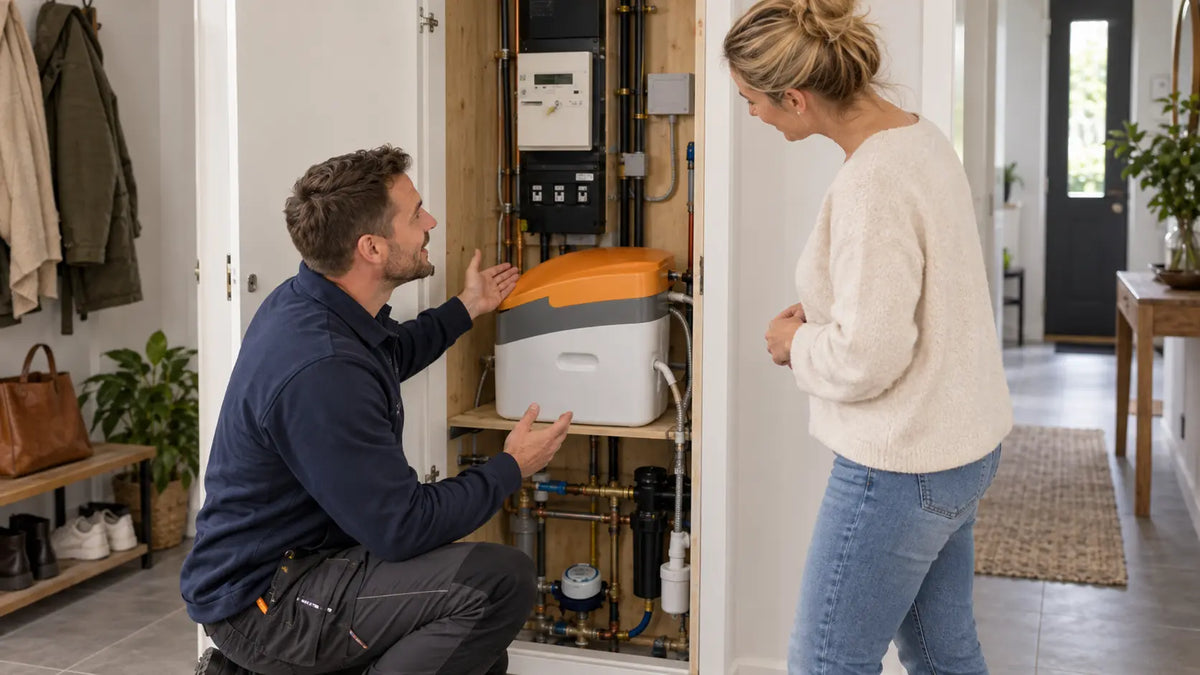
A built-in osmosis system needs space under the sink, along with a small storage tank. In a full kitchen cabinet, this is something to consider. Those who do not want to sacrifice space or drill holes can choose a standalone version that works on the countertop without installation.
4. The filters require periodic maintenance
Every filter system must be replaced occasionally to remain clean and effective. For reverse osmosis, this involves pre-filters and the membrane. If you forget this, quality and flow rate will drop. With a maintenance subscription, you no longer have to think about this yourself.
5. The flow rate is slower
Because the water has to go through a fine membrane, pure water flows slightly slower than regular tap water. A storage tank compensates for this, so you can still immediately fill a glass or pan. For most households, this is barely noticeable in daily use. If you are doubting whether you can safely drink tap water without a filter, you can read the full answer there.
6. The purchase is an investment
A complete osmosis system costs more than a simple filter pitcher. However, long-term costs per liter are actually lower than bottled water, which quickly costs around 0.50 euros per liter. If you factor in the payback period, this disadvantage is manageable for many families, especially with a subscription that keeps the initial costs low.
Are those disadvantages a problem in the Netherlands?
To be fair: Dutch tap water is among the cleanest in the world. According to Vewin, the water meets strict quality requirements in about 99.9% of measurements, and Milieu Centraal states that a filter is not strictly necessary for most people. Purchasing an osmosis system is therefore not a must, and we at PureAqua are open about that.
At the same time, there are good reasons why people still choose extra purification. The RIVM advises lowering the standard for PFAS in drinking water to 4.4 nanograms per liter, because people are already ingesting more PFAS through food and water combined than is desirable. In addition, old lead pipes in homes from before 1960 can release traces of lead, and limescale and taste play a local role. The disadvantages of reverse osmosis then weigh less heavily than the gain in certainty and convenience.
At PureAqua, we see that customers mainly choose that combination of purity and peace of mind, without scare tactics. Not because they have to, but because tasty, pure water from their own tap is simply pleasant.
How PureAqua solves every disadvantage
Most disadvantages of reverse osmosis arise from older or simpler systems. The core PureAqua system, The Source, is specifically designed to eliminate those points.
- Adding back minerals: an optional 45-euro mineral filter adds calcium and magnesium back, for a natural, full taste.
- Without power: The Source runs on water pressure itself, so it needs no electricity and incurs no extra energy costs.
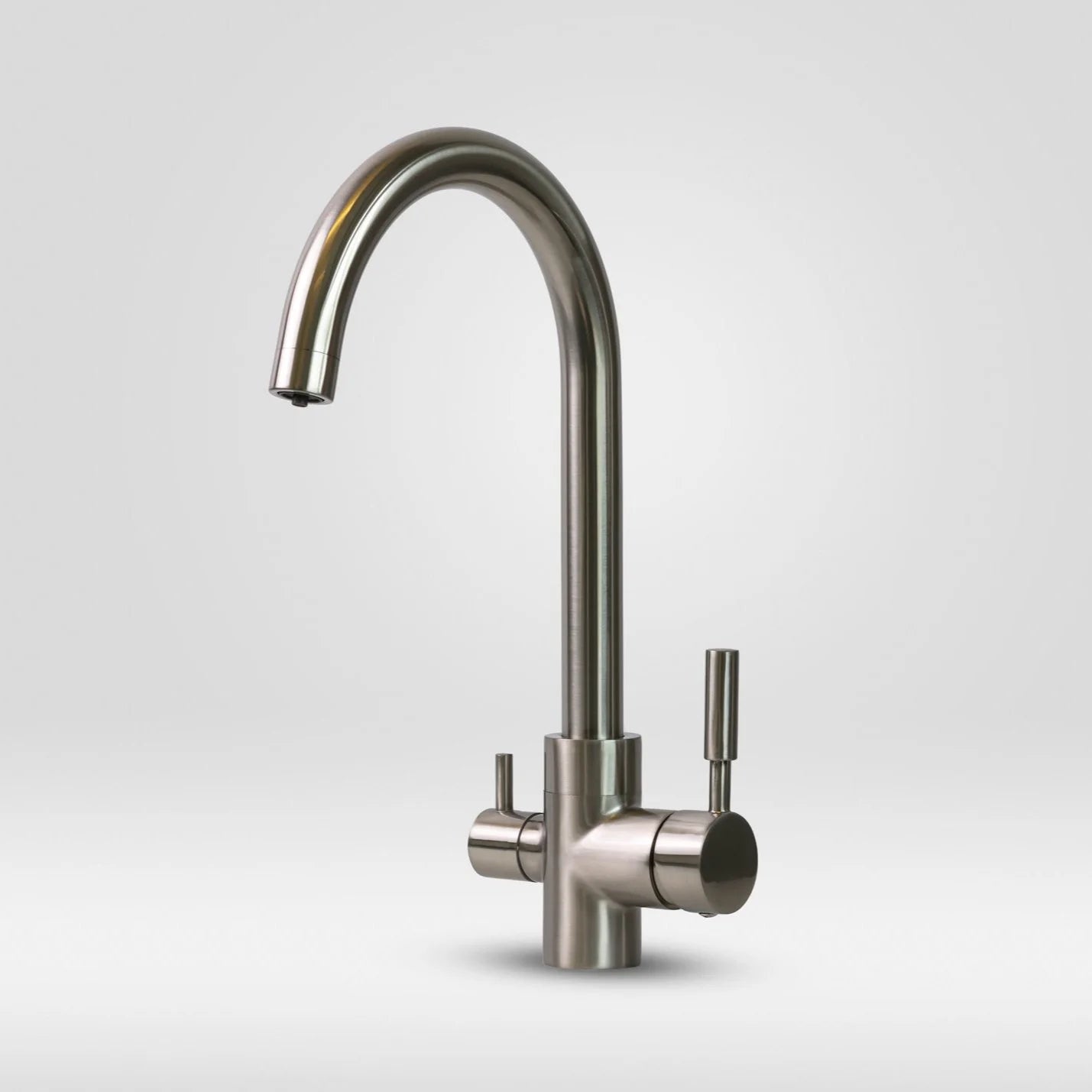
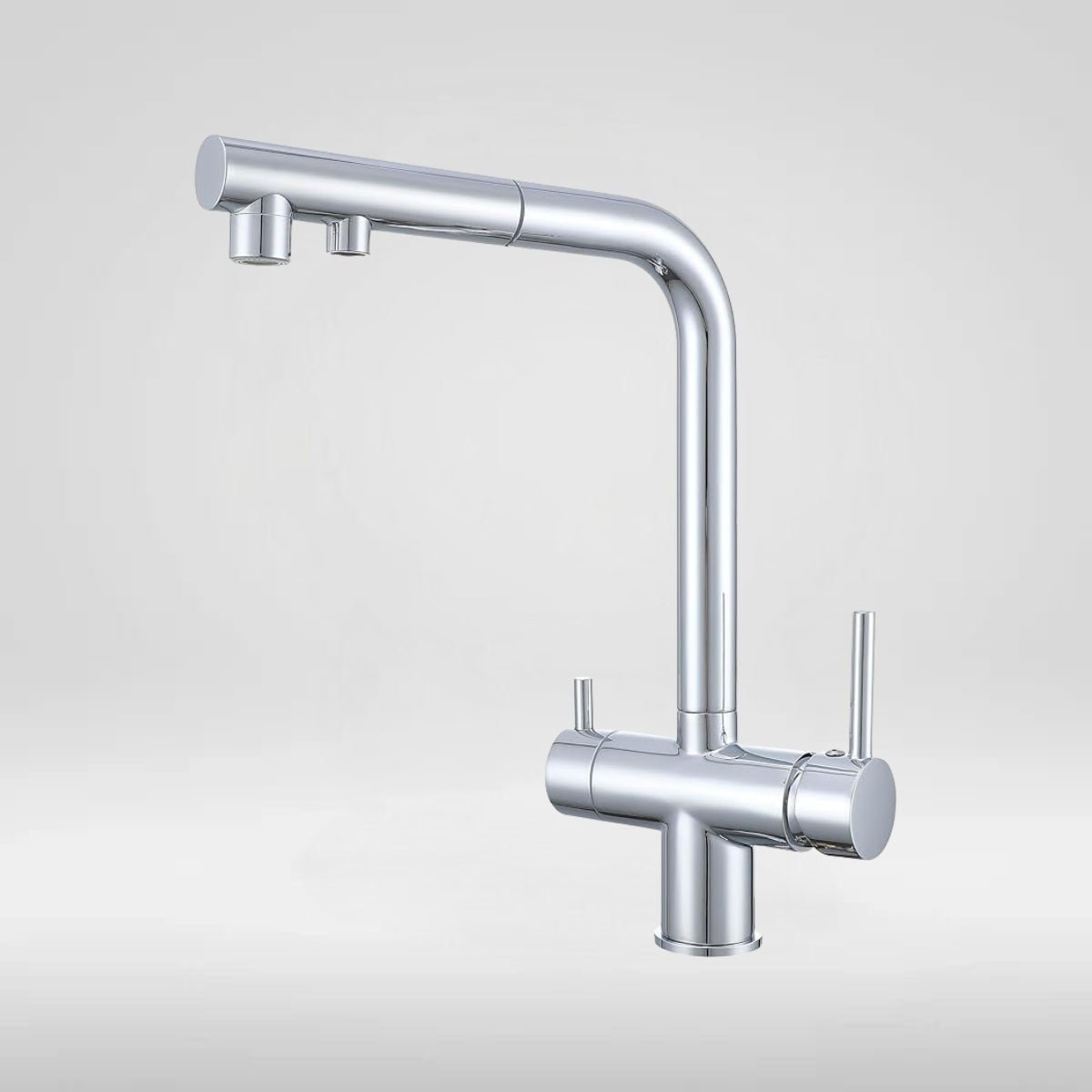
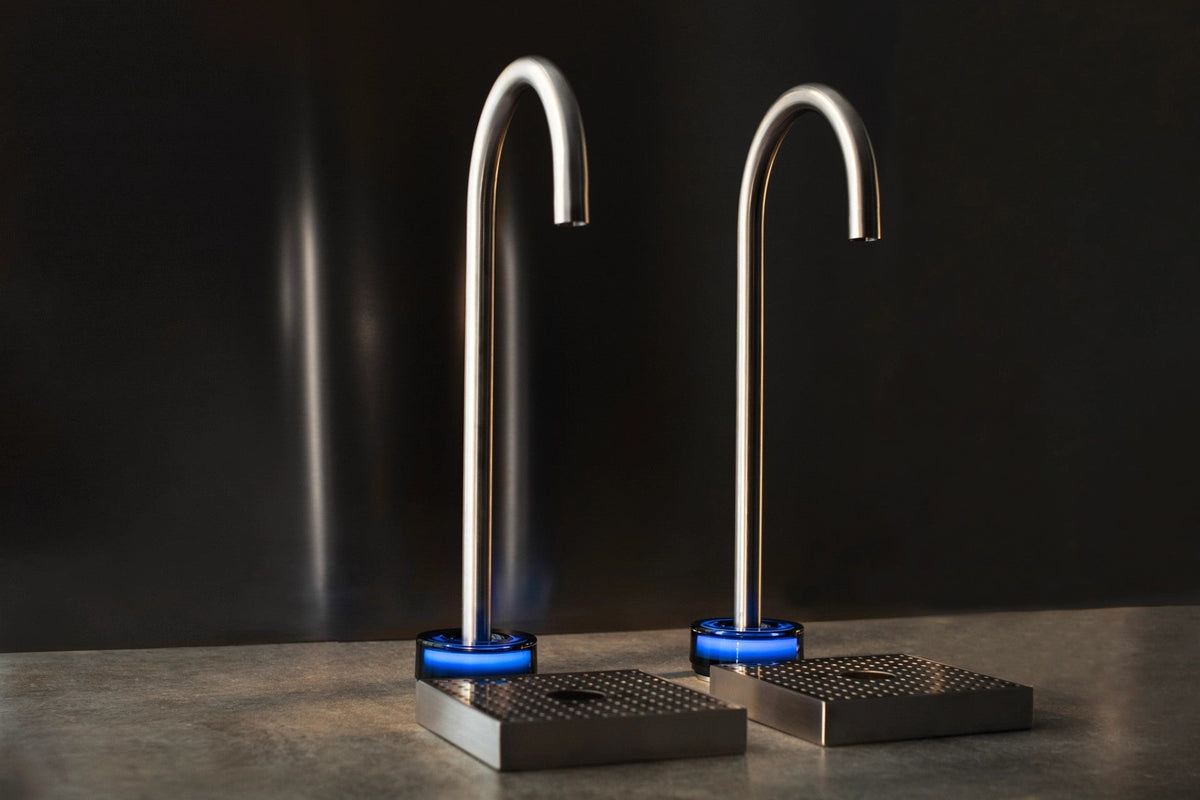
- Compact and invisible: the system is tucked away in the kitchen cabinet and delivers water via a stylish pure-water faucet.
- Maintenance taken care of: with the "Carefree Pure Water" subscription for 29 euros per month, filters, installation, and service are handled.
- No space or installation needed? Then the standalone version is the answer; you can read more about that under osmosis water without installation or drilling.
If you want to see what you can do with that pure water, from drinking to plants and aquariums, take a look at what you use osmosis water for. This is how a perceived disadvantage becomes an advantage.
Doubting if osmosis suits you?
Discover the pure water faucets with The Source or the standalone pure water device. 100 days on trial, 2-year all-in warranty, and over 950 customers. Prefer personal advice first? That is free and without obligation.
View the pure water faucets View the pure water deviceDisadvantage versus solution in a table
| Disadvantage of reverse osmosis | How significant is it? | Solution at PureAqua |
|---|---|---|
| Minerals are also removed | Taste is a bit flatter, health effect small | Mineral filter adds back calcium and magnesium |
| Rinse water / water consumption | Larger with old systems, small with modern | Efficient membrane in The Source |
| Space under the sink | Point of attention for a full cabinet | Compact or standalone on the countertop (Countertop RO) |
| Filter maintenance | Periodically necessary, otherwise quality drops | Subscription handles filters and service |
| Slower flow rate | Barely noticeable in daily use | Storage tank refills immediately |
| Purchase price | Higher than a filter pitcher | Low cost per liter, subscription from 29 euros |
Buying advice: is reverse osmosis right for you?
If you are mainly looking for a better taste and have a small budget, a filter pitcher or a simple filter faucet is often sufficient. If you want the most thorough certainty that PFAS, microplastics, and heavy metals will disappear by up to 99%, then reverse osmosis is the most complete choice, provided you cleverly counter the disadvantages with a mineral filter and proper maintenance.
If you live in a kitchen with little cabinet space, the standalone Countertop variant is handy because it sits on the countertop without drilling. If you want to combine cooking, hot water, and pure water from one faucet, take a look at the PureAqua 4-in-1 faucet. And if you want to compare all criteria, our guide on the best reverse osmosis system will help you further. With a 100-day trial period, you can also experience at your leisure whether it suits you.
Frequently asked questions
What are the pros and cons of reverse osmosis?
The biggest advantage is the most thorough purification: up to 99% of unwanted substances such as PFAS, microplastics, and heavy metals are removed, with a noticeably fresher taste and no hauling bottles. The disadvantages are that useful minerals disappear, that rinse water is produced, that the system requires space and maintenance, and that the purchase is an investment. These disadvantages are easy to handle with a mineral filter and a maintenance subscription.
What are the disadvantages of osmosis water?
Pure osmosis water contains almost no minerals, which can make the taste flatter and resemble demineralized water. For daily mineral needs, this makes little difference, because you get most minerals from food. If you still want a natural, full taste, a mineral filter easily adds calcium and magnesium back.
Is it safe to drink reverse osmosis water?
Yes. Osmosis water is highly pure and safe to drink. The membrane blocks up to 99% of dissolved substances, including PFAS and heavy metals. The only thing to note is the lower amount of minerals, which you restore with a mineral filter. This allows you to drink pure water with a natural taste.
What are the disadvantages of filtered water?
That depends on the type of filter. A simple filter pitcher mainly removes taste and chlorine, but hardly any PFAS or drug residues, and bacteria can grow on a dirty filter if you replace it too late. Reverse osmosis purifies much more thoroughly but requires space, maintenance, and a mineral filter for the taste in return. Regular maintenance is the key to good quality with any filter.
Can I wash windows with osmosis water myself?
Yes, osmosis water is excellent for streak-free window washing because it contains almost no limescale or minerals that leave stains. This same property makes it popular for washing cars, aquariums, and ironing. You can find more applications in our overview of what you use osmosis water for.
What is an important problem with reverse osmosis?
The most cited problem is the rinse water produced to keep the membrane clean. In older systems, that consumption is higher, but modern membranes like those in The Source significantly limit it. The second point of attention is that minerals are removed, which a mineral filter solves. Both points are well managed with the right technology.
Conclusion
The disadvantages of reverse osmosis are real, but well manageable in practice. You add back minerals with a mineral filter, limit water consumption with an efficient membrane, handle maintenance with a subscription, and solve a lack of space with a standalone version on the countertop. What remains is exceptionally pure water that removes up to 99% of unwanted substances.
At PureAqua, we combine that purity with convenience: The Source works without electricity, is hidden from sight in your kitchen cabinet, and delivers water through a dedicated filtered-water tap of your choice. With a 100-day trial and a 2-year all-in warranty, you can discover at your own pace if it’s right for you. Drink different.
Ready for pure water without the drawbacks?
Choose a filtered-water tap with The Source or get started worry-free with a subscription starting at 29 euros per month. 100-day trial, 2-year all-in warranty, and free shipping in the Netherlands and Belgium. Feel free to request free, no-obligation advice first.
View the subscription View the filtered-water taps