Reading time: approximately 12 minutes
Short answer
Alkaline water, also called basic water, is water with a pH above 7. Dutch tap water is often already that: the standard is between pH 7 and 9.5, and according to Brabant Water, drinking water companies aim for 7.8 to 8.3. There is no evidence that a higher pH improves your health.
In this article
What exactly is alkaline water?
Alkaline water is simply water with a pH value above 7. The pH scale runs from 0 to 14: anything below 7 is acidic, exactly 7 is neutral, and anything above that is basic, or alkaline. The word alkaline sounds exotic, but it describes a very ordinary measurement that every drinking water company in the Netherlands tracks daily.
Definition
Alkaline water, also called basic water, is drinking water with a pH higher than 7. Commercially, this usually involves bottled water with a pH of 9 or higher, often enriched with minerals such as calcium, magnesium, potassium, and bicarbonate.
Two things are often confused in advertisements. pH indicates how acidic or basic water is at a given moment. The buffer capacity, or alkalinity in technical terms, indicates how much acid the water can neutralize before the pH drops. The World Health Organization therefore treats pH as an operational water quality parameter: it is important for the purification process and for your pipes, not as a health value in itself.
In the supermarket, you can see the difference in price. A bottle of alkaline water with a pH of 9 or higher costs about 1.39 to 1.49 euros per liter in Dutch stores, and a multipack of twelve bottles is around 35 euros. According to Vewin, tap water will cost 2.05 euros per cubic meter in 2026 excluding taxes, and 2.71 euros including them. That is 0.0027 euros per liter, over five hundred times less.
Are you looking for better-tasting water instead of a higher pH?
Tell us what your kitchen looks like and what you want to get out of the tap, and we will gladly provide non-binding advice.
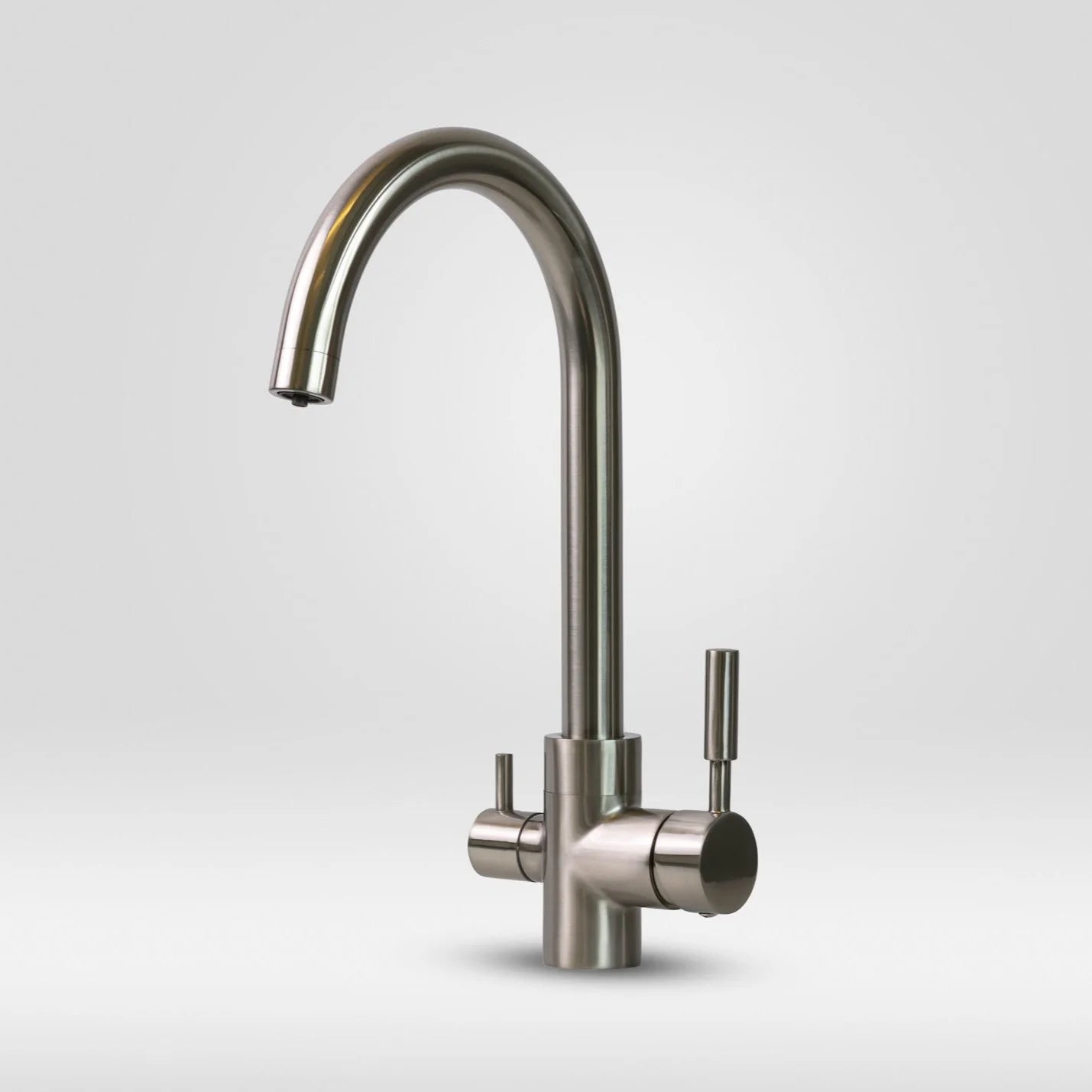
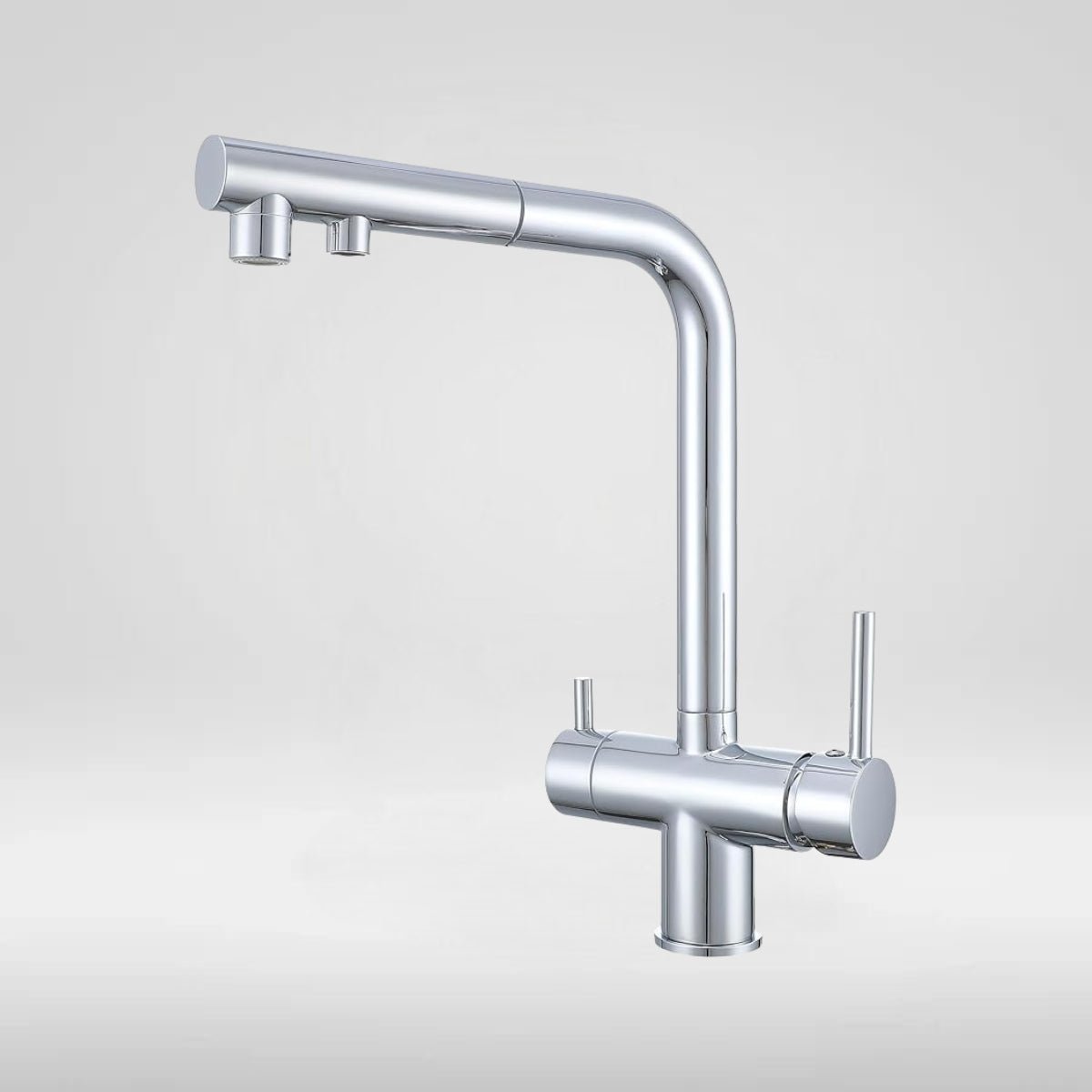
Ask for free advice View the pure water tapsHow basic is Dutch tap water already?
This is the point missing from most articles about alkaline water: you are already drawing it from the tap. According to legal standards, tap water in the Netherlands must have a pH between 7 and 9.5. In practice, drinking water companies target a narrower margin. Brabant Water lists 7.8 to 8.3 as the optimal value and measures 7.65 to 8.13 in Eindhoven. That is by definition basic water.
That standard is not in a brochure, but in the law. The RIVM describes how the Drinking Water Act and the Drinking Water Decree establish quality requirements for tap water, including acidity. Drinking water companies monitor this value continuously because a pH that is too low damages pipes, and one that is too high causes limescale buildup.
Why do they aim for slightly basic instead of neutral? Because pH is related to the amount of lime in the water. Water containing too little bicarbonate is aggressive toward copper and galvanized pipes. In our article on the acidity of Dutch tap water by region, you can read which values the major drinking water companies achieve and why they differ by area.
In short: anyone in the Netherlands buying a bottle of alkaline water with a pH of 9 is mainly paying for the difference between about 8 and 9. On the logarithmic pH scale, that is a factor of ten in hydrogen ions, but in your stomach, that difference vanishes within seconds.
The hardness of your water is related to those same minerals. Vitens reports that tap water in the Netherlands averages around 8 dH, which is considered soft to medium-hard, and that you can check the hardness by postcode. Hard water means more calcium and magnesium, and therefore usually also a slightly higher pH.
What does alkaline water do to your body?
There is a narrative surrounding alkaline water about "de-acidifying": your body is supposedly becoming acidic due to diet and stress, and basic water would correct that. That narrative does not hold up, and the evidence for it does not come from water sellers but from independent research institutions.
The World Cancer Research Fund is explicit about this. There is no evidence that drinking basic water has any influence on cancer. As soon as basic water enters your stomach, the stomach acid immediately ensures it is no longer basic. No research has been conducted on humans regarding the effect of basic water on cancer; there are only a limited number of laboratory studies. The foundation’s advice is therefore not to drink basic water to reduce the risk of cancer.
The misunderstanding about acidification
The same foundation explains that the claim that improper diet and stress make the water in your body cells acidic is incorrect. Acidification of your muscles during intense exertion does exist, but your body reacts to this immediately and restores the acid-base balance itself. Your blood does not become more basic because you drink a glass of water with a different pH.
What actually counts in drinking water
Where health benefits truly lie is in what should not be in your water. Strict standards apply to substances like PFAS, heavy metals, and microplastics, and this is exactly the area where filtering adds value, while a pH figure does not. If you want to know how strict these controls are in the Netherlands, read how tap water is checked in the Netherlands before you spend money on a higher pH.
Another sober argument: Milieu Centraal calls tap water the most sustainable beverage choice. Transporting bottles of alkaline water from Southern Europe does the opposite. At PureAqua, we see that customers who come in with a health question ultimately choose for taste, convenience, and less plastic.
How to make water alkaline, and what it costs
If you still want to experiment, there are three routes offered in the Netherlands. They differ greatly in price and what they actually do.
1. A pinch of baking soda
Sodium bicarbonate dissolves and raises the pH. It works, but you are adding sodium to your drinking water, and there is a limit to that. Dunea mentions the standard value from the Drinking Water Decree for sodium: 150 milligrams per liter, with taste complaints starting from about 200 milligrams per liter. Half a teaspoon of baking soda in a liter is well above that. Furthermore, you can taste it.
2. Lemon in your water
This is the most persistent tip on social media, and it is incorrect. Lemon juice has a pH of around 2 and therefore makes your water more acidic, not more basic. The reasoning that lemon has an "alkalizing" effect comes from acid-base theory, and that theory is precisely what the World Cancer Research Fund describes as incorrect.
3. A water ionizer or alkaline filter pitcher
An ionizer splits the water electrolytically and taps off the basic stream. A filter pitcher with an alkaline cartridge adds minerals. Both provide a higher pH, but neither is designed to remove contaminants. You are buying a device for a measurement value instead of for water quality. In our comparison of what a filter pitcher with a carbon cartridge does and does not remove, you can see the limitations of such pitchers.
Alkaline water and reverse osmosis
Here is the honest nuance you should expect from PureAqua. Reverse osmosis forces water through a membrane that holds back the majority of dissolved substances. In the process, part of the bicarbonate that keeps the pH high is also removed. Consequently, osmosis water usually comes out more neutral than the tap water it is made from: it drops towards pH 7, sometimes just below it.
That is the opposite of alkaline water, and that is not a problem. The page on how reverse osmosis works explains step-by-step what the membrane stops. The international standard for household osmosis systems, NSF/ANSI 58, evaluates such a system based on what it removes, not on the pH it produces.
If you want those minerals and that slightly higher pH back, there is a solution for that: a mineral filter after the membrane. This adds calcium and magnesium, making the water softer in taste and shifting the pH back towards neutral to slightly basic. At PureAqua, such a mineral filter costs 45 euros and is an option, not an obligation. What the removal of minerals specifically means is explained in the minerals that an osmosis membrane removes from your water.
Do not confuse osmosis water with demineralized water from the hardware store, either. We cover the difference, and whether you can drink it, in the article comparing demi water, osmosis water, and distilled water.
Prefer pure water over a higher pH?
With the Carefree Pure Water subscription, you pay 29 euros per month with a 299 euro start fee, including tap, system, filters, and installation by a specialist.
View the subscription View the Countertop ROThe five routes compared
The table compares the options based on the two questions that really matter: what happens to the pH, and what happens to what is in your water.
| Route | What it does to the pH | Does it remove contaminants? | Indicative costs |
|---|---|---|---|
| Dutch tap water | Is already slightly basic, usually 7.8 to 8.3 | Is already purified by your drinking water company | 0.0027 euros per liter |
| Bottled alkaline water | pH 9 or higher | No, it is spring water or purified bottled water | 1.39 to 1.49 euros per liter |
| Baking soda in your pitcher | Higher, you do not know how much | No, you are actually adding sodium | A few cents per liter |
| Water ionizer or alkaline pitcher | Higher, adjustable with an ionizer | Limited to none, depending on the cartridge | Tens to hundreds of euros plus cartridges |
| Reverse osmosis at PureAqua | Towards neutral, slightly alkaline again with a mineral filter | Yes, up to approximately 99 percent of, among other things, PFAS, microplastics, heavy metals, and limescale | Countertop RO 495 euros, or the subscription from 29 euros per month |
The table makes the choice clear. Only the bottom line does something about the composition of your water. The rest just changes a number on a test strip.
So, what should you choose?
The question behind "is alkaline water healthy" is almost always a different question: I want to drink tastier and cleaner water and I don't know where to start. We encounter three situations most often.
- You find your tap water fine: then you don't have to do anything. You are already drinking slightly alkaline water that meets legal standards and costs a fraction of a cent per liter.
- You are bothered by taste, limescale, or chlorine: then filtering helps, but a pH number does not. A reverse osmosis system with a pure water tap, or the Countertop RO without installation, tackles the substances that determine the taste.
- You want to keep minerals in your water: then consciously choose a mineral filter after the membrane, so that calcium and magnesium return and the water tastes a bit fuller.
If you are doubting between a tap with a system and a separate device on the countertop, our article on a separate device on the countertop versus a built-in system will help you further. At PureAqua, the filter system is included as standard with a pure water tap; we do not sell it separately.
Frequently asked questions
How do I make water alkaline?
There are three ways. A pinch of baking soda raises the pH, but adds sodium; Dunea cites 150 milligrams of sodium per liter as the standard value from the Drinking Water Decree, and taste complaints arise from approximately 200 milligrams per liter. A water ionizer separates the water electrolytically and taps off the alkaline stream. A filter pitcher with an alkaline cartridge adds minerals. Lemon does not work: lemon juice is acidic and actually lowers the pH.
What is the difference between pH-neutral and alkaline?
pH-neutral is exactly 7 on the scale of 0 to 14. Alkaline, or basic, is anything above 7. The scale is logarithmic: every step of a whole point means a factor of ten in hydrogen ions. Dutch tap water is therefore not neutral but slightly alkaline, because the standard lies between 7 and 9.5 and drinking water companies aim for 7.8 to 8.3 according to Brabant Water.
What does alkaline do to your body?
Less than the marketing suggests. According to the World Cancer Research Fund, your stomach acid ensures that alkaline water is no longer alkaline as soon as it reaches your stomach. Your body keeps the acid-base balance in check itself; the body recovers immediately from the acidification of muscles during heavy exercise. The idea that food or stress makes the water in your body cells acidic is incorrect according to the same fund.
Is alkaline water healthy?
It is safe to drink, but there is no evidence that it is healthier than regular tap water. The World Cancer Research Fund states that there is no evidence that alkaline water influences cancer and that research in humans is missing; only a limited number of laboratory studies have been conducted. The fund's advice is not to drink alkaline water to reduce the risk of cancer. For health gains, you are better off looking at what is removed from your water than at the pH.
Is a banana acidic or alkaline?
As a food item, a banana is slightly acidic; in acid-base theory, it is actually classified as base-forming. That classification says little about your body, because the World Cancer Research Fund describes the assumption behind that theory, that food makes your body cells acidic, as incorrect. Eat fruit because it is healthy, not to control a pH value.
What is the pH of osmosis water?
Generally more neutral than the tap water it is made from, so around pH 7 and sometimes just below. This is because the membrane also holds back bicarbonate, and it is precisely that bicarbonate that keeps the pH up. If you want that value back towards slightly alkaline, you place a mineral filter after the membrane; at PureAqua, that filter costs 45 euros.
Is bottled alkaline water worth the money?
Do the math. A bottle of alkaline water costs about 1.39 to 1.49 euros per liter in Dutch stores. According to Vewin, tap water costs 2.71 euros per cubic meter including taxes in 2026, or 0.0027 euros per liter. You are therefore paying more than five hundred times as much for water that hardly differs from your tap water in terms of pH, plus a plastic bottle per liter.
Conclusion
Alkaline water is water with a pH above 7, and Dutch tap water usually already meets that requirement: the standard lies between 7 and 9.5, and drinking water companies aim for 7.8 to 8.3. There is no evidence for the idea that a higher pH de-acidifies your body or prevents disease; your stomach acid undoes the difference within seconds.
What does make a difference is what is removed from your water. Reverse osmosis actually lowers the pH slightly and removes up to approximately 99 percent of, among other things, PFAS, microplastics, heavy metals, and limescale. If you want the minerals and the taste back, you put a mineral filter behind it. This way, you buy water quality instead of a number.
Pure water from your own tap, without bottles
View the pure water taps with filter system included, or let us help you think about what fits your kitchen.
View the pure water taps Ask for free advice