Reading time: ~9 minutes
Quick answer
A pure water device is a unit that further purifies tap water, ranging from a simple filter pitcher to a reverse osmosis system that blocks up to 99% of substances such as PFAS, microplastics, and heavy metals. If you want the most thorough purification without installation, a countertop osmosis device is the best choice. If you want it invisible in the kitchen, choose a pure water faucet with the system underneath it.
Table of contents
What is a pure water device?
A pure water device is any unit that post-purifies water before you drink it. In the Netherlands, the term is used for two very different things. On one hand, there are emergency and outdoor filters that turn ditch or rainwater into safe drinking water. On the other hand, and this is what most people are looking for, there are devices that make already safe tap water one step purer: less PFAS, less limescale, less chlorine taste.
The difference lies in the technology. A carbon filter removes taste and chlorine, a ceramic or hollow-fiber filter stops bacteria, and reverse osmosis (RO) goes the furthest: it presses water under pressure through a membrane with pores of approximately 0.0001 microns. As a result, up to 99% of dissolved substances are left behind, including PFAS, microplastics, heavy metals, and limescale. If you want to understand that technology first, read how reverse osmosis works.
Definition
Pure water device: a unit that filters or purifies tap, rain, or surface water into drinking water. For domestic tap water, this usually involves a carbon filter, a filter faucet, or a reverse osmosis system. The latter is the most thorough variant and stops up to 99% of dissolved substances. RO devices can be certified according to NSF/ANSI 58, the international standard for osmosis drinking water systems.
What types of pure water devices are there?
In the Dutch market, you will encounter seven types. They differ significantly in what they remove, price, and installation.
1. Filter pitcher with carbon filter
The most well-known and cheapest variant. A pitcher with an activated carbon filter primarily improves taste and removes chlorine. Popular models cost around 140 euros for a pitcher with a longer filter life. What a pitcher does not do: reliably remove PFAS, pharmaceutical residues, and heavy metals. If you replace the filter too late, the water quality can actually deteriorate.
2. Filter faucet or inline carbon filter
Here, the filter sits under the kitchen counter, and you tap filtered water from a separate or combined faucet. Pleasant, as there is no device on the counter and no pitchers to refill. The purification remains dependent on the filter type. In our explanation on filtering tap water with a filter faucet, you can read exactly what such a setup does and does not address.
3. Countertop osmosis device
A complete osmosis system in a housing that stands on the countertop. You fill a reservoir or connect it to the tap, plug it into the socket, and you are done. No drilling, no installer, so also suitable for renters. In Dutch search results, individual tabletop models from other brands cost around 449 euros. The Countertop RO from PureAqua works on the same principle: full-fledged reverse osmosis, without installation.
4. Undersink osmosis system with pure water faucet
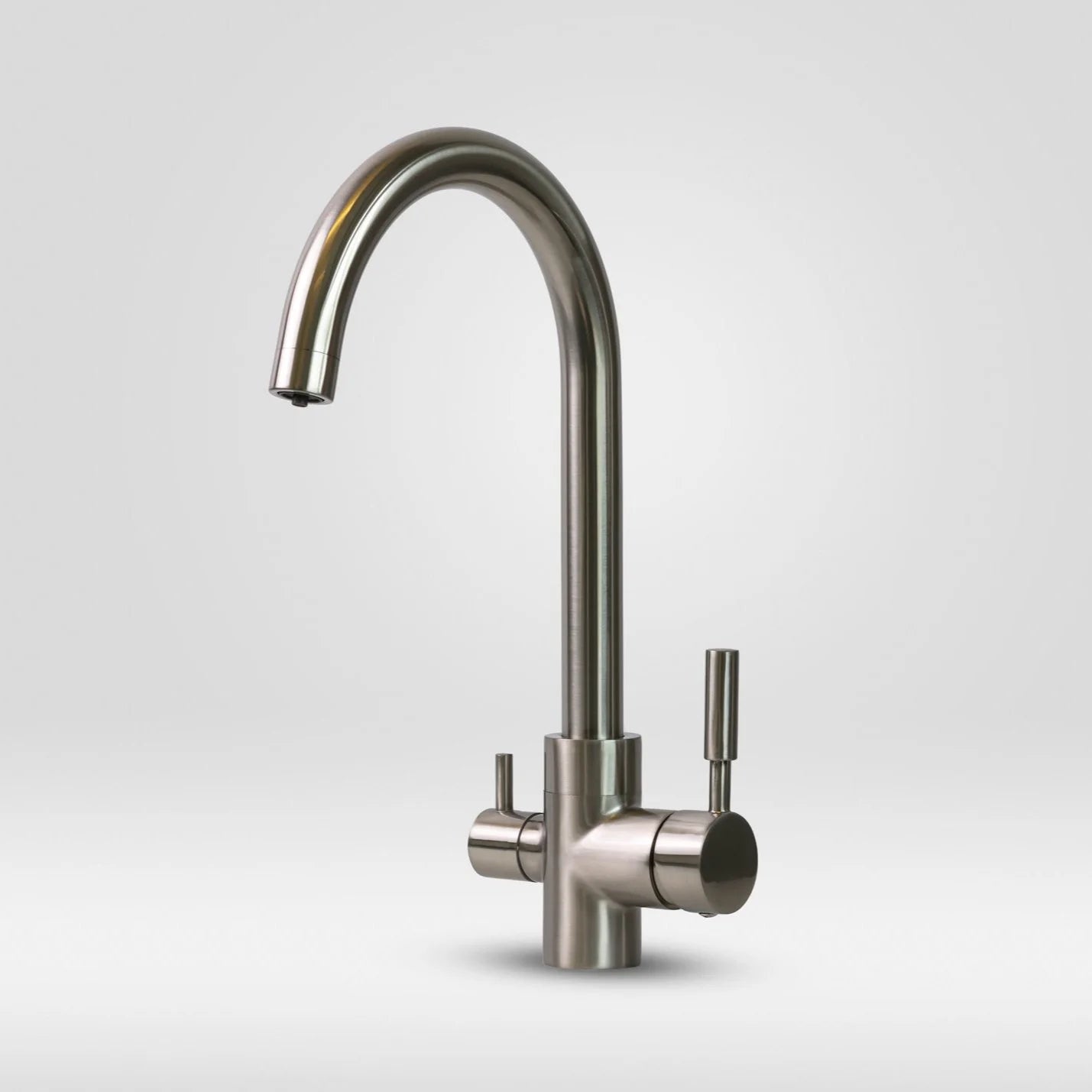
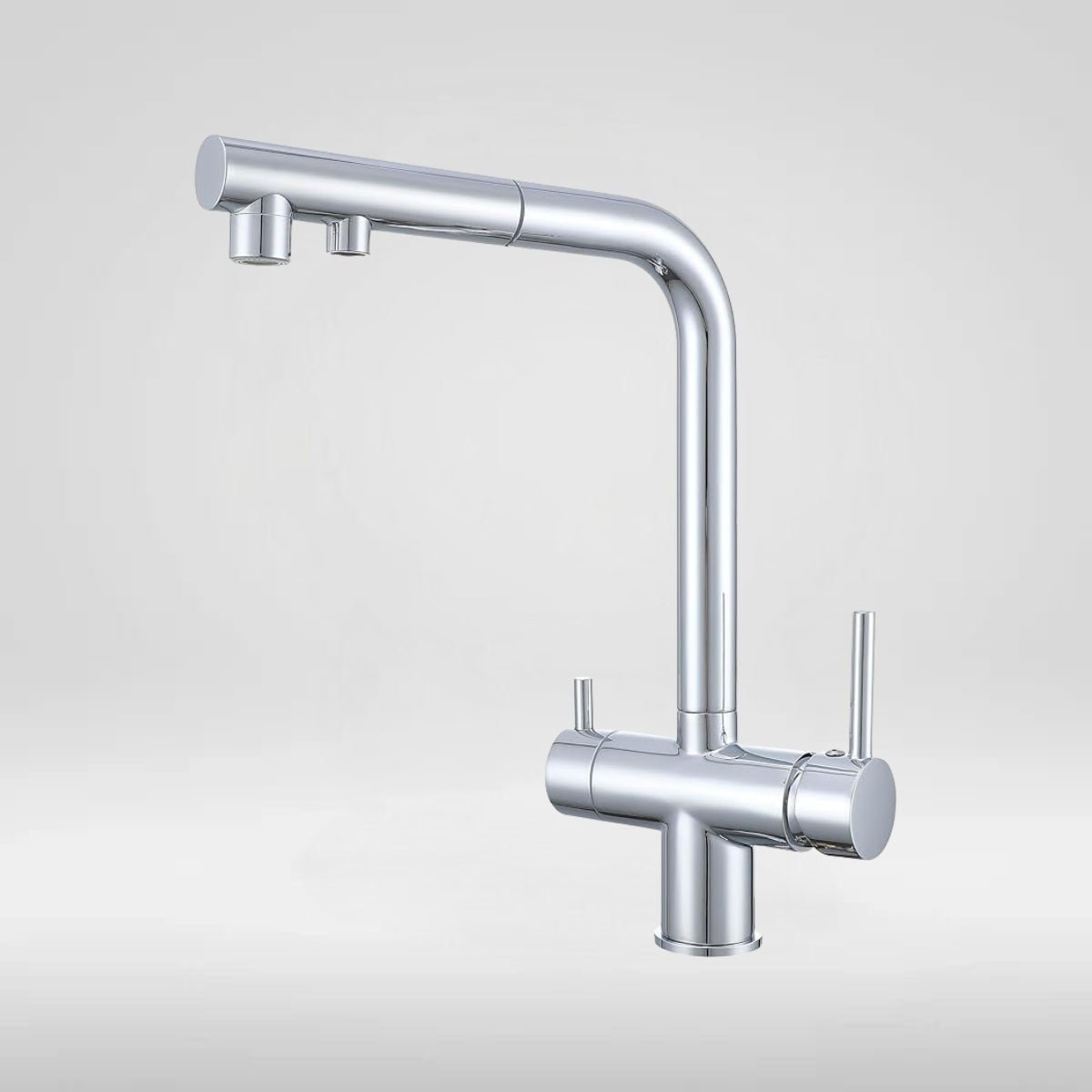
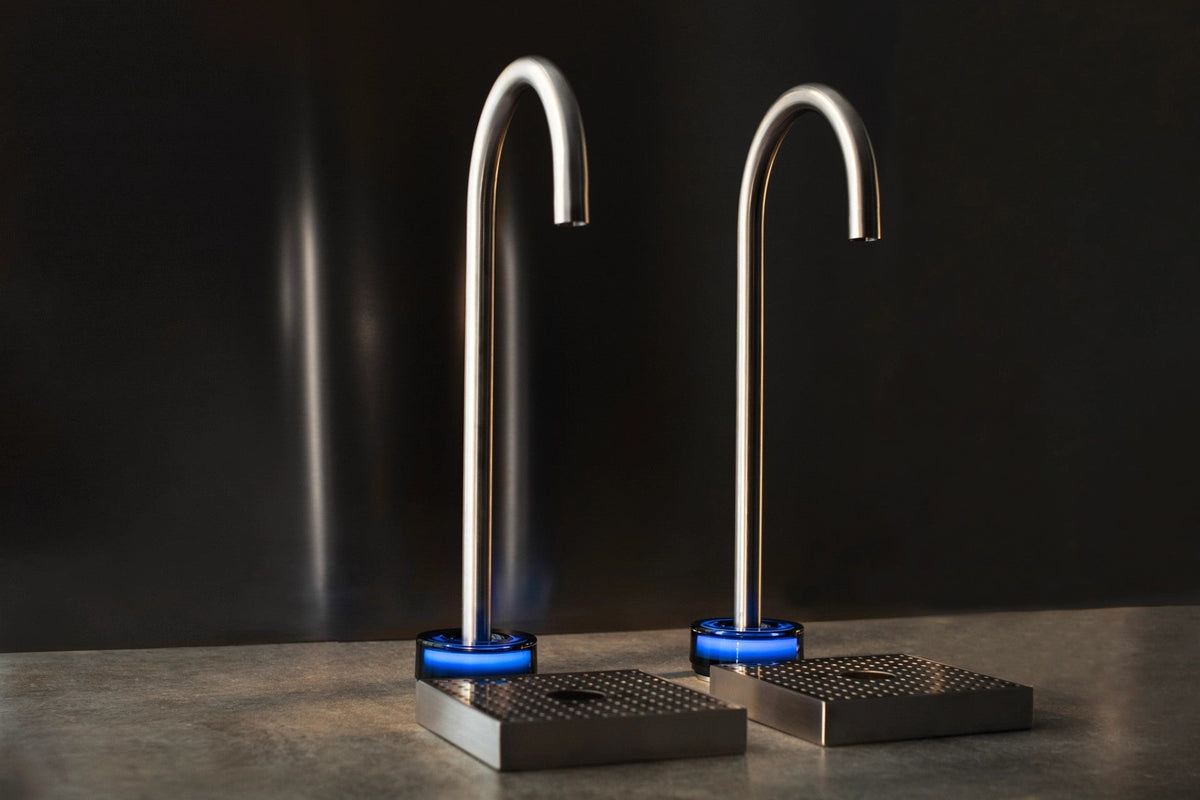
The invisible variant: the system is tucked away in the kitchen cabinet, and pure water comes from a design faucet. At PureAqua, that is The Source in combination with a pure water faucet of your choice. The system is not sold separately but comes standard with the faucet or the subscription. This is the choice for those who want a sleek kitchen and want to keep the countertop clear.
5. Emergency and outdoor filter
Filter straws, pump filters, and gravity filters for camping, travel, or an emergency kit. They stop bacteria and parasites and often cost between 30 and 220 euros. They are intended for ditch or rainwater, not for daily use from the tap: they largely let chemical substances like PFAS pass through.
6. Water softener
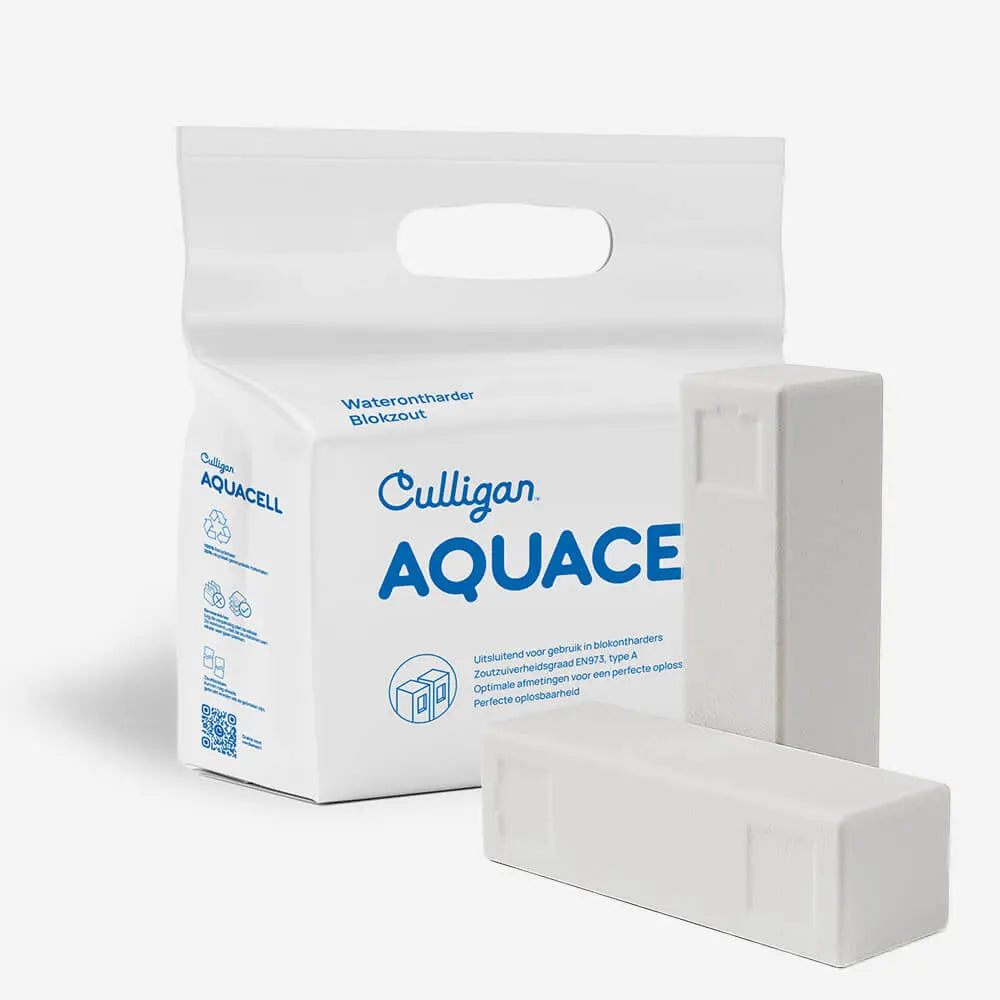
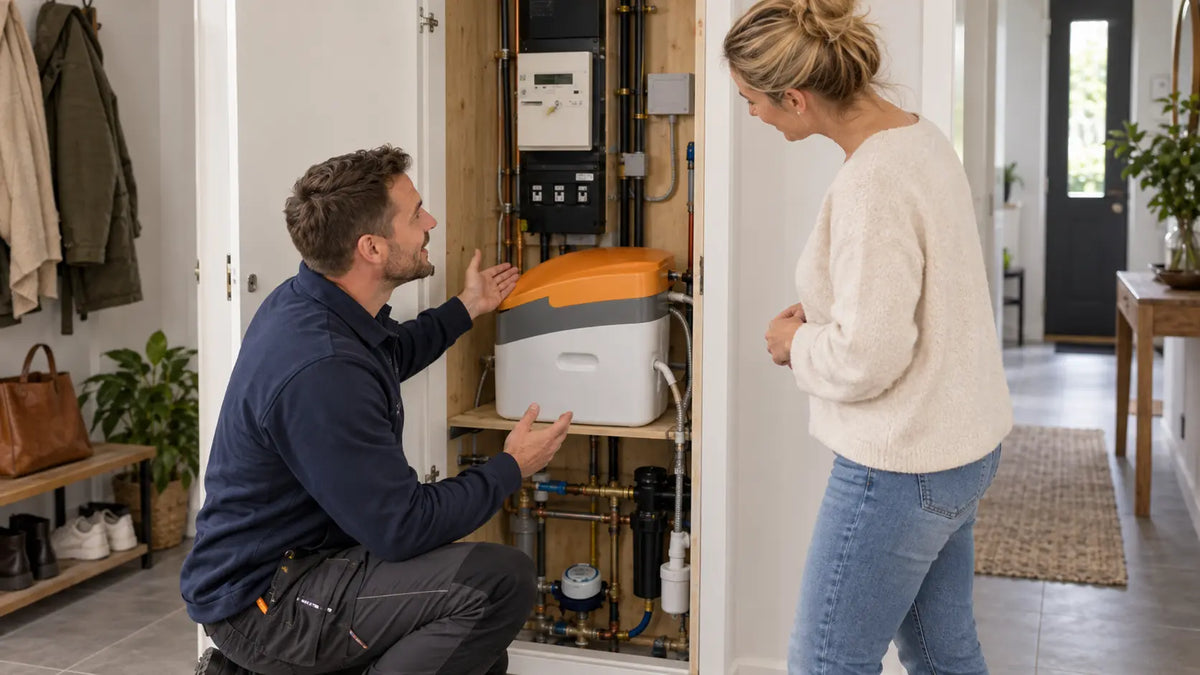
Not a purification device for drinking water, but a solution against limescale throughout the entire house. Prices with us range from 1,699 euros for the Joep to 2,348 euros for the AquaCell. A softener does not remove PFAS or microplastics from your water, so osmosis remains necessary for drinking water. If you want to know how the two relate to each other, compare water filter versus water purifier versus reverse osmosis side by side.
7. Water ionizer
Devices that increase or decrease the pH of water, found in stores for between approximately 90 and 680 euros. They barely purify anything, and the health claims surrounding them are not scientifically substantiated. We do not sell them and do not recommend them if you are looking for pure water.
What should you look for when choosing?
At PureAqua, we see that customers mainly pay attention to six points. Go through them one by one, and the choice will become clear by itself.
- Purification level: what does the device really remove? Only reverse osmosis reaches approximately 99% of dissolved substances, including PFAS and microplastics.
- Installation: is drilling allowed? If you rent, a countertop device without installation is the safe choice. More on that in our article on osmosis water without fixed connection.
- Space: an undersink system requires space in the cabinet, a tabletop model requires space on the counter. Measure it before you choose.
- Maintenance: every filter must be replaced periodically. Count on pre-filters plus a membrane for osmosis. A filter set costs 75 euros for two pieces or 149 euros for three with us.
- Taste and minerals: osmosis water contains virtually no minerals anymore. A mineral filter for 45 euros adds calcium and magnesium back for a fuller taste.
- Cost per liter: do not just calculate the purchase price, but also the filters. Compared to bottled water at around 0.50 euros per liter, filtered tap water is almost always cheaper.
Do you want to check your choice with a measurement? A TDS meter for 5.95 euros immediately shows how many dissolved substances are in your water before and after filtering.
Pure water devices compared
| Device type | What it removes | Installation | Price indication | For whom |
|---|---|---|---|---|
| Filter pitcher with carbon filter | Chlorine and taste, limited limescale | None | Approx. 20 to 140 euros | Who primarily wants better-tasting water |
| Filter faucet or inline carbon filter | Chlorine, taste, particles | Small installation under the counter | Varies per system | Who wants to keep the counter clear |
| Countertop osmosis device | Up to 99% incl. PFAS, microplastics, heavy metals, limescale | None, plug and play | Market approx. 300 to 450 euros | Renters and small kitchens |
| Undersink osmosis with pure water faucet | Up to 99% incl. PFAS, microplastics, heavy metals, limescale | By a specialist or with the 49-euro DIY set | Faucet with The Source included, or subscription 29 euros per month with 299 euros start-up costs | Who wants pure water invisible in a sleek kitchen |
| Emergency and outdoor filter | Bacteria and parasites from ditch or rainwater | None | Approx. 30 to 220 euros | Camping, travel, emergency kit |
| Water softener | Limescale throughout the house, no PFAS | Water-side installation | 1,699 to 2,348 euros | Households with hard water |
| Water ionizer | Changes pH, barely purifies | None | Approx. 90 to 680 euros | Niche, effect not substantiated |
Are you unsure which device suits your kitchen?
Check out the pure water device without installation or the pure water faucets with The Source included. 100 days trial, 2-year all-in warranty, and over 950 customers. Would you prefer personal advice first? That is free and without obligation.
View the pure water device View the pure water faucetsDo you need a pure water device in the Netherlands?
Honest answer: it is not necessary. Dutch tap water is excellent. According to Vewin, approximately 99.9% of the 565,689 measurements met legal standards in 2023, and the water is checked on more than 60 parameters. Milieu Centraal therefore states that a water filter is not necessary for most households and warns that quality can even deteriorate if you replace a filter too late.
At the same time, there are reasons why people still choose extra purification. According to the RIVM, a legal limit of 100 nanograms per liter applies for 20 different PFAS, which Dutch drinking water meets. However, the RIVM recommends a stricter guideline value of 4.4 nanograms per liter because people are already ingesting more PFAS through food and drinking water combined than the health-based limit value. Additionally, lead pipes in older homes can release traces of lead, and limescale and taste play a role locally.
A pure water device is therefore not a must, but a choice for extra security, better taste, and fewer plastic bottles. At PureAqua, we prefer to state that honestly rather than with scaremongering.
Buying advice: which device suits you?
If you are only looking for a fresher taste and have a small budget, a filter pitcher or a simple filter faucet will suffice. If you want the most thorough purification, you end up with reverse osmosis. The only question then is: on the counter or underneath it. If you want boiling water in the same spout, a 4-in-1 faucet with reverse osmosis is worth considering.
Do you rent, are you moving in a few years, or do you not want to drill? Then choose the Countertop RO, the standalone pure water device that works without installation. Are you staying put and do you want a sleek kitchen without a device in sight, then a pure water faucet with The Source is the more beautiful solution. If you want boiling, hot, cold, and purified water from one faucet, look at the PureAqua 4-in-1 faucet.
If you want to see all criteria side by side before you decide, our guide on the best reverse osmosis system will help. And if you first want to know what to look out for on the other side of the scale, read the disadvantages of reverse osmosis. With 100 days of trial, you can experience in either case whether it suits you.
Frequently asked questions
What is the best water purifier for home?
For domestic tap water, a reverse osmosis system is the best water purifier because it stops up to 99% of dissolved substances, including PFAS, microplastics, heavy metals, and limescale. If you do not want installation, choose a countertop osmosis device. If you want it invisible, choose an undersink system with a pure water faucet. With every choice, pay attention to the purification level, maintenance, and whether a mineral filter can be added.
How can I purify drinking water myself?
At home, the easiest way to purify tap water is with a filter: a carbon filter for taste and chlorine, or reverse osmosis for the most thorough purification. For water of unknown quality, such as from a ditch, boiling it for at least two minutes is the basic step against bacteria, possibly followed by a ceramic filter. Boiling does not remove chemical substances like PFAS or heavy metals; filtration is required for that.
How do you purify ditch water into drinking water?
You can make ditch water drinkable in three steps: first, let it settle or pre-filter it to remove silt, then filter it with a ceramic or hollow-fiber filter to remove bacteria and parasites, and finally disinfect it by boiling or using a UV filter. This is intended for emergency and outdoor situations. Home water purification devices, such as reverse osmosis systems, are designed for tap water and not for surface water.
How can I store drinking water at home?
Store drinking water in clean, sealable jugs or bottles made of glass or food-grade plastic, in a cool, dark place. This keeps tap water fresh-tasting for one to two days in the refrigerator. Always fill with clean water and clean the bottle thoroughly on a regular basis, as bacteria grow faster in stagnant water at room temperature.
How can I store drinking water for the long term?
For long-term storage, use special food-grade water tanks or jerry cans, kept in a dark and cool place, and refresh your supply periodically. For an emergency supply, three liters per person per day is often recommended. A home water purification device is not intended for this: it provides fresh water daily rather than a stockpile.
What does a water purification device cost per month?
At PureAqua, you can choose between buying outright or the "Zorgeloos Zuiver Water" (Worry-Free Pure Water) subscription for 29 euros per month with a 299-euro start-up fee, which includes a faucet, The Source 50+, filters for twelve months, and installation. If you buy separately, expect to pay 75 euros for two or 149 euros for three filter sets in addition to the purchase price. Per liter, this keeps you well below the approximately 0.50 euros that bottled water costs.
Does a water purification device also remove minerals from the water?
Yes, with reverse osmosis, calcium and magnesium are removed along with unwanted substances, which can make the taste flatter. This is similar to demineralized water. The share of minerals removed from drinking water is small compared to food, but if you still want a full taste, a 45-euro mineral filter adds them back easily.
Conclusion
A water purification device is a collective term for very different appliances. For emergency situations, a ceramic or hollow-fiber filter works well; for taste, a carbon filter is sufficient. However, if you want to keep up to 99% of PFAS, microplastics, heavy metals, and limescale out of your tap water, reverse osmosis is the only technology that achieves this. After that, it is mainly a choice between a tabletop model without installation and an invisible system under the kitchen counter.
At PureAqua, you can go either way: the Countertop RO as a standalone water purification device, or a water purification faucet with The Source. Both operate without electricity for the membrane itself, feature an optional mineral filter for taste, and come with a 100-day trial plus a 2-year all-in warranty. Drink different.
Ready for pure water from your own tap?
Start worry-free with the subscription starting at 29 euros per month and a 299-euro start-up fee, or choose the standalone water purification device without installation. Feel free to request free, no-obligation advice first.
View the subscription View the water purification device