Reading time: approximately 10 minutes
Short answer
According to WML, tap water stored in a clean, tightly sealed bottle in the refrigerator stays good for up to seven days. An open glass or pitcher on the counter should be consumed within a day, mainly due to taste and dust. For an emergency supply, fill bottles to the brim, label them with the date, and refresh the water every six months.
In this article
- What determines how long tap water lasts?
- How long does tap water last? The guidelines
- Glass bottle, plastic bottle, or stainless steel: which stores best?
- Refrigerator or room temperature
- Why tap water tastes different after a night
- Storing tap water for your emergency kit
- Storing water in a jerrycan or water tank
- Storage periods compared
- Does filtering help with storage?
- Frequently asked questions
- Conclusion
What determines how long tap water lasts?
Definition
The shelf life of tap water is the period during which stored drinking water remains safe and palatable. Water itself does not spoil, as it is an inorganic substance without nutritional value. What does change is the environment: bacteria from the air or your hands, substances from the packaging, and the loss of dissolved oxygen.
Dutch tap water leaves the tap clean. Drinking water companies check for more than 60 substances, and according to the RIVM, the quality is among the best in the world. Furthermore, there is no chlorine in tap water in the Netherlands. That is nice for the taste, but it also means there is no residual disinfectant, as in countries that do chlorinate. Once the water is in a bottle, the bottle largely determines the shelf life.
Three factors do most of the work:
- Hygiene: a bottle you don't rinse or hands you don't wash introduce bacteria that then multiply over the days.
- Oxygen and air: a bottle filled to the brim leaves almost no air, giving bacteria less chance and keeping the taste quality up for longer.
- Temperature and light: keeping it cool and dark inhibits growth. At room temperature in the sun, it goes much faster.
At PureAqua, we see that customers who store water themselves almost always do it for two reasons: a cold pitcher in the fridge for daily drinking or an emergency supply in the basement. These are two very different timeframes, and that confusion explains why you read both "three days" and "six months" online.
How long does tap water last? The guidelines
According to WML, tap water in a well-sealed, clean bottle remains stable for up to seven days. Those seven days apply to a bottle that you keep closed and store cool, not to a carafe that sits open on the table all week.
An open glass or pitcher: 1 day
A glass left on your nightstand overnight is not dangerous, but it tastes flat and has collected dust and skin cells. The same goes for an open pitcher on the counter. Practical rule: pour it out every morning and refill.
A sealed bottle in the refrigerator: up to 7 days
This is the timeframe provided by drinking water companies. The condition is that the bottle is clean, you seal it immediately after filling, and it remains closed between pours. If you drink directly from the bottle, you effectively halve that time, because you introduce mouth bacteria into the water.
An emergency supply: 6 months, then refresh
Brabant Water recommends refreshing stored tap water every six months. This is not a spoilage date but a safety margin: after half a year, you can be sure your supply is still fresh when you really need it.
Glass bottle, plastic bottle, or stainless steel: which stores best?
The material mainly determines the taste and the likelihood of substances from the packaging leaching into your water. The safety window differs less than people think, but there is a difference.
- Glass: neutral, does not absorb odor or taste, and is easy to clean. The best choice for water you want to keep in the fridge for a week.
- Stainless steel: lighter and unbreakable, keeps water cool, and does not impart flavor as long as the inside is undamaged. Ideal for on the go, but rinse it daily.
- Hard plastic (PET or HDPE): fine for an emergency supply, but store it in a dark, cool place. Heat and direct sunlight accelerate the leaching of substances from the plastic.
- Thin disposable plastic: not intended to be refilled repeatedly. The interior becomes scratched, and those scratches are breeding grounds for bacteria.
Whatever you choose: wash the bottle regularly with hot water and dish soap, and let it dry upside down. A damp, sealed bottle in a cupboard is the fastest route to a musty smell.
Refrigerator or room temperature
Cooling does two things simultaneously: it inhibits bacterial growth and keeps the taste fresh. A refrigerator is typically set to 4 to 7 degrees Celsius, and in that range, microbial growth is many times slower than at 20 degrees on the counter. That is why the refrigerator is the place where those seven days are realistic.
There is one point of attention: always store water sealed. Tap water absorbs odors from the refrigerator, and a pitcher next to a bowl of leftovers will taste like those leftovers within a day. A lid or cap solves that completely.
Do you prefer storing at room temperature, for example, a pitcher on the table? Stick to one day and do not place it in the sun. For a pantry: cool and dark is better than a shed where it hits 30 degrees in the summer.
Why tap water tastes different after a night
That flat, "plain" taste of water that has been sitting overnight is not due to spoilage. Three things happen. Firstly, dissolved oxygen escapes from the water, and it is that oxygen that gives fresh water its crisp bite. Secondly, carbon dioxide from the air dissolves into it, which minimally lowers the pH. Thirdly, the water reaches room temperature, and lukewarm water always tastes flatter to us than cold water.
Do you want to get that freshness back without drawing new water? Shake the bottle vigorously or pour the water back and forth between two pitchers a few times. You are literally re-introducing oxygen. That is the exact same reason why water from a carafe with a wide opening often tastes better than from a narrow bottle.
If your tap water doesn't taste good even when fresh, the problem isn't in the storage but in the water itself. Limescale, chlorine-like off-flavors at holiday destinations, or a metallic edge from old pipes are the usual suspects. In that case, a filter at the kitchen tap helps more than any storage trick.
Storing tap water for your emergency kit
For an emergency supply, count on a minimum of 9 liters per person for three days: 6 liters for drinking and 3 liters for cooking. For a family of four, according to Vitens, that comes to 36 liters in the house. If the supply is interrupted for longer than 24 hours, water companies are obliged to distribute emergency water, but that is 3 liters per person per day, which is less than what you can have in stock yourself.
Vitens provides a step-by-step plan that you can finish in ten minutes:
- Step 1: use well-sealable bottles or jerrycans.
- Step 2: wash your hands before filling.
- Step 3: rinse the bottles well.
- Step 4: fill the bottles to the brim, so that as little air as possible remains.
- Step 5: seal them immediately.
- Step 6: write the date on the bottle.
- Step 7: store the water in a cool, dark place.
Then set a reminder for six months later. Simply use the old water for the plants or the washing machine and refill. If you are going on a trip and wonder if you can just draw from the tap while traveling, check the overview of drinking water standards per country before you fill bottles.
Storing water in a jerrycan or water tank
A jerrycan does not keep water longer than a bottle; it just holds more at once. The same six months apply, with the same conditions: clean, filled to the brim, closed, cool, and dark. Make sure to choose a jerrycan that is explicitly suitable for food; you will never get a reservoir that once held fuel or detergent neutral again.
With larger tanks in a camper or boat, the storage period actually decreases without additional measures, because air remains above the water and hoses and taps are difficult to keep dry. Better to refresh every few weeks and flush the tank at the beginning and end of the season.
For home use, a large stock is rarely necessary. Those who want delicious cold water daily are better off with fresh water from the tap than with pitchers that have been sitting for three days. That is exactly why osmosis water at home is primarily drawn at the moment of use and not stored for days.
Storage periods compared
| Storage method | Target timeframe | What to watch for |
|---|---|---|
| Open glass or carafe, room temperature | 1 day | Dust and loss of taste, not unsafe but bland |
| Sealed bottle, room temperature | 1 to 2 days | Store in the dark, never in the sun or the car |
| Sealed glass bottle, refrigerator | Up to 7 days | Rinse bottle beforehand, do not drink from the bottle |
| Refillable stainless steel bottle on the go | 1 day, then rinse | Clean daily, let dry without cap |
| Emergency supply in bottles or jerrycan | 6 months, then refresh | Fill to the brim, date it, cool and dark |
| Unopened bottled water from the store | Up to the best-before date | Date refers to taste and packaging, not spoilage |
Better fresh than stored
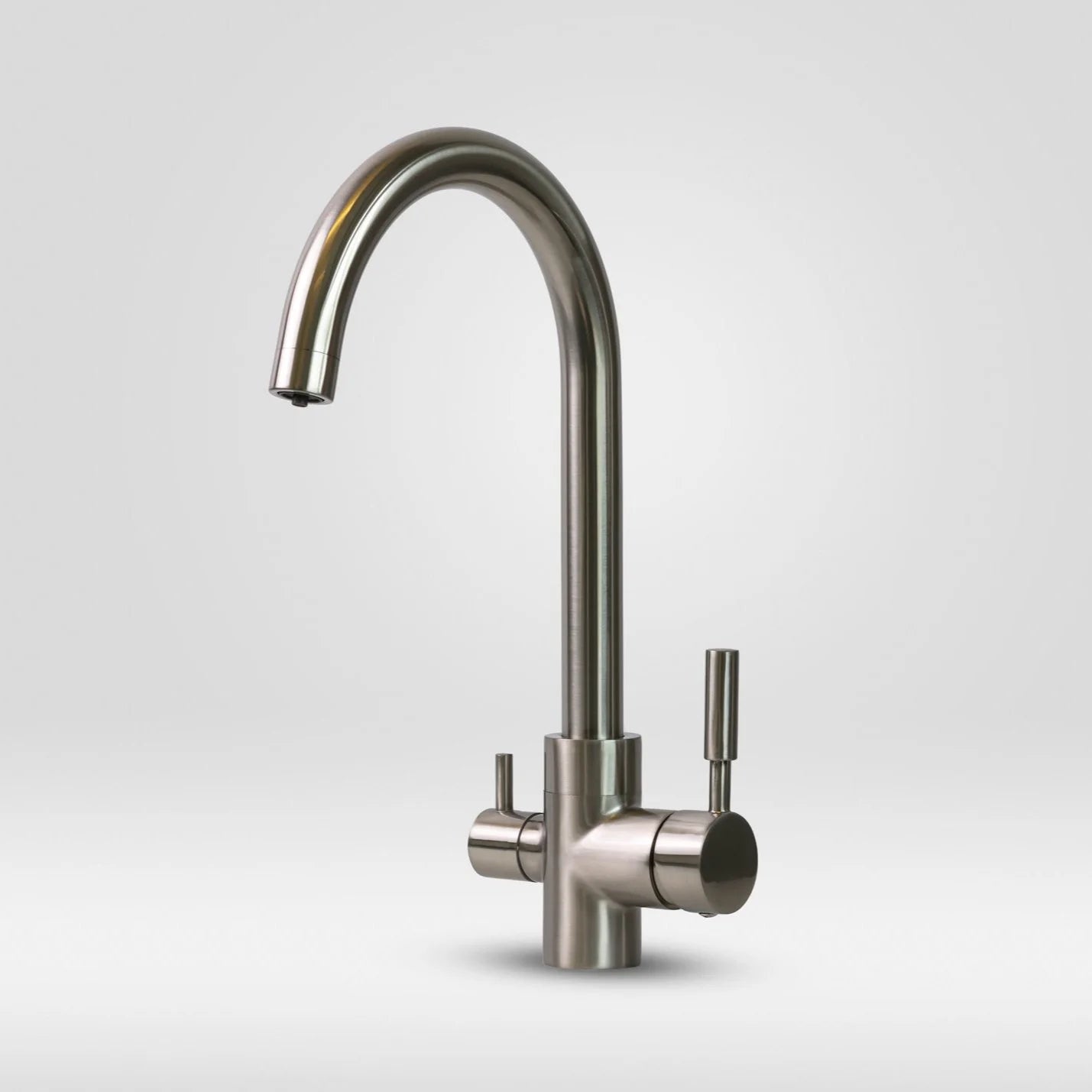
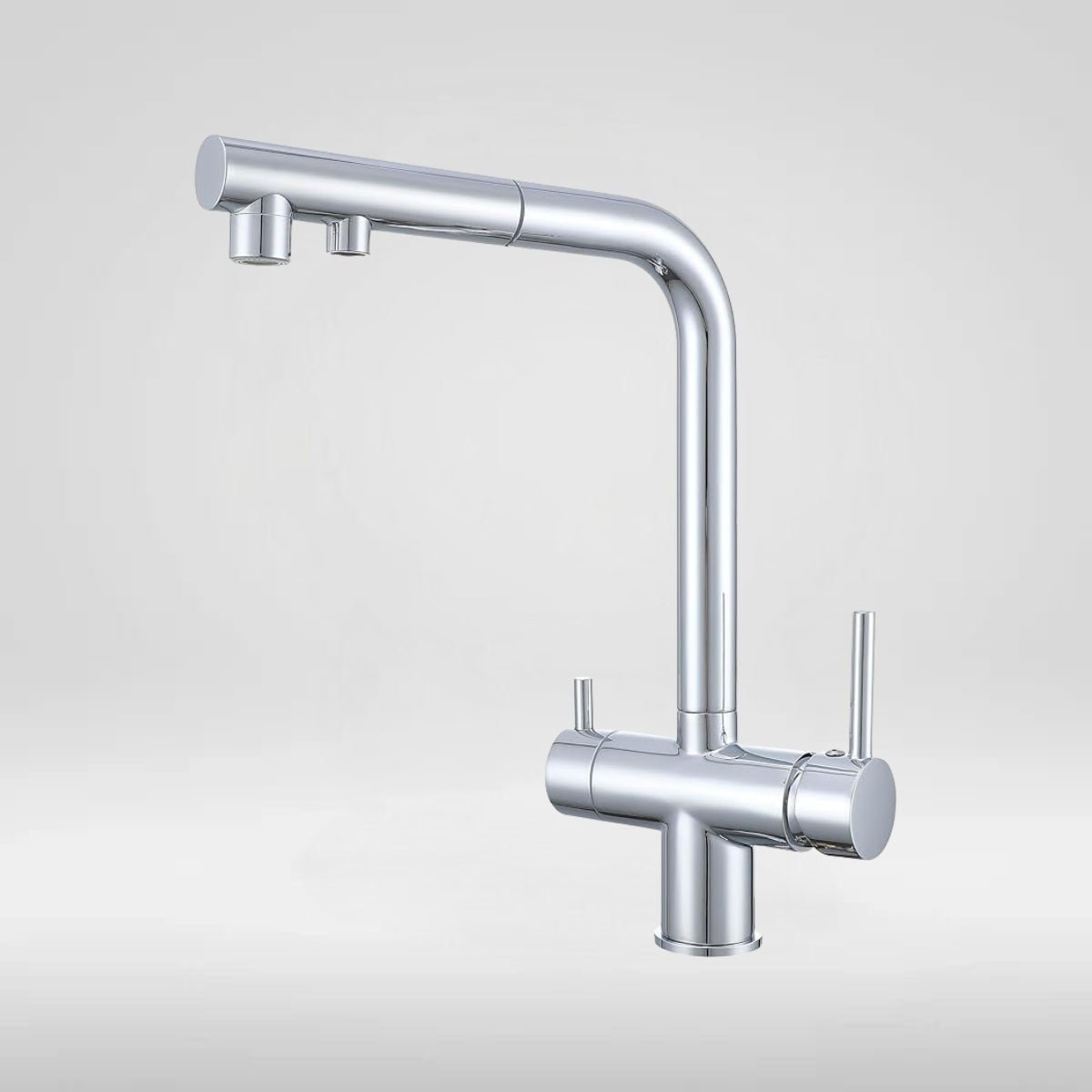
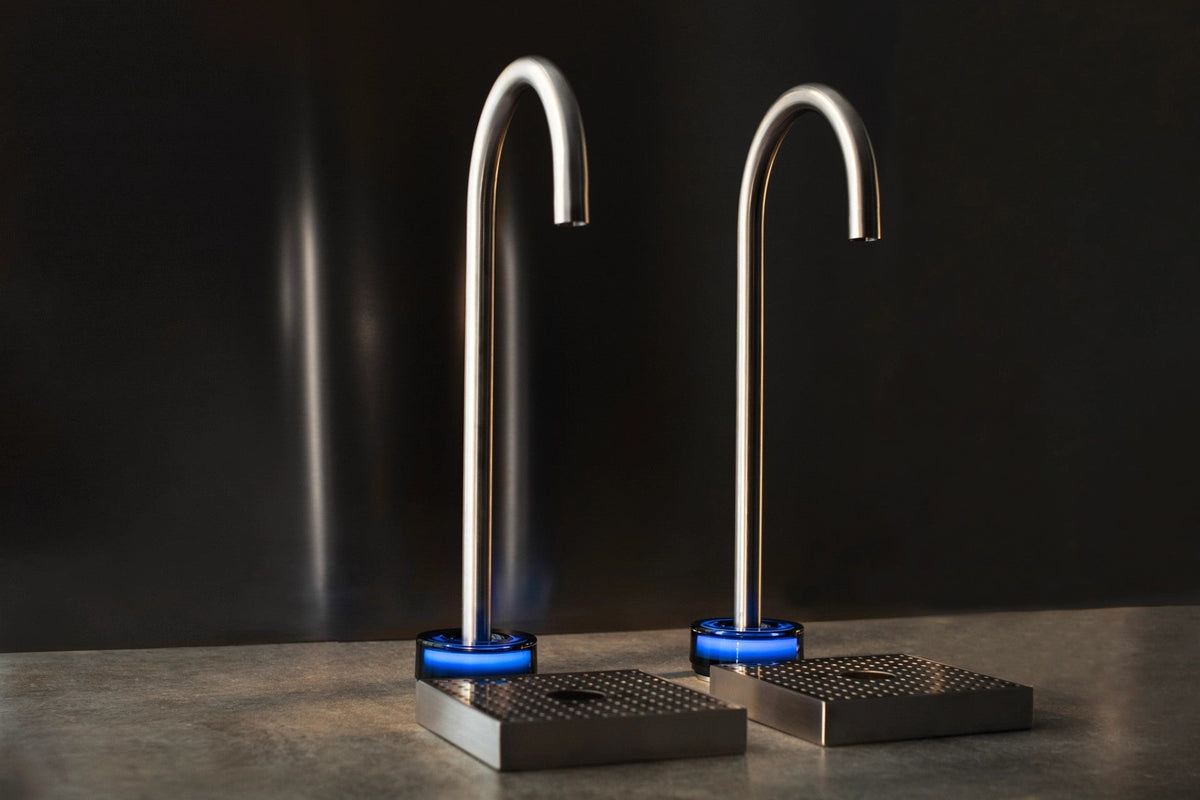
A pure water tap provides filtered water instantly, so you never have to keep a pitcher filled again.
View the pure water taps Ask for free adviceDoes filtering help with storage?
Filtered water does not automatically have a longer shelf life. Filtration removes substances that are already present; it does not add preservatives. In fact, a simple filter pitcher without refrigeration can actually shorten the shelf life, as the filter cartridge itself remains damp and becomes a breeding ground when not used often.
What filtering does do is make storage largely unnecessary. Reverse osmosis forces water through a membrane with pores of approximately 0.0001 microns, blocking up to 99 percent of dissolved substances, from PFAS and microplastics to heavy metals and limescale. Systems that comply with NSF/ANSI 58 are tested precisely for that performance. Because you draw pure water directly from the tap, you no longer need to keep a pitcher filled, and the whole storage question disappears.
Then there is the cost factor. According to Vewin, tap water will cost 2.05 euros per cubic meter excluding taxes in 2026, which is approximately one-fifth of a euro cent per liter. A bottle of spring water from the supermarket is soon hundreds of times more expensive, and according to Milieu Centraal, tap water is also by far the most sustainable drink choice. Those who wish to combine this with filtered water can choose a pure water tap from PureAqua with the filter system included, the Countertop RO with no installation required, or the worry-free subscription of 29 euros per month with a 299 euro start-up fee.
Pay attention to standing tap water: if the tap has been unused for a night or during a holiday, let it run for half a minute until the water feels cold. Buildings from before 1960 may still have lead pipes; according to the RIVM, the standard is 5 micrograms of lead per liter, and standing water increases the concentration.
Are you unsure whether your tap water is good enough to drink without a filter? The complete answer can be found in our overview of the safety and health of Dutch tap water. And if you want to understand how the purification works technically, read on on the page about how reverse osmosis works.
Frequently asked questions
How long can you store drinking water in a jerry can?
In a clean, well-sealable jerry can that you fill to the brim and store in a cool, dark place, you should assume six months. After that, refresh the water. Only use a jerry can suitable for food; a container that has held fuel or cleaning agents can never be made neutral again.
How do you store drinking water for an emergency kit?
Wash your hands first, rinse well-sealable bottles, and fill them to the brim so that as little air as possible remains inside. Seal them immediately, write the date on the bottle, and store them in a cool, dark place. Count on at least 9 liters per person for three days, so 36 liters for a family of four, and refresh the water every six months.
Is it bad if you drink old water?
Usually not. Water that has stood out overnight tastes flat because the oxygen has disappeared, but it is not unsafe. However, be careful if the water is cloudy, smells, or if the bottle is visibly dirty or coated. If so, discard it and rinse the bottle with hot water and dish soap.
How long does drinking water stay good?
In a well-sealed, clean bottle in the refrigerator, tap water stays good for up to seven days. An open glass or pitcher should be consumed within a day. An emergency supply in sealed bottles or jerry cans should be refreshed every six months. Unopened bottled water from the store stays good until the expiration date on the label.
Can you drink 20-year-old bottled water?
Water itself does not spoil, so an unopened bottle from twenty years ago is theoretically still drinkable. In practice, the packaging is the problem: plastic becomes porous, caps lose their seal, and the taste absorbs substances from the bottle. The expiration date on the bottle refers to the taste and packaging, not the spoilage of the water.
Can I store tap water for 6 months?
Yes, provided you do it correctly. Drinking water companies advise refreshing stored tap water after six months. This only works with clean bottles filled to the brim, sealed immediately, and stored in a cool, dark place. For water you drink daily, maintain a much shorter timeframe: a maximum of one week in the refrigerator.
Does filtered water stay good longer than regular tap water?
No. Filtering removes substances but does not add preservatives, so the storage periods remain the same. A filter pitcher that is rarely used can even shorten the shelf life because the cartridge remains moist. The advantage of a filter system on the tap is precisely that you always draw fresh water and do not have to store anything.
Conclusion
Tap water does not spoil, but the bottle determines how long it stays tasty and hygienic. For daily use: an open pitcher for one day, a closed bottle in the refrigerator for up to seven days. For an emergency supply: six months, provided you fill it hygienically to the brim, seal it immediately, and store it in a cool, dark place. Mixing up those two timeframes is the only real pitfall.
Those who prefer to skip storage entirely can simply draw fresh water at the moment of use. At PureAqua, we notice that customers who switch to a pure water tap set aside their pitchers within a week: the water is instantly cold, pure, and delicious, without plastic bottles and without planning. Drink different.
Pure water from your own tap
Tailored advice, installation by a specialist, and a 100-day trial period. We are happy to help you think it through.
Request free advice View the taps