Reading time: approximately 10 minutes
Short answer
You can generally drink tap water throughout almost the entire European Union. All member states are subject to the same European Drinking Water Directive, with standards that meet or exceed WHO recommendations. Just watch out for signs saying "non-potable water," on campsites and in homes with private wells, and for the first sips from a pipe that has been stagnant for a long time. This guarantee does not apply outside the EU: follow local advice there.
In this article
- What does drinkable tap water mean?
- Why tap water is safe almost everywhere in the EU
- Tap water by country: what applies where
- The signs you need to know
- Why foreign tap water tastes different
- When you are better off not drinking the tap water
- With a baby or during pregnancy
- Outside the EU: what is the situation there?
- What works on the road and what works at home
- Back home: how clean is Dutch tap water?
- Frequently asked questions
- Conclusion
What does drinkable tap water mean?
Definition
Drinkable tap water is water that is legally intended for human consumption and that meets established threshold values for bacteria, chemical substances, and materials in the distribution network. Therefore, drinkable means safe, not automatically low in lime or pleasant to the taste.
That distinction explains almost all the confusion on vacation. Water that is officially drinkable can smell of chlorine, be quite hard (high in lime), or simply taste different than what you are used to at home. That says nothing about the safety, but everything about the source and the purification method. At PureAqua, we hear that question every spring from customers who have just booked a camping trip: is it safe, or does it just taste different?
Why tap water is safe almost everywhere in the EU
Within the European Union, drinking water is not a matter of making separate agreements per country. The revised European Drinking Water Directive (Directive (EU) 2020/2184) applies to all water supplied for domestic use and food production, whether it comes from a tap, a tanker truck, or a bottle. The directive entered into force on January 12, 2021, and member states had to transpose it into national law by January 12, 2023 at the latest.
Two things make that directive relevant for you as a traveler. First, the safety thresholds are at or above the recommendations of the World Health Organization. Second, the directive explicitly identifies modern contaminants such as PFAS, microplastics, and endocrine disruptors, and obliges water companies to take a risk-based approach rather than just measuring after the fact. The revision came after the European Citizens' Initiative "Right2Water," which gathered 1.8 million signatures.
Practically, this means: if you travel within the EU, in principle you drink water that must meet the same minimum standards as at home. The differences lie in the source, the hardness, and the disinfection method, not in whether the water is safe.
Tap water by country: what applies where
The table below is intentionally not a ranking. It shows which legal framework applies and what to watch out for in practice. For every EU country, the starting point is the same: the tap water is intended for drinking unless stated otherwise locally.
| Destination | Falls under the EU Drinking Water Directive | Drink tap water | What to look out for |
|---|---|---|---|
| France | Yes | Yes, unless a sign says otherwise | "eau non potable" sign, private well on small campsites, chlorine taste in urban networks |
| Belgium | Yes | Yes | Vacation homes with private wells, water that has sat for a long time in second homes |
| Germany | Yes | Yes | "kein Trinkwasser" sign, old installations in historic buildings |
| Austria | Yes | Yes | Mountain huts with private well sources |
| Italy | Yes | Yes | "acqua non potabile" sign at public fountains, hard water in parts of the country |
| Spain | Yes | Yes | "agua no potable" sign, desalinated water on islands tastes different |
| Portugal | Yes | Yes | Remote accommodations with private sources |
| Greece | Yes | Yes on the mainland; check locally on small islands | Islands more often work with private sources or desalination |
| Croatia | Yes | Yes | Small coastal towns and boats with private tanks |
| Outside the EU | No | Follow local advice | Different standards and enforcement; worldwide, 27 percent of people do not use a safely managed drinking water service |
The last row is based on figures from the World Health Organization: in 2022, 6 billion people, 73 percent of the world's population, used a safely managed drinking water service. The remaining 2.2 billion people did not, and 1.7 billion used a source contaminated with feces. Within Europe, that problem is small; outside it is not.
The signs you need to know
Public taps, fountains, sanitary facilities, and wash points at campsites are not always connected to the drinking water network. In that case, there will be a sign. These six words are enough to tap safely anywhere in Western Europe:
- French: eau potable is drinkable, eau non potable is not.
- German: Trinkwasser is drinkable, kein Trinkwasser is not.
- Italian: acqua potabile is drinkable, acqua non potabile is not.
- Spanish: agua potable is drinkable, agua no potable is not.
- Portuguese: agua potavel is drinkable, agua nao potavel is not.
- Croatian: pitka voda is drinkable, nije za pice means do not drink.
If there is no sign at a tap in a sanitary building or holiday home, it is highly likely that it is just tap water. If you are in doubt at a small campsite or in a remote house, just ask the manager. Private sources also occur in the Netherlands, for example at campsites, and according to the RIVM (National Institute for Public Health and the Environment), separate rules apply there to ensure safety.
Why foreign tap water tastes different
Chlorine keeps the network safe, but you can taste it
In many European countries, a trace of chlorine is added to drinking water so that it remains safe as it travels through the distribution network. The Netherlands is an exception: the RIVM reports that Dutch tap water contains no chlorine and that its quality is among the best in the world. This explains why a Dutch person in Southern Europe is often the first to notice the "pool" smell. If you leave the water open in a pitcher in the refrigerator for half an hour, a large part of that odor will dissipate.
Lime determines the mouthfeel and your kettle
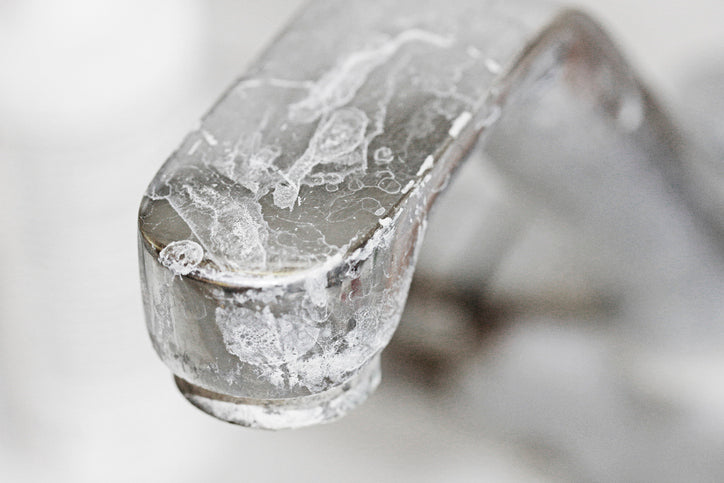
Hardness varies greatly by region because the source varies. According to the RIVM, about 60 percent of Dutch tap water is made from groundwater, the rest from surface water. In areas rich in lime, you will see a white rim in your holiday home's kettle within a week. Lime is not unhealthy, but it makes tea and coffee taste duller. If you want to know how to structurally solve that at home, read about how to remove lime and chlorine from your tap water with a filter tap.
When you are better off not drinking the tap water
The exceptions are roughly the same everywhere in Europe, and they rarely have to do with the country itself:
- There is a sign. Then the tap is simply not connected to the drinking water network.
- The water has sat for a long time. A holiday home that has been empty for weeks has water in the pipes that has warmed up. Let the cold water tap run for half a minute to a full minute until the water is noticeably cold, and use only that water for drinking or cooking.
- The accommodation has a private source or tank. Boats, mountain huts, and small campsites sometimes fall outside the public network.
- The building is old. Lead pipes were installed in the Netherlands until about 1960 and can also still be present in old buildings abroad. According to Milieu Centraal, flushing is a first measure, but replacement is the real solution.
- A boil advisory is in effect. In case of maintenance or a pipe break, a water company may issue a boil advisory; always follow it.
With a baby or during pregnancy
For adults, drinkable EU tap water is simply drinkable. For baby formula, the question is a bit narrower: it's about the composition, not just safety. In a holiday home, always use freshly flushed cold water, never water from the hot tap or from a boiler, and boil it according to the instructions on the baby formula packaging. If you are in doubt about the local source, for example with a private source at a campsite, choose bottled water suitable for infant formula temporarily. This is not a panic reaction, but the same caution you apply at home after the pipes have been stagnant for a long time.
Outside the EU: what is the situation there?
As soon as you leave the European Union, the common safety floor disappears. The WHO warns that microbiological contamination, especially by feces, is the biggest risk for drinking water worldwide, with an estimated 505,000 deaths from diarrhea per year. That figure relates to structural situations in countries without reliable infrastructure, not a week-long city trip, but it does explain why the travel advice outside the EU is standard: drink bottled water or treat the water yourself.
Practically, it boils down to three rules. If you are in doubt about the source, boil the water for at least a minute. Do not have ice cubes of unknown origin. And take care to also rinse your toothbrush with safe water in areas where the tap water is not considered drinking water.
What works on the road and what works at home
Travelers often lump filters together, while every technology does something different. A carbon filter improves taste, a hollow-fiber filter blocks bacteria, and reverse osmosis tackles dissolved substances. The table below compares the options, including what PureAqua provides at home.
| Solution | Where suitable | What it tackles | What it doesn't do | Cost indication |
|---|---|---|---|---|
| Buy bottled water | On the road | Certainty with unknown source | Expensive, lots of plastic, lugging it around | From about 0.25 euros per liter |
| Boil water | On the road | Bacteria, viruses, parasites | No chemical substances, no lime | Energy costs only |
| Filter bottle with carbon filter | On the road | Chlorine taste, odor, particles | No dissolved substances like PFAS | Approx. 20 to 40 euros |
| Survival filter with hollow fibers | Trekking, emergency | Bacteria and protozoa from surface water | No chemistry, no heavy metals | Approx. 30 to 90 euros |
| Countertop reverse osmosis from PureAqua | At home, without installation | Up to approx. 99 percent of PFAS, microplastics, heavy metals, and lime | Cannot be taken on trips | Separate purchase via the webshop |
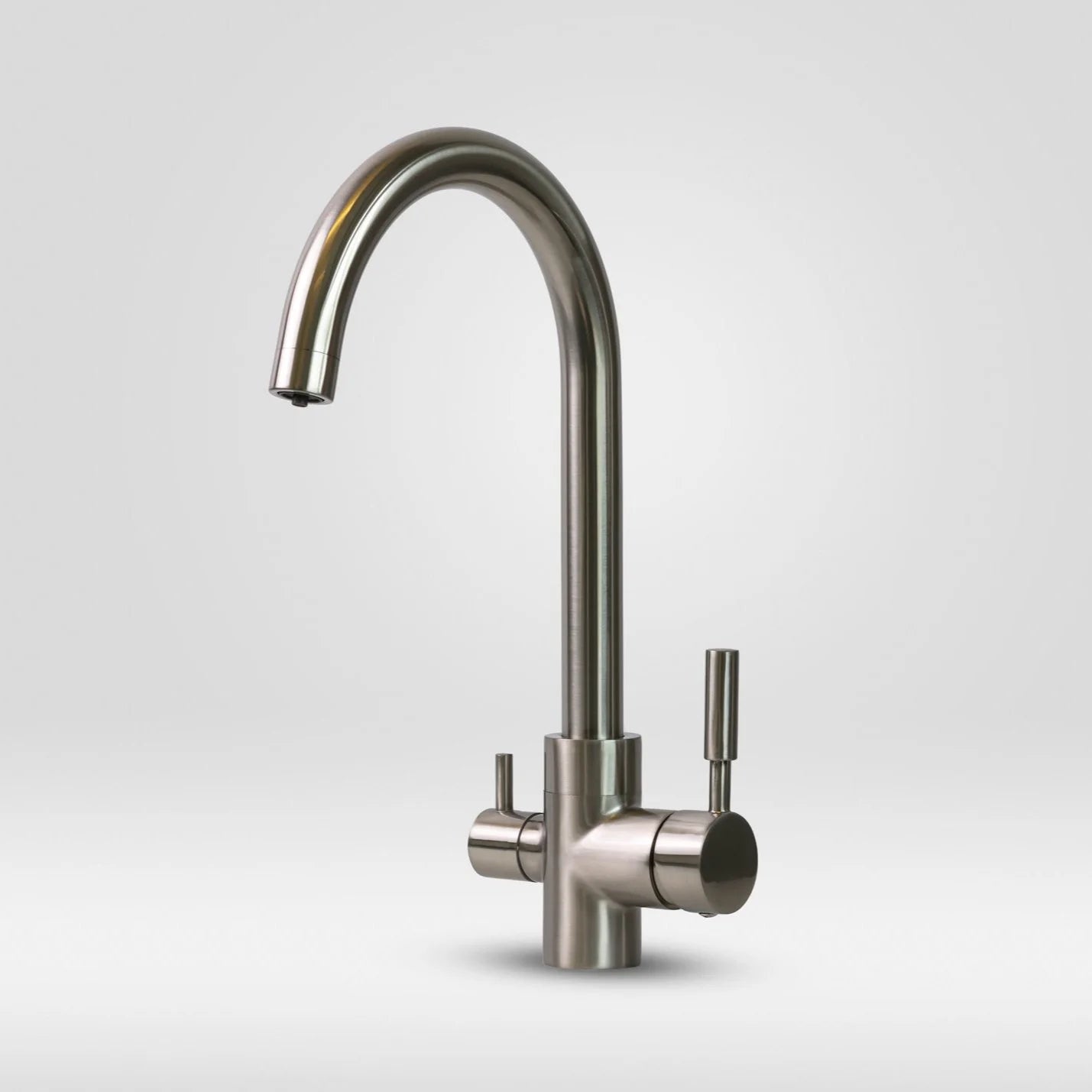
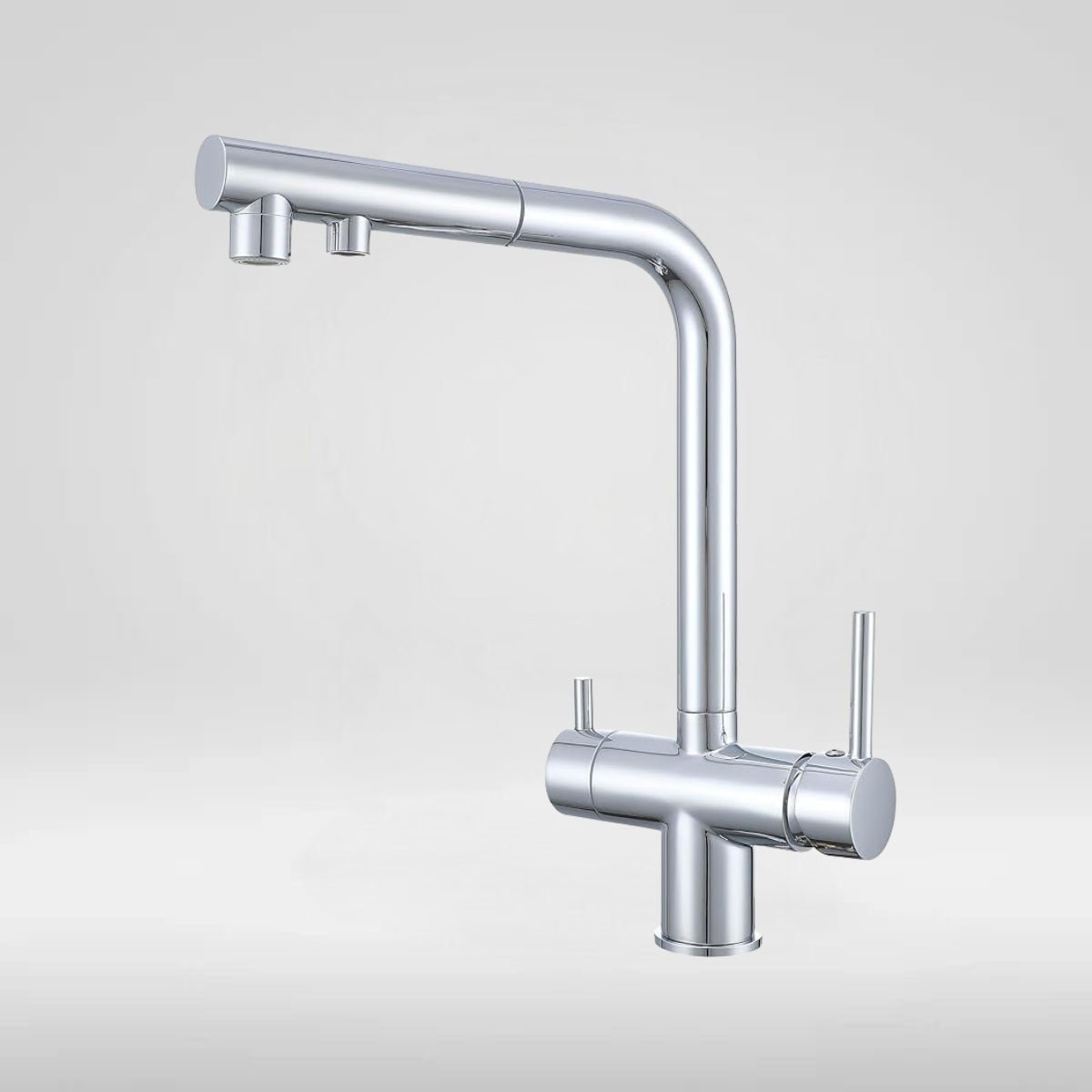
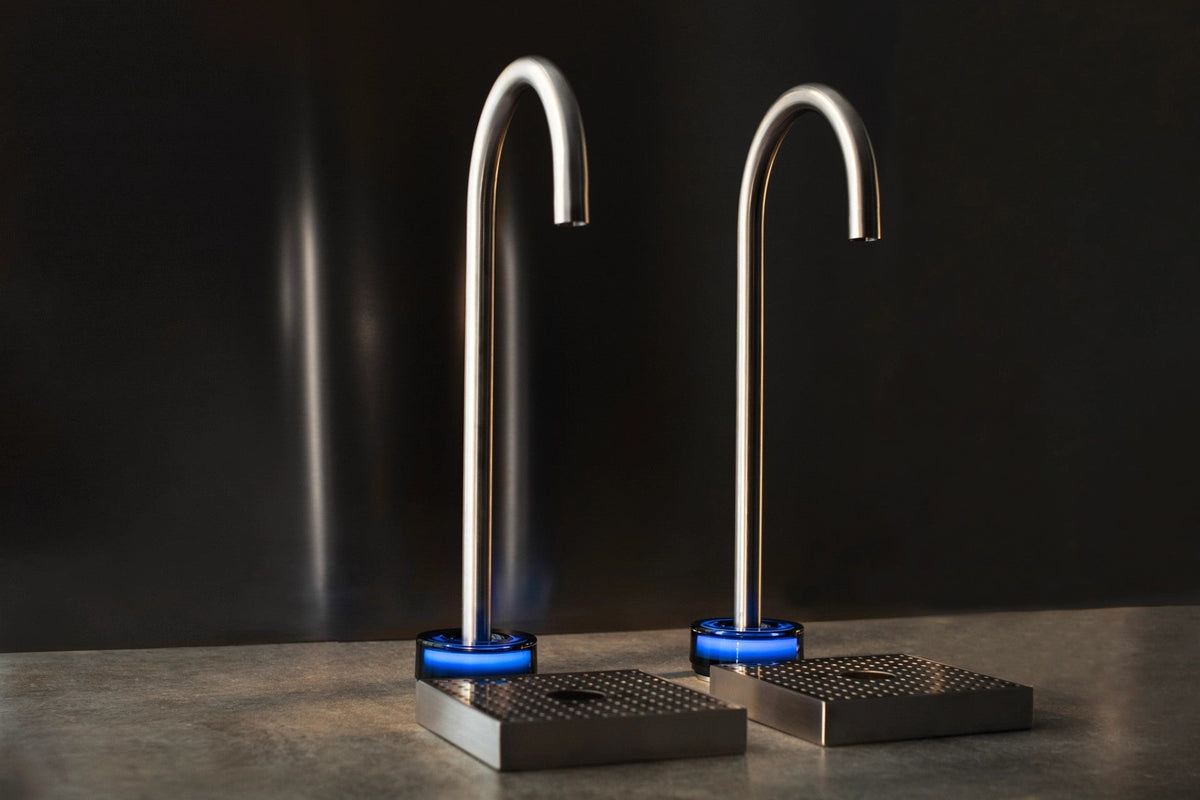
| Pure water tap with The Source | At home, fixed in the kitchen | Same purification, invisible under the counter, optional mineral filter | Requires installation under the sink | Also via the subscription of 29 euros per month with 299 euros in startup costs |
For home use: reverse osmosis is the only technique in this list that blocks dissolved substances at a molecular level. There is an international standard for this type of system, NSF/ANSI 58, with established test procedures for removal claims. If you are not sure which technique is right for your situation, our comparison of water filter pitchers, filter taps, and osmosis systems will help you further. If you would rather know what you can do with that water first, read about the applications of osmosis water in and around the home.
Back home: how clean is Dutch tap water?
Dutch tap water is among the most closely monitored in the world. According to Vewin, the association of water utility companies, drinking water in the Netherlands is monitored more strictly than food products, and it meets quality standards in 99.9 percent of measurements. Nevertheless, a group of substances remains that meet the standards but are still present in the water, such as PFAS. The RIVM concluded that PFAS concentrations in drinking water derived from river water need to decrease because people are already ingesting too much through food and drinking water combined.
That is precisely the gap where a purification step at home adds value. Reverse osmosis presses water through a membrane that stops up to approximately 99 percent of substances, including PFAS, microplastics, heavy metals, and limescale. At PureAqua, we notice that customers look more often for such a solution after a vacation: they have been hauling bottles for two weeks and do not want to do that anymore at home. It is also worth knowing at home how to carry and safely store water instead of leaving a pitcher standing. If you want to get started without any hassle, you can begin with a countertop device without installation, or choose a permanent tap into which the system is invisibly integrated. If you are doubting between a boiling water tap and a purified variant, our article on which functions a fourth channel does and does not filter explains the difference.
Never haul bottles again at home
Pure water from your own tap, with a 100-day trial and 2-year all-in warranty.
View the pure water taps View the Countertop ROFrequently asked questions
Is it safe to drink tap water in France?
Yes. France is subject to the European Drinking Water Directive 2020/2184, so the tap water must meet the same minimum standards as in the Netherlands. Exceptions are taps marked with "eau non potable" (non-potable water), accommodations with their own well, and water that has been standing still for a long time. In the latter case, let the cold water tap run for a moment first.
Why can't you drink from the tap in France?
That image is usually incorrect. French tap water is, in principle, drinking water; the assumption mainly comes from the chlorine taste, the limescale-rich water in some regions, and the many "eau non potable" signs at fountains and rinsing points not connected to the drinking water network. Only at such a sign, at a private well, or if there is a boil water advisory should you avoid the water.
Which country has the best tap water in Europe?
There is no official European ranking because all EU member states must comply with the same minimum standards. The Netherlands does stand out: according to the RIVM, Dutch tap water contains no chlorine and its quality is among the best in the world, and according to Vewin, 99.9 percent of measurements meet the standards. Differences in taste between countries are mainly due to hardness and disinfection methods.
Why is there chlorine in the water in France?
Chlorine is a disinfectant that keeps the water safe during transport through the pipeline network. Many European countries therefore use a small residual concentration of chlorine. The Netherlands does not: the RIVM reports that Dutch tap water does not contain chlorine. The "swimming pool" smell is therefore a sign of disinfection, not pollution, and largely dissipates if you leave the water in an open pitcher for a little while.
Can Dutch people drink water in France?
Yes, without any special preparation. A Dutch stomach does not need an adjustment period for water that meets European drinking water standards. What you may notice is a different taste due to chlorine or limescale. Complaints after a vacation are more often caused by food, ice cubes of unknown origin, or the heat than by the tap water itself.
Can you drink tap water in Paris?
Yes. Paris is connected to the public drinking water network and is subject to the same European standards. In the city, there are also public drinking water points where you can refill your bottle; even there, pay attention to the distinction between "eau potable" and "eau non potable." The water is often high in limescale and can taste like chlorine, but that does not affect its safety.
May you use foreign tap water for baby formula?
Within the EU, you generally may, provided you use fresh, flushed cold water and follow the preparation instructions for the formula. Never use water from the hot water tap or from a boiler. If you are staying at a place with a private well or if you have doubts about the installation, choose bottled water suitable for infant formula as a temporary solution.
Conclusion
If you are traveling within the European Union, drinking tap water is the most normal thing in the world: the same directive, the same minimum standards, the same obligation to actively manage PFAS and microplastics. What differs is the taste, not the safety. Remember three things: read the sign, flush after the water has been standing still, and inquire about a private well. Outside the EU, you reverse the standard setting and follow the local advice.
And at home? There, the question is not whether the water is safe, but whether you want more than just "safe." Those who want to be permanently rid of the hassle of hauling bottles after two weeks will find their answer in pure water from their own tap. Drink different.
Curious about what is in your tap water?
Our specialists will take a look with you for free and advise you without obligation.
Request free advice View the subscription