Quick answer
The best water filter for your home depends on what you want to achieve. A filter pitcher or filter tap primarily improves taste and odor, a water softener tackles limescale, and a reverse osmosis system purifies most thoroughly, removing up to 99% of unwanted substances such as PFAS, microplastics, and drug residues. If you want pure drinking water while retaining minerals, then reverse osmosis with a mineral filter is the most complete choice.
Table of contents
- Filtering, purifying, and reverse osmosis: what is the difference?
- Why choose a water filter or purifier for your home?
- The main types at a glance
- Benefits of reverse osmosis as the best home water filter
- Points of attention and drawbacks
- Comparison table: options side-by-side
- Buying advice: which is the best water filter for home?
- Frequently asked questions
- Conclusion
Filtering, purifying, and reverse osmosis: what is the difference?
Anyone looking for the best home water filter will quickly come across three terms that are often used interchangeably: filtering, purifying, and softening. They sound the same but have very different effects on your tap water. Understanding the difference is the fastest way to make the right choice. If you want to know first how strictly Dutch tap water is regulated, start there.
A standard water filter, such as a pitcher or a filter tap with activated carbon, primarily blocks chlorine, rust, and taste-impairing substances. A water purifier goes further and also removes finer substances. Reverse osmosis is the most thorough form of purification: it pushes water through a membrane with pores of approximately 0.0001 microns, so fine that up to 99% of dissolved substances are left behind.
Definition
Water filter: a collective term for systems that improve tap water. A simple filter (pitcher or tap) primarily removes taste and chlorine. A water purifier based on reverse osmosis removes up to 99% of unwanted substances such as PFAS, microplastics, and drug residues. A water softener is not a filter, but exclusively removes limescale from the water.
Why choose a water filter or purifier for your home?
Dutch tap water is among the cleanest in the world and easily meets legal standards. Nevertheless, it is not entirely free of unwanted substances. The RIVM (National Institute for Public Health and the Environment) has detected more than 100 different drug residues in drinking water sources, and according to RIVM and Vewin, PFAS are being measured in more and more drinking water areas. Those who want to know what drinking water standards are like outside the Netherlands can find that per country.
Additionally, microplastics are becoming increasingly common, and old lead pipes in homes built before 1960 can release traces of lead. A water filter or water purifier provides an extra purification step between the tap and your glass. You also see immediate practical benefits: fewer bottles to carry, less packaging waste, and often a noticeably fresher taste.
At PureAqua, we see that customers mainly choose a solution that combines pure water with convenience. Delicious water from your own tap, without the hassle of refilling pitchers or lifting crates of water. If you first want to understand what is in your tap water and why filtering makes sense, read why filter water.
The main types at a glance
There are four main types that people mean when searching for the best home water filter. Each type has its own strengths and weaknesses.
Filter pitcher
The cheapest option, often available from 25 to 40 euros. A filter pitcher with activated carbon improves taste and odor and blocks chlorine. Finer substances like PFAS or drug residues are hardly removed, and you have to manually refill the pitcher each time.
Filter tap
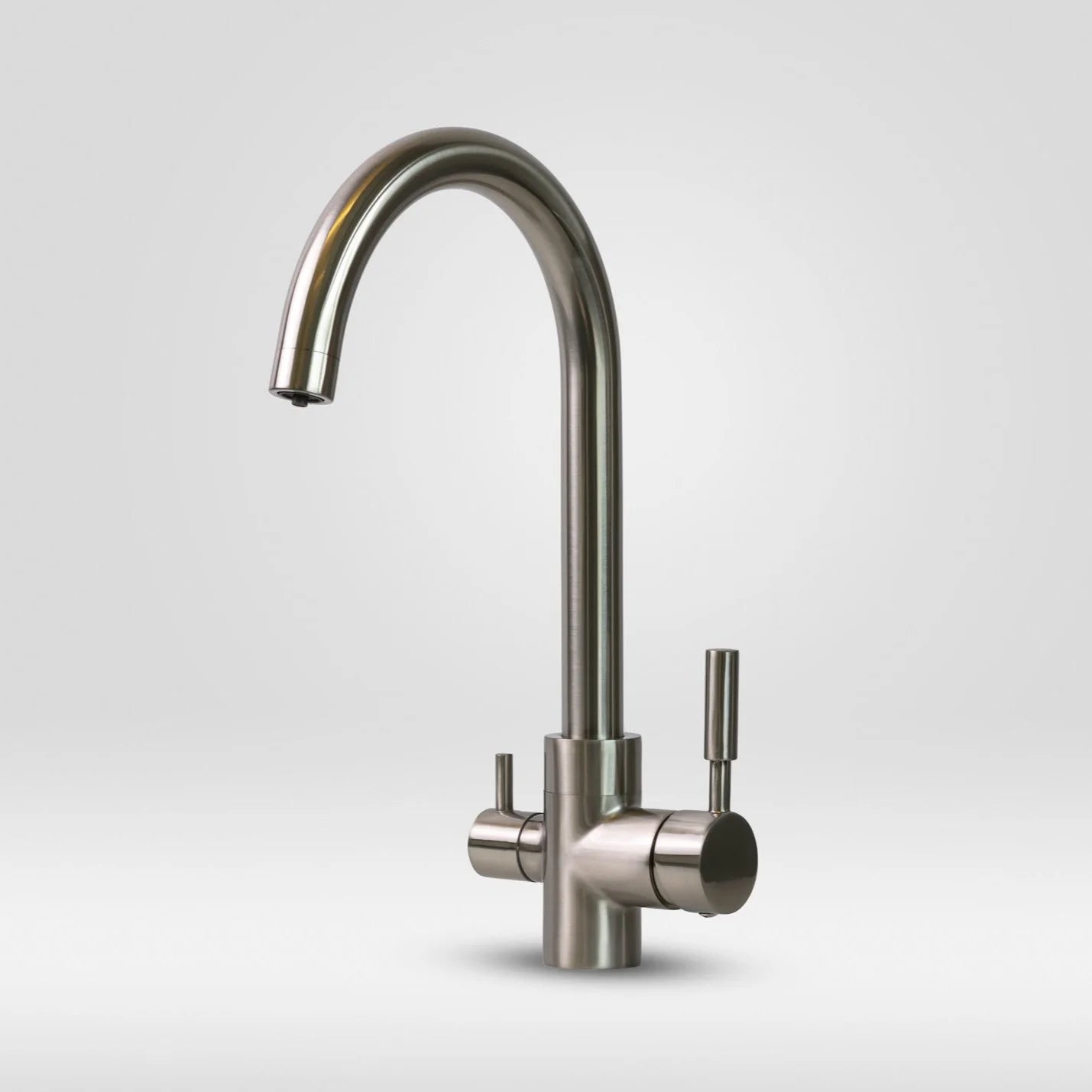
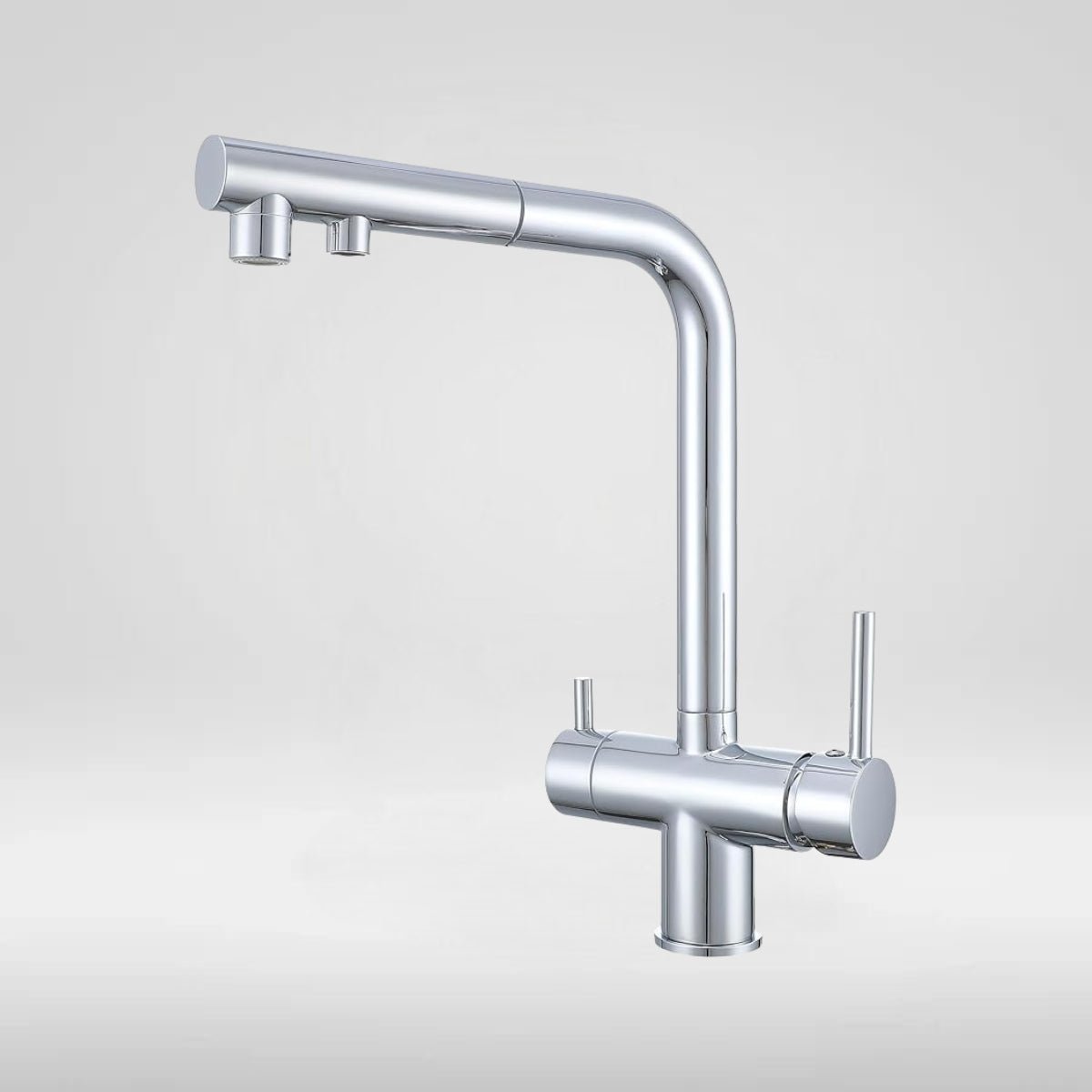
A filter tap or pure-water tap provides filtered water directly from the faucet, without refilling. Depending on the filter, such a tap removes chlorine, particles, and sometimes heavy metals. Read here how such a tap purifies the water while you dispense it. See the possibilities in the pure water taps collection.
Water softener
A water softener is not a filter. It exclusively removes limescale from the water to protect pipes, boilers, and appliances. For pure drinking water, this is not the solution, but it is for limescale in the home. Also see what such a device costs per year in practice. Compare the models in the water softeners collection.
Reverse osmosis
The most thorough form of purification. A reverse osmosis system removes up to 99% of unwanted substances, including PFAS, microplastics, drug residues, and pesticides. At PureAqua, the core system, The Source, works completely without electricity and is tucked away invisibly in the kitchen cabinet. Read how exactly that works on the page how does reverse osmosis work.
Benefits of reverse osmosis as the best home water filter
If you are looking for the most complete solution, reverse osmosis comes out on top in most comparisons as the best home water filter. The most important benefits at a glance:
- Most thorough purification: removes up to 99% of unwanted substances, including PFAS, microplastics, drug residues, and pesticides.
- Minerals are retained: a mineral filter adds calcium and magnesium back for a natural, full flavor.
- Works without electricity: The Source runs on water pressure alone, so it requires no electricity and incurs no additional energy costs.
- Invisible and hassle-free: the system is tucked away under the kitchen sink and dispenses water through a stylish pure-water tap.
- No more pitchers or bottles: unlimited pure water from your own tap saves you from carrying heavy items and reduces packaging waste.
If you want to try osmosis water without a permanent connection, a separate plug-and-play solution is an alternative. For that, check out the pure water device that works directly on the countertop.
Points of attention and drawbacks
No system is perfect for everyone. Consider these points in advance:
- Purchase price: a filter pitcher is cheaper to buy than a complete purification system, although the long-term cost per liter is actually lower.
- Replacing filters: every filter system requires periodic maintenance. The complete The Source filter set consists of three filters and is replaced every 12 months; the set costs 149 euros.
- Adding back minerals: pure osmosis also removes minerals. A mineral filter costing 45 euros solves this and keeps the taste natural.
- Space in the cabinet: a built-in system requires space under the counter, while a filter pitcher requires no installation.
Are you unsure whether you want to tackle limescale or unwanted substances? A water softener protects your home against limescale, while reverse osmosis provides pure drinking water at the tap. The two are not mutually exclusive and are often combined.
Comparison table: options side-by-side
| Solution | What does it do? | PFAS and drug residues? | Price indication | Best for |
|---|---|---|---|---|
| Filter pitcher | Improves taste, blocks chlorine | Hardly | 25 to 40 euros | Small budget, taste only |
| Filter tap (pure-water tap) | Filtered water directly from tap | Partially, depends on filter | See collection | Convenience without refilling |
| Water softener | Removes limescale from water | No, only limescale | On request | Limescale control in home |
| Reverse osmosis (The Source) | Purifies up to 99% and adds minerals | Yes, up to 99% | See website | Pure drinking water at the tap |
| Bottled water | Ready-to-use, no installation | Varies by brand | Approx. 0.50 euro per liter | Occasional use |
Buying advice: which is the best water filter for home?
If you only want a better taste and have a small budget, a filter pitcher or a simple filter tap will suffice. If you are aiming for truly pure drinking water that removes up to 99% of unwanted substances, a reverse osmosis system is the most complete choice.
If you suffer from limescale in your home, you won't solve that with a drinking water filter, but with a water softener. Many households combine both: a softener for the whole house and an osmosis system for pure water at the kitchen tap. At PureAqua, we help you make that assessment based on your water quality and family size.
Not sure which water filter is right for you?
Discover The Source with a pure-water tap or compare the options at your own pace. 100-day trial period, 2-year all-in warranty, free shipping, and over 950 customers with a 9+ rating. Prefer personal advice first? That is free and obligation-free.
View pure water taps Request free adviceFrequently asked questions
What is the best water filter for home?
For the most complete purification, a reverse osmosis system is the best home water filter, as it removes up to 99% of unwanted substances, including PFAS, microplastics, and drug residues. If you are only looking for a better taste, a filter pitcher or filter tap will suffice. If you want to tackle limescale, choose a water softener.
What is the difference between a water filter and a water purifier?
A simple water filter, such as a pitcher or tap with activated carbon, primarily improves taste and blocks chlorine. A water purifier based on reverse osmosis goes much further and removes up to 99% of dissolved substances. In practice, the terms are used interchangeably, but the difference lies in how thoroughly the water is cleaned.
Does a water filter remove PFAS from tap water?
That strongly depends on the type. A filter pitcher hardly removes PFAS, while a reverse osmosis system removes up to 99% of PFAS and other unwanted substances. According to RIVM and Vewin, PFAS are being measured in more and more drinking water areas, which increases the interest in thorough filtering.
Is a water filter with reverse osmosis healthy?
Pure osmosis also removes minerals from the water. That is why PureAqua adds calcium and magnesium back via a 45-euro mineral filter, so that the water retains a natural, full taste. This way, you benefit from thorough purification without compromising on minerals.
What does a good water filter for home cost?
A filter pitcher costs 25 to 40 euros to purchase, but the filters must be replaced often. With The Source, you replace the complete set of three filters every 12 months; the set costs 149 euros. Calculated per liter, the costs are low compared to bottled water.
Can I combine a water filter with a water softener?
Yes, that is a popular combination. A water softener tackles limescale throughout the house, while a reverse osmosis system provides pure drinking water at the kitchen tap. At PureAqua, we advise you on which combination fits your situation.
Conclusion
The best water filter for your home is the solution that fits your goal. For better taste, a filter pitcher or filter tap is sufficient; for limescale, choose a water softener; and for truly pure drinking water, reverse osmosis is the most thorough route. Such a system removes up to 99% of unwanted substances and keeps the taste natural with a mineral filter.
At PureAqua, we combine that purity with convenience: The Source works without electricity, sits invisibly in your kitchen cabinet, and delivers water through a pure-water tap of your choice. With a 100-day trial and a 2-year all-in warranty, you can experience at your own pace whether it’s right for you.
Ready for pure water from your own tap?
Discover The Source with a pure-water tap or the standalone pure water system. 100-day trial, 2-year all-in warranty, and free shipping in the Netherlands and Belgium. Unsure which system fits your needs? Request free, no-obligation advice.
View the pure water system Request free advice