Reading time: approximately 11 minutes
Short answer
It does not work as a water softener. A magnetic water softener does not lower your water hardness: the calcium and magnesium simply remain in the water and your dH value remains unchanged. At most, a magnetic field can influence how limescale precipitates, which may make the buildup feel looser. If you truly want soft water, you need an ion exchanger that uses salt. If you want pure drinking water, reverse osmosis is the right technology.
In this article
- Does a magnetic water softener work?
- What does such a magnet do to your water?
- Why your water hardness remains the same
- What do standards and drinking water companies say?
- What does a magnetic water softener cost?
- Magnet, ion exchanger, or reverse osmosis
- Do you even need a water softener in the Netherlands?
- Which choice suits your situation?
- Frequently asked questions
- Conclusion
Does a magnetic water softener work?
Not as a softener, but as a limescale inhibitor, and that difference is exactly where the confusion lies. A magnet around your water pipe does not remove calcium and magnesium from the water. If you measure the hardness before and after the device, the meter shows the same number of German degrees of hardness. Nevertheless, in the Netherlands, the term "magnetic water softener" is searched for approximately 390 times per month, according to Google search volumes from August 2026, with a peak of 720 searches in September 2025.
That search query is logical. A magnetic device costs a fraction of a real appliance, you don't need salt, electricity, or a sewer connection, and the product descriptions promise less limescale buildup. The only question is what exactly you are buying.
Definition
A magnetic water softener, also called an anti-limescale magnet, magnetic descaler, or lime converter, is a clamp or small box with permanent magnets or coils that you attach to the water pipe. The water passes through a magnetic field. Nothing is added and nothing is removed, so the amount of scale-forming ions in the water remains exactly the same. Only the way in which limescale precipitates is said to change.
Are you doubting whether softening is useful for your home?
We will take a look at your water hardness, your utility cupboard, and your consumption, and tell you honestly if you don't need it.
View the water softeners Ask for free adviceWhat does such a magnet do to your water?
The claim behind every magnetic device is that the magnetic field changes the crystal form of limescale. Calcium carbonate would then precipitate less as hard, adhering calcite and more as loose, powdery particles that flow along with the water. The result would be: less hard buildup on your heating element, and deposits that are easier to wipe away.
When reading product descriptions, pay attention to the wording. Serious providers write "reduces limescale buildup" or "less limescale." They do not write "lowers your water hardness by x dH," because that does not happen. That difference in language is the quickest way to see what an appliance actually promises.
What you notice in practice
Users report mixed experiences, and that is the core problem: limescale buildup depends on temperature, flow rate, pipe material, and how often you clean. Anyone who simultaneously lowers their boiler temperature or descals more frequently when purchasing a magnetic device sees improvement that has nothing to do with the magnet. Without a measurement before and after, in the same place and under the same conditions, no conclusion can be drawn.
What is objectively certain: not a single gram of limescale disappears from your water. Everything that comes out of your tap still comes out. If you want to understand how ion exchange actually removes calcium and magnesium from your tap water, you will immediately see why a magnet does something fundamentally different.
Why your water hardness remains the same
The definition of softening leaves little room for doubt. The Flemish Environment Agency describes it as follows: "A water softener removes calcium and magnesium from the water, which can limit limescale buildup in your household appliances." If you do not remove these two ions, you are not softening. You are, at best, changing their behavior.
The international performance standard also aligns with this. NSF/ANSI 44, the standard for residential water softeners, deals exclusively with cation exchangers that regenerate with sodium or potassium chloride and thus lower the hardness caused by calcium and magnesium. There is no comparable performance standard for magnetic devices against which a manufacturer must demonstrate their softening result. That is not a detail: it means there is no independent benchmark against which such devices are tested.
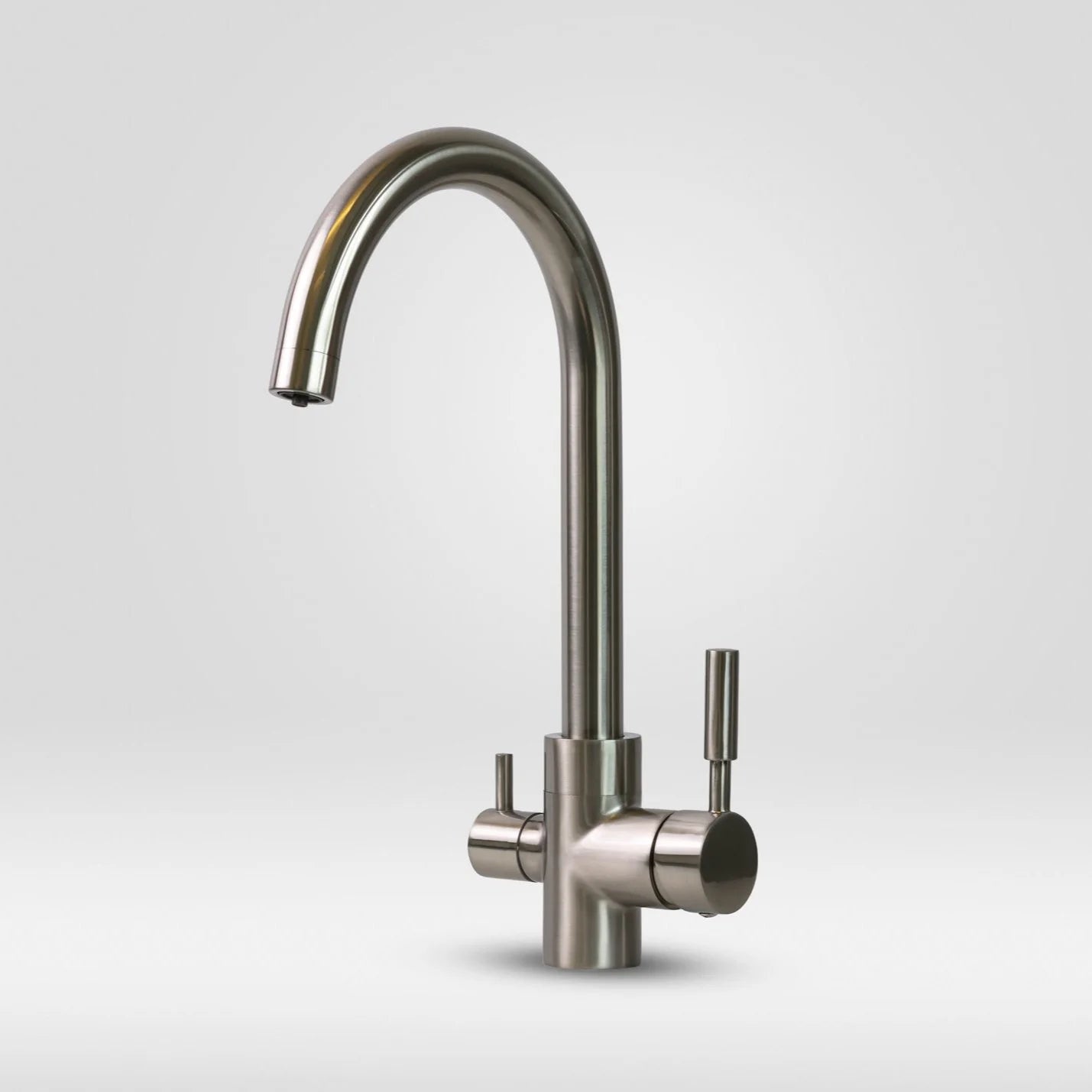
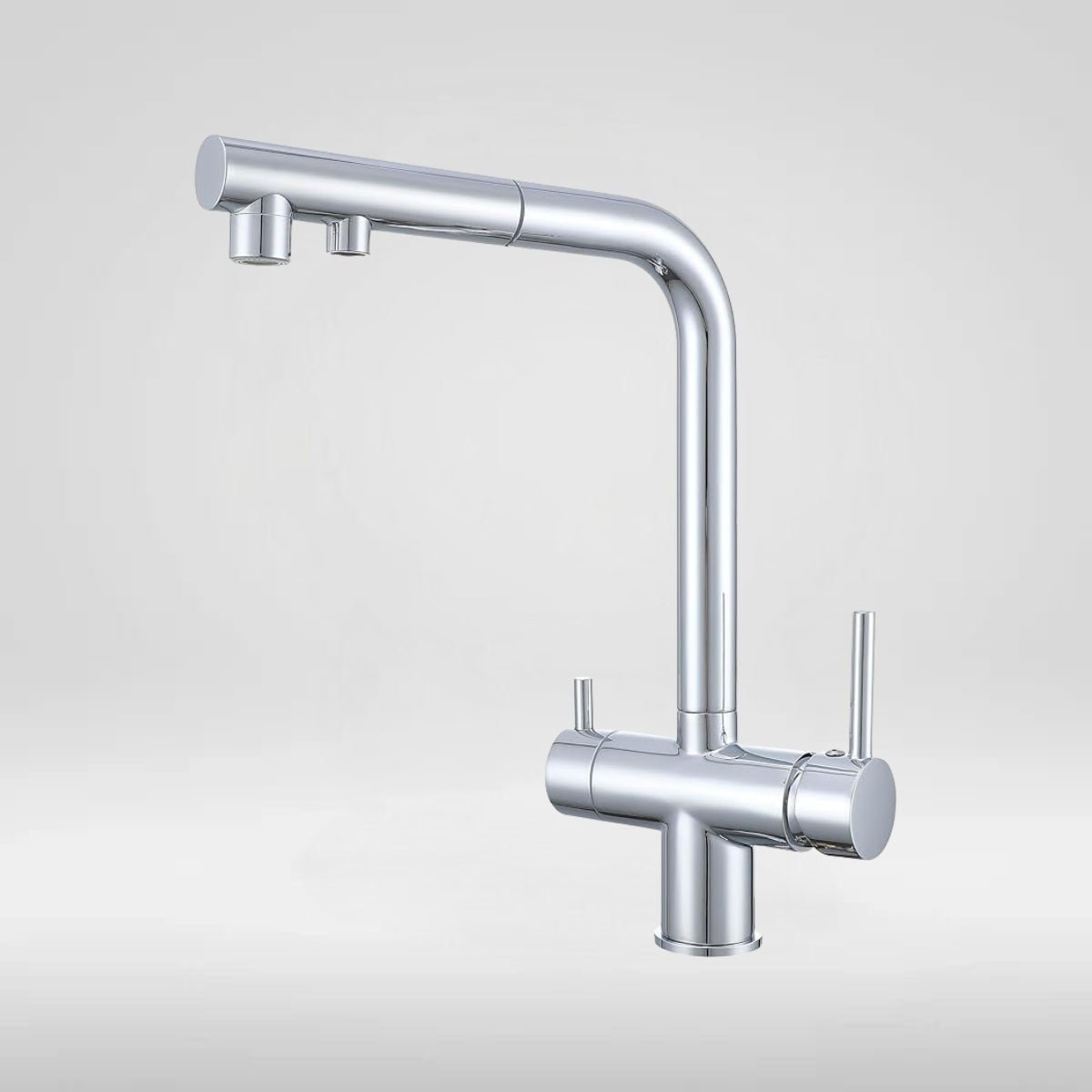
For drinking water, the same distinction applies even more sharply. A softener, magnetic or otherwise, is not a drinking water filter. PFAS, heavy metals, and medication residues simply pass through both a magnet and a resin column. For that, you need reverse osmosis, the technology behind NSF/ANSI 58. The PureAqua system The Source filters up to approximately 99 percent of items including PFAS, microplastics, heavy metals, and limescale from your drinking water.
What do standards and drinking water companies say?
Dutch drinking water companies are remarkably sober about softening in general. Vitens states that the hardness of Dutch tap water is around 8 dH, which amounts to soft to moderately hard, and refers to the Consumers' Association (Consumentenbond) with the conclusion that a water softener is unnecessary.
Vitens also sets strict requirements for appliances that you do install: a water softener must have a Kiwa Water Mark certificate or another government-recognized quality statement. An appliance with automatic regeneration should be fitted with a CA non-return valve, and an appliance with replaceable filters should have an EA non-return valve. If you supply softened water to third parties via a shared pipe network, the hardness must not drop below the legal standard of 5.6 dH. That is a concrete checklist against which you can evaluate any offer.
The hardness limit that many sellers talk around
Waternet is explicit about this: water is considered moderately hard between 8 and 12 degrees dH, and only hard above 12 dH. The drinking water in Amsterdam and its surrounding area is 7.8 dH. Waternet explicitly adds: "Manufacturers of water softeners often state on their websites that water is already hard above 4 dH. This is incorrect." Anyone selling a magnetic device with the argument that your water is "already hard" at 6 dH is using a threshold that the water company itself rejects.
Milieu Centraal arrives at the same conclusion and reports that nearly two-thirds of municipalities have soft water: "Hard water almost never comes out of the tap." Milieu Centraal generally considers self-softening unnecessary, noting that it also carries risks, because harmful substances can dissolve in very soft water and detergents may not work as effectively.
What does a magnetic water softener cost?
Prices vary widely, and that in itself says something. In the Dutch shopping results of August 2026 for the search term "magnetic water softener," there are eight products with prices ranging from 16.95 euros to 139 euros. Below is the full list as it was shown at that time.
| Product | Shown price | Provider |
|---|---|---|
| FlowMag 2500 | 16.95 euros | bol.com |
| WOLFF MOUNT | 34.95 euros | bol.com |
| Aquamag 7000 | 39.00 euros | bol.com |
| Magiko Apollo | 49.92 euros | VergelijkEven.nl |
| The King | 89.00 euros | Water-Ontharder.nl |
| Alpwater eco | 99.00 euros | bol.com |
| Amas Organics | 129.00 euros | Amas Organics |
| Amfa4000 | 139.00 euros | Waterontharder.com |
A difference of more than eight times between the cheapest and the most expensive device, while they all claim the same principle, is striking. For appliances with a demonstrably measurable effect, the price is related to capacity, amount of resin or membrane, and maintenance. For magnetic devices, this relationship largely disappears.
Compare this to the other extreme. A full-fledged ion exchanger costs 1,699 euros for the Joep and 2,348 euros for the AquaCell at PureAqua, and in return you get a device that actually lowers your hardness and lasts for years. In our article on the total costs of softening over several years, you can calculate the purchase price plus salt and maintenance in full.
Magnet, ion exchanger, or reverse osmosis
Three technologies, three different problems. They are not competitors; they simply do different things.
| Feature | Magnet or lime converter | Ion exchanger with salt | Reverse osmosis |
|---|---|---|---|
| What it does | Influences how limescale precipitates | Exchanges calcium and magnesium for sodium | Presses water through a membrane |
| Effect on hardness in dH | None | Measurably lowers hardness | Almost entirely gone in the drinking water |
| Works throughout the house | Only after the point of installation | Yes, after the water meter | No, only at the tap point |
| Removes PFAS and heavy metals | No | No | Yes, up to approximately 99 percent |
| Needs salt, electricity, or drain | None of these | Salt and a sewer connection | Rinse water to the drain |
| Recognized performance standard | None | NSF/ANSI 44, Kiwa Water Mark | NSF/ANSI 58 |
| Price indication | 16.95 to 139 euros | 1,699 to 2,348 euros at PureAqua | From a pure water tap or 29 euros per month |
At PureAqua, we see that customers who come to us with a limescale query often actually have two desires: less buildup in the bathroom and tastier, cleaner drinking water. These are two solutions. The softener tackles the pipes and appliances, while the pure water tap tackles what you drink and cook with. Those who want both combine them; those who have to choose start with the problem that bothers them the most.
Prefer pure drinking water over a magnetic device?
With reverse osmosis, you actually remove something measurable from your water: from limescale to PFAS. Drink different.
View the pure water taps View the Countertop RODo you even need a water softener in the Netherlands?
That is the question that comes before choosing a technology, and the honest answer is: often not. With a national average around 8 dH, the majority of Dutch households are below the 12 dH threshold above which water is considered hard. The Flemish Environment Agency writes that a softener is usually unnecessary and that the purchase may only be useful in cases of very hard water.
There are cheaper measures that are demonstrably effective. By keeping the temperature in household appliances below 60 degrees, the VMM explains, you sufficiently limit limescale deposits and wear and tear. That only costs you a turn of your boiler’s thermostat.
Moreover, there is a lower limit. Water that is too soft, below 10 French degrees, corrodes metal pipes, allowing copper, zinc, and lead to dissolve into your water. Softening to zero is therefore not a goal, and it is one of the reasons why drinking water companies are cautious. Anyone who wants to see the drawbacks in full can find them in our overview of the downsides associated with softening.
Start with one number
Request your water hardness from your drinking water company, by zip code. If you are below 8 dH, the benefit of softening is small, and filtering for your drinking water will be more rewarding. If you are above 12 dH, you will notice it daily in your glassware, sanitary fixtures, and heating element, and a true ion exchanger is the logical step. If you are in between, it is a matter of comfort, not a necessity.
Which choice fits your situation?
Hard water above 12 dH, family, space by the water meter
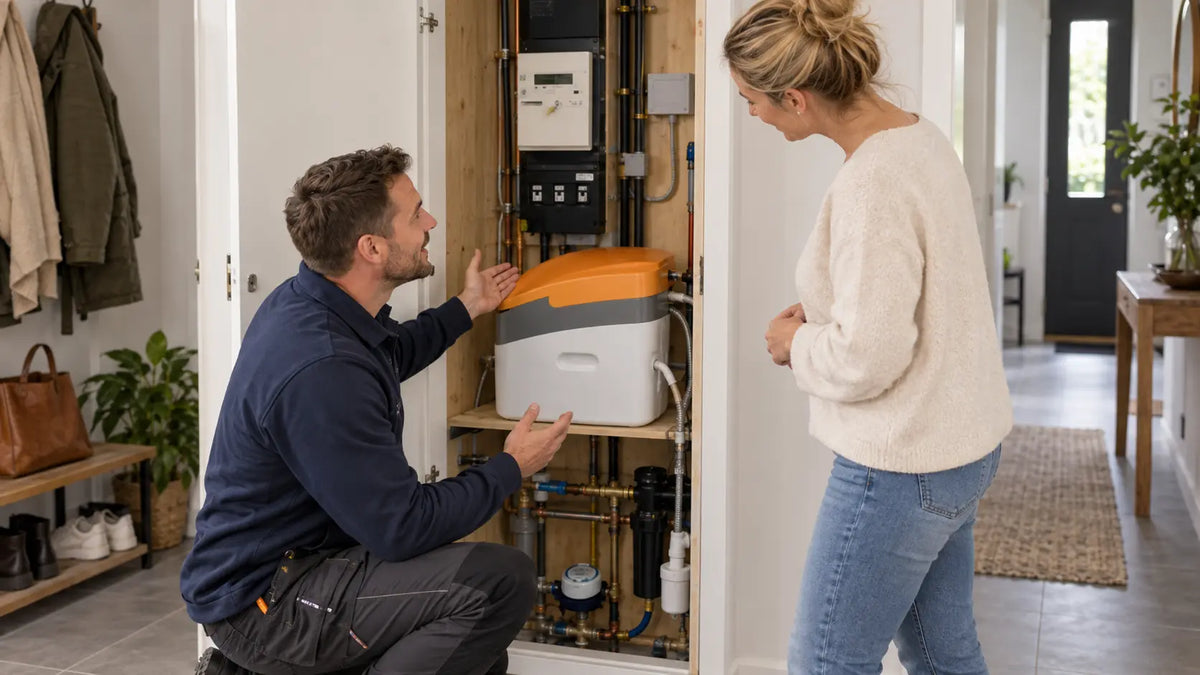
Choose an ion exchanger with salt. The AquaCell for 2,348 euros works hydraulically and thus without electricity, which makes it suitable for meter cupboards without a power outlet. If you have a smaller household or are looking for a lower entry point, the Joep for 1,699 euros is more logical. Which criteria you should weigh against each other is explained in our guide on the figures you should really use to compare appliances.
No drain, no power outlet, limited space
This is the situation where a magnetic device seems attractive, precisely because it requires no connection. The honest trade-off is: do you accept that your hardness remains the same, or do you resolve the connection issue? An extended drain or a small wastewater pump is more often feasible than people think. We previously described what to do if there is no sewer connection near your water meter, including the variants that work without salt.
Your concern is primarily your drinking water
Then softening is simply the wrong tool. A softener does not change anything regarding PFAS, pharmaceutical residues, or heavy metals. A reverse osmosis system behind a purified water tap does, and the Countertop RO does that even without installation, right on the countertop. If you want everything including filters, installation, and maintenance in one amount, there is the "Carefree Pure Water" subscription of 29 euros per month with 299 euros in startup costs. The distinction between softening and filtering, and why you shouldn't confuse them, has been detailed in our article on appliances with and without salt.
Frequently asked questions
Is a magnetic water softener any good?
Sometimes useful as an anti-limescale aid, but not as a water softener. The device does not lower your water hardness: calcium and magnesium remain in the water, so your dH value does not change. There is also no recognized performance standard by which a manufacturer must demonstrate softening results, whereas one does exist for ion exchangers in the form of NSF/ANSI 44 and the Kiwa Water Mark. Expect at most that limescale might feel looser, not soft water.
Can I soften water with a magnet?
No. By definition, softening means that calcium and magnesium are removed from the water, as the Flemish Environment Agency (VMM) describes. A magnet adds nothing and removes nothing, so those ions remain present. The magnetic field can at most influence the crystal form in which limescale precipitates. If you measure the hardness before and after the device, you will read the same number of German degrees of hardness.
Which water softener really works?
An ion exchanger with salt. The water flows through resin beads that capture calcium and magnesium and give sodium in return, after which the device flushes itself with a salt solution. That is also the technology covered by the NSF/ANSI 44 standard. Vitens also requires a Kiwa Water Mark certificate or another government-recognized quality declaration, plus the correct check valve: a CA check valve for automatic regeneration and an EA check valve for replaceable filters.
How does a water softener work without electricity?
Hydraulically. Instead of an electronic timer or sensor, the water flow itself triggers the regeneration: the device counts the flow mechanically and starts flushing as soon as the resin is saturated. That is how PureAqua’s AquaCell works, which allows it to fit into meter cupboards without a power outlet while delivering soft water 24 hours a day. A drain for the flush water remains necessary, as the dissolved limescale must be sent to the sewer.
Is 100% limescale-free water healthy?
Completely limescale-free tap water throughout your entire house is not the goal. The Flemish Environment Agency warns that water that is too soft, below 10 French degrees, corrodes metal pipes, allowing copper, zinc, and lead to dissolve. Milieu Centraal notes the same risk and points out that detergents work less effectively in very soft water. For drinking water, it is different: there, limescale-free water via reverse osmosis is indeed pleasant, and a mineral filter can add minerals back for taste.
Has the Consumentenbond recommended a water softener?
No. On its page about water softeners, Vitens refers to the Dutch Consumentenbond with the conclusion that a water softener is not necessary, because the hardness of Dutch tap water is around 8 dH. Milieu Centraal comes to the same judgment and reports that nearly two-thirds of municipalities have soft water. That does not mean that softening never makes sense, but rather that in the Netherlands, it is a choice for comfort and not a health necessity.
Conclusion
A magnetic water softener is not a water softener. It does not lower your hardness, it has no recognized performance standard behind it, and it does not change the quality of your drinking water. What it can do—make limescale feel looser—is enough for some people, especially for 16.95 to 139 euros. But if you buy one, do so with the right expectations.
If you want measurably soft water throughout your entire home, then an ion exchanger with salt is the only technology that delivers on that, and only after you have determined that your hardness is actually above 12 dH. If you want pure drinking water, then reverse osmosis is the answer, and softening has nothing to do with it. If you are in doubt about which of the two applies to you, just ask us; we will also tell you if you don't need anything at all.
Want to know what actually helps in your home?
Tell us your zip code and your concern, and we will tell you whether softening, filtering, or neither is the right step.
Ask for free advice Compare water softeners