




Reading time: approximately 10 minutes
Short answer
In the Netherlands, you simply use cold tap water for baby food. The Netherlands Nutrition Centre (Voedingscentrum) explicitly states that boiling is not necessary: Dutch tap water is safe for your child even without boiling. Do not use warm water from the tap, as pipes release slightly more metals in warm water. There are four situations where you should use bottled water: lead pipes in the house, the first 3 months after installing new pipes or taps, water from a private source or well, and countries with a boil water advisory. If you are unsure about your situation, consult your child health clinic or GP.
In this article
- Which water should you use for baby food?
- Why boiling is not necessary in the Netherlands
- The four situations where you do not use tap water
- Which bottled water is suitable for baby food?
- Comparing the options
- What a water filter or water softener changes
- How to prepare the bottle
- Frequently asked questions
- Conclusion
Definition
Water for baby food is the water used to mix powdered infant formula. It must be microbiologically safe and contain low levels of dissolved substances that a baby struggles to process, particularly nitrate, nitrite, sodium, fluoride, and lead. In the Netherlands, tap water meets these standards by default; for bottled water, the label will indicate whether it meets these requirements.
Which water should you use for baby food?
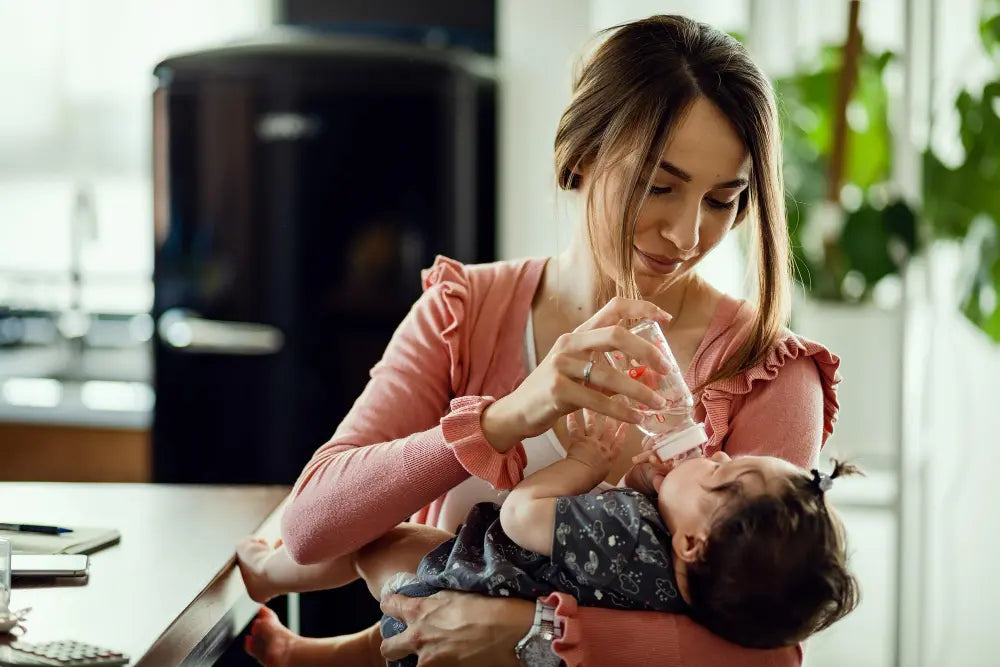
Cold tap water. That is the entire answer for the vast majority of Dutch households, and it is also stated in step 4 of the step-by-step guide from the Netherlands Nutrition Centre: fill the bottle with cold tap water and do not add any powder yet.
Nevertheless, this is one of the most frequently asked questions by young parents, which stems from a conflict between two sets of instructions. Many infant formula packages state that you should boil the water. That instruction is formulated internationally, for markets where tap water is not reliable everywhere. The Nutrition Centre explicitly states that this is not necessary in the Netherlands. So you read two different pieces of advice, and the Dutch advice is the one that applies to your tap.
There is an entire control chain behind this. Vitens states that it takes approximately 200,000 samples per year, about 750 per day in the laboratory, and therefore refers to tap water as the most strictly controlled food product in the Netherlands. The RIVM oversees the legal requirements set out in the Drinking Water Decree. Those who want to read why Dutch tap water meets such strict requirements will find the figures behind those controls there.
One thing you should do differently than for yourself: take water from the cold tap, not the warm one. In the case of warm water, pipes can release slightly more metals. If you have occasionally made a bottle with warm tap water, the Nutrition Centre says this is no cause for concern; it is a habit to adjust, not an incident to worry about.
Are you unsure about the water in your home?
Tell us your home's construction year, your postcode, and whether your pipes have been replaced recently. We will then tell you what is known about your situation and what you can potentially do. Free and without obligation, no sales pitch.
Ask for free advice View the pure water tapsWhy boiling is not necessary in the Netherlands
Boiling does exactly one thing: it kills bacteria, viruses, and parasites. The advice was originally created for that purpose, in countries where the water supply network does not provide that certainty. Dutch drinking water is produced and checked in such a way that this step has become superfluous.
Knowing what boiling does *not* do is at least as important. Dissolved substances remain and become even more concentrated because water evaporates. The Nutrition Centre is unequivocal about lead: boiling water does not help to remove lead. The same applies to nitrate, limescale, and traces of substances like PFAS. Anyone thinking they are solving a water problem with a boiling kettle is only solving a problem that did not exist in the Netherlands.
For babies, the temperature is also important. According to the Nutrition Centre, a bottle should not be warmer than 30 to 35 degrees Celsius, and you should always check the milk with a drop on the inside of your wrist. Water that you boil first still needs to be cooled back down, which makes the preparation take longer without providing any benefit.
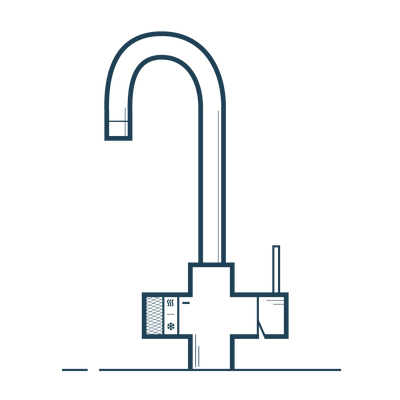
If you have a boiling water tap and want to use it to mix hot with cold water, it is likely safe to use according to the Nutrition Centre, but contact the manufacturer to check if your tap is suitable for this. This is the same line the Nutrition Centre maintains for filters and softeners, and we will return to that later.
The four situations where you do not use tap water
The Nutrition Centre lists four exceptions. They are all easy to recognize, and in three out of four cases, the solution is temporary.
1. Lead pipes in the house
Lead drinking water pipes have been prohibited since 1960, but they are sometimes still found in older houses. Lead slowly dissolves in stagnant water. The advice from the Nutrition Centre for babies, children up to and including age 7, and pregnant women is firm: do not use that water for formula, use bottled water in the meantime, and have the pipes replaced as soon as possible. The RIVM maintains a standard of 5 micrograms per liter for lead and points to buildings from before 1960; Milieu Centraal explains how to recognize them. RIVM research from 2019 showed that pregnant women, formula-fed children, and young children in particular can ingest too much lead through tap water from such pipes.
2. The first 3 months after new pipes or taps
In a newly built home, or after replacing pipes or taps, new materials may release some lead at first. They are not made of lead, but fittings and taps can contain it. The advice applies for 3 months: let the tap run for a bit first. Calculate about 1 liter of water per 5 meters of piping, so for a 10-meter pipe, let 2 liters run out. If you only have a new tap, flushing for 10 seconds is enough. Do not use that initial water for a bottle, but the water after that is fine. Buying bottled water is therefore not necessary in this situation.
3. Water from a private source or well
Never use water from private wells for baby food: it may contain too much nitrate, which is harmful to a baby. The RIVM points out that water from private extraction is the responsibility of the owner and must itself meet the standards of the Drinking Water Decree. Those who want to know the technical requirements for water from a private well can read which steps are necessary before such water can even be called drinking water. For a bottle, the answer remains the same: do not do it.
4. While traveling in countries with a boil water advisory
If the country you are in has an advisory not to drink tap water, boil the water or use bottled water that specifies on the label that it is suitable for preparing baby food. Even in old houses abroad, lead pipes may still exist. This varies greatly by destination, and in our overview, you can read in which countries the tap water is safe to drink without hesitation. A practical tip the Nutrition Centre also provides: if you are returning from a long vacation, let the tap run for a bit before using it again.
Which bottled water is suitable for baby food?
Not every mineral water is suitable, and the brand name says nothing about that. The criterion is on the packaging. The Nutrition Centre puts it this way: mineral water packaging generally indicates whether it is suitable for making baby formula, meaning it contains low levels of nitrate, nitrite, sodium, and fluoride.
In practice, this means three things when you are at the store:
- Look for the explicit mention. If it is not on the bottle that it is suitable for the preparation of infant or baby food, pick a different bottle. This is not a marketing phrase but a claim backed by figures.
- Non-carbonated and low-mineral. Carbonation does not belong in a bottle, and a high mineral content unnecessarily taxes a baby's kidneys.
- Bottled water is not sterile water either. Keep an opened bottle refrigerated and do not store it indefinitely, just as you would with tap water. Our article on storage explains the time limits that apply for water in a closed bottle.
Regarding brands and search queries. Many parents search for a specific brand: is this or that water suitable for baby food. We do not evaluate brands, and there is no need to, because the manufacturer is required to put the composition on the label. The mention on the bottle is the only criterion mentioned by the Nutrition Centre. If a source or composition changes, the label changes with it, unlike a blog post.
Comparing the options
Four types of water end up in a bottle in practice. This is how they relate to one another, including the official stance.
| Type of water | What the Nutrition Centre says about it | What to watch out for | Cost per liter |
|---|---|---|---|
| Cold tap water | Suitable, boiling is not necessary | Always the cold tap; flush for a bit after a long absence | Approximately 0.003 euros at a rate of 2.71 euros per cubic meter |
| Warm tap water | Preferably do not use | Pipes release slightly more metals with warm water | Same as cold water, plus heating costs |
| Boiled tap water | Not necessary in the Netherlands | Kills bacteria, but does not remove lead, nitrate, or limescale | Tap water plus energy, and extra cooling time |
| Bottled water | Necessary with lead pipes, private source, and boil-advisory countries | Label must state: suitable for the preparation of baby food | Several tens of cents per liter, so a multiple of tap water |
| Water from a filter or softener | Ask the manufacturer if your filter is suitable for this | Follow the instructions and replace the filter on time | Tap water plus filter costs |
The drinking water rate in the table comes from Vewin, which estimates the 2026 rate at 2.71 euros per cubic meter including taxes. One thousand liters of tap water therefore cost you less than 3 euros. A family that buys bottled water for half a year purely out of doubt pays a multiple of that without the Nutrition Centre providing any reason for doing so.
What a water filter or water softener changes
As a supplier of water filters, we must tell the honest story here, even where it is not in our favor.
The Nutrition Centre provides one clear piece of advice regarding filters and softeners: if you use a water filter or water softener and want to prepare a bottle, contact the manufacturer to check whether your filter is suitable for that purpose. And: follow the manufacturer's instructions and always replace the filter on time to prevent water contamination. This is not a rejection and not a recommendation; it is a call to inquire. Please do so, regardless of which brand your filter comes from.
When it comes to the question of whether a filter removes lead, the Netherlands Nutrition Centre (Voedingscentrum) is cautious: while there are filters on the market that claim to remove lead from drinking water, it is unknown whether they work and how well, and using such filters increases the risk of bacterial growth. In the case of lead pipes, the official advice is therefore to replace them and use bottled water in the meantime, rather than filtering. We agree with this stance. A filter is no substitute for the removal of lead piping.
So, what is a reverse osmosis system for? Reverse osmosis forces water through a membrane, blocking up to 99 percent of substances such as PFAS, microplastics, heavy metals, and limescale. There is a specific performance standard for this technology, NSF/ANSI 58. At PureAqua, we see that new parents rarely choose it because they have to, but because they wanted tastier, softer water at home anyway, and the bottle is simply part of that. Our page on how reverse osmosis works explains step-by-step what each filter stage does.
However, two things are prerequisites. The first is maintenance: a filter that is left in for too long becomes a risk rather than a solution, and in our article on filter replacement, you can read what signs indicate that a cartridge is exhausted. The second is taste: osmosis water is very low in minerals, which some people find bland. This can be resolved with minerals added back into the water after the membrane. For a baby bottle, this hardly matters, however: the formula itself determines the composition.
And the honest summary of this entire section: in the Netherlands, you do not need a water filter for baby formula. Those who want one choose it for taste, for limescale, or for peace of mind, and should consult the manufacturer regarding its suitability for bottle feeding. If you want to know first what the reasons are for and against filtering water, start there.
Pure water without lugging bottles
With a pure water tap, the filter system is included as standard. Prefer no installation? The pure water device is available for 495 euros for your countertop. And in the 'Carefree Pure Water' subscription, you pay 29 euros per month with 299 euros in start-up costs, including tap, system, filters for one year, and installation.
View the pure water device View the subscriptionHow to prepare the bottle
The water is only half the story. The order and hygiene determine the rest. This is the step-by-step plan from the Nutrition Centre, briefly summarized.
- Wash your hands with soap and ensure the bottle and teat are clean.
- Check the packaging of the formula for the correct amount of water and powder.
- Fill the bottle with cold tap water. No powder yet.
- Heat the water to a maximum of 30 to 35 degrees. In a bottle warmer, in a pan with warm but not boiling water, or in the microwave at a maximum of 600 watts: 25 seconds for 90 milliliters, 35 seconds for 120 milliliters, 45 seconds for 150 milliliters, and 55 seconds for 180 milliliters. Shake gently during and afterwards.
- Add the powder using the scoop from the packaging. No extra scoop and no leveling it off: too much powder makes the feed too concentrated.
- Shake gently until the powder is dissolved.
- Check the temperature with a drop on the inside of your wrist. If it feels the same temperature as your skin, it's right.
- Do not let your child drink for longer than half an hour and discard any leftover milk.
If you want to work ahead, you may: prepare a maximum of 2 bottles in advance, skip the heating, put them immediately at the back of the fridge at 4 degrees, and use them within 8 hours. Do not take a prepared bottle when traveling; take powder in a formula dispenser and hot water in a thermos.
A bottle for a healthy baby does not need to be sterilized. According to the Nutrition Centre, washing in hot soapy water or in the dishwasher on a full cycle is sufficient. If you use an automatic bottle maker, put fresh water in the reservoir every time, as standing water promotes bacterial growth.
When in doubt: ask. If your baby was born prematurely, has a medical condition, or if there are feeding issues, follow the advice of your local health clinic (consultatiebureau), midwife, maternity nurse, or GP. They know your child's situation; an article cannot. This piece only reflects what the Nutrition Centre, RIVM, and water utility companies publish and is not medical advice.
Frequently asked questions
What is the best water for baby formula?
In the Netherlands, cold tap water. The Nutrition Centre states that you do not need to boil it and that unboiled tap water is safe for your child. Use the cold tap, not the hot one, because pipes release slightly more metals with hot water. Only in the case of lead pipes, in the first 3 months after new pipes or taps have been installed, with water from a private well, and in countries with a boiling advisory should you use bottled water labeled as suitable for the preparation of baby food.
Which bottled water is suitable for baby formula?
Bottled water whose packaging states that it is suitable for making formula. According to the Nutrition Centre, this statement means that it contains low amounts of nitrate, nitrite, sodium, and fluoride. In addition, choose non-sparkling and mineral-poor water. The brand name in itself means nothing; the label does, and it is updated if the source's composition changes.
What water to use for baby formula if the baby has cramps?
There is no type of water that eliminates intestinal cramps, and the Nutrition Centre does not link water to cramps. However, preparation and ratios play a role: too much powder makes the feed too concentrated, and air swallowed during shaking or drinking often causes more discomfort than the water itself. Maintain the correct ratio, do not heat above 30 to 35 degrees, and discuss persistent complaints with your local health clinic or GP instead of switching water sources.
Is Bar-le-Duc suitable for baby formula?
You determine that by the bottle, not the brand name. The Nutrition Centre mentions one criterion: the packaging of mineral water states whether it is suitable for making formula, meaning it contains little nitrate, nitrite, sodium, and fluoride. If that statement is not on it, choose another water. Compositions and sources can change, so check the current packaging and do not rely on something you once read somewhere.
Is Chaudfontaine water suitable for baby formula?
The label rule applies here as well. Look on the bottle for a statement that the water is suitable for the preparation of infant or baby food, and choose non-sparkling, mineral-poor water. A sparkling variant of any brand should not be used for a baby bottle. If you are in doubt at the store, cold tap water in the Netherlands is always a valid alternative, except in the four exceptional situations.
Is the water in Bar-le-Duc of good quality?
This question often refers to two different things. Bar-le-Duc is both a name found on bottled water and a French town. Regarding the bottle, the label determines if the water is suitable for baby food. Regarding the local tap water, we cannot judge that from here; the European Union Drinking Water Directive applies, but it can vary by municipality and property, for example, due to old pipes. When abroad, always follow local advice and, if in doubt, use bottled water with the correct statement.
Conclusion
For baby formula water, the Dutch answer is simpler than the formula packaging suggests: cold tap water, without boiling. The exceptions are manageable and usually temporary. Have lead pipes replaced and bridge the gap with bottled water. Flush new pipes for 3 months, or 10 seconds if only a tap was replaced. Do not use water from a private well. And when traveling, follow local advice.
If you use a filter or softener at home, take the trouble to ask the manufacturer the one question the Nutrition Centre recommends, and replace your filters on time. At PureAqua, a filter is a choice for taste, limescale, and convenience, not something a baby in the Netherlands needs. That is the most honest thing we can say about it, even though we sell them. For everything else: the ratio of powder to water, a temperature of maximum 30 to 35 degrees, and a clean bottle do more for your child than the choice between two water sources. Drink different.
Know what comes out of your tap first
Our advisors will look at your water hardness, construction year, and kitchen, and will honestly tell you when you don't need anything. Only then will we talk about taps.
Ask for free advice View the taps



 Filtered drinking water
 Boiling water from the tap
 Less limescale at home
 Water for my business


