Reading time: approximately 11 minutes
Short answer
A water filter in your coffee machine is primarily a limescale filter. It stops calcium and magnesium, meaning your machine calcifies less and your coffee tastes cleaner. It does not remove PFAS, nitrate, or heavy metals from your water. Count on 6 cartridges per year, costing about 51 to 90 euros in total. Anyone who has soft or pure water from the tap no longer needs that filter.
In this article
- What does a water filter do in a coffee machine?
- Is a water filter necessary in your coffee machine?
- What does a brand-name cartridge cost per year?
- How often should you replace the filter?
- What a cartridge does not remove from your water
- Soft or pure water from the tap
- Cartridge, softener or osmosis: the comparison
- Which choice suits your coffee?
- Frequently asked questions
- Conclusion
What does a water filter do in a coffee machine?
Definition
A water filter for a coffee machine is a small cartridge that clicks into the water reservoir or into the machine itself. It consists of ion-exchange resin to combat limescale and a layer of activated carbon against chlorine, odor, and taste. The water flows through it with every cup before it reaches the boiler or thermoblock.
Those two layers do two different things. The resin exchanges calcium and magnesium, the limescale formers, for sodium or hydrogen, so less residue is left behind on your heating element. The activated carbon binds chlorine and the associated taste and odor substances. This is exactly what the top Google providers promise: less limescale buildup and a longer service life for the appliance.
The effect depends entirely on the hardness of your water. You can check the hardness for your specific postal code at Vitens, and Brabant Water shows how much that differs: in Eindhoven, the water is between 5.71 and 6.16 German degrees of hardness (dH), while it ranges from 5.0 to 11.2 dH throughout their entire supply area. Above approximately 8 dH, you will really start to see limescale; below that, the effect of a cartridge is small. If you want to understand why limescale adheres and what happens in a device that actually removes it, we explain ion exchange from the inside out in a separate article.
Prefer good water over a new filter all the time?
With a pure water tap, filtered water comes straight from your kitchen sink, also for your coffee.
View the pure water taps Request free adviceIs a water filter in your coffee machine necessary?
It is not necessary, but it can be useful. Your machine will not break without a filter, but you will have to descale more often. That is the honest summary, and it also explains why "water filter coffee machine nonsense" is one of the standard search queries regarding this topic: people doubt whether they are buying a consumable that they don't need.
Three situations where a cartridge pays for itself. First, with hard water above about 8 dH, because then limescale deposits quickly on the heating element and flow rate decreases. Second, with a fully automatic machine with a brew group that you cannot descale yourself without opening the machine. Third, if your machine recognizes the filter and automatically extends the descaling interval, because then your appliance gains maintenance benefits.
And three situations where it does little. With soft water below 6 dH, there is hardly any limescale to stop. With a machine that you descale every few months anyway, you are mostly just shifting costs. And if you hope the filter makes your water safer, you are buying something other than what you think. Both Vitens and Waternet say that Dutch tap water does not need a filter for health reasons. Those who filter anyway do so for taste, for limescale, or to remove substances like PFAS, and then the question is which technology you choose.
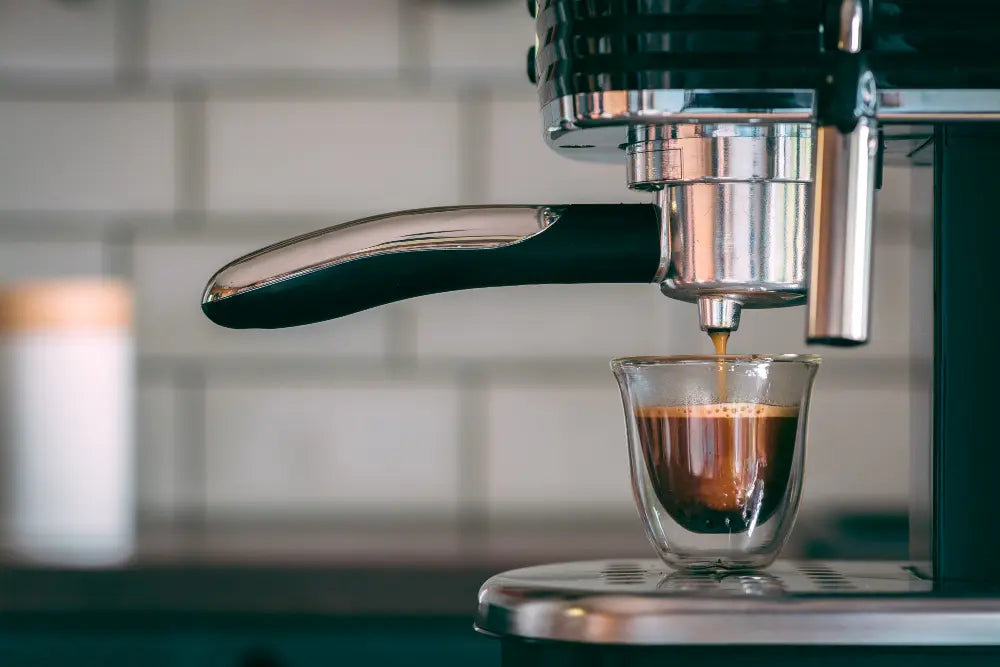
At PureAqua, we see that coffee drinkers usually come in with a taste question and only start talking about limescale afterwards. That makes sense: an espresso consists of about 90 percent water and a filter coffee about 98 percent. You can therefore taste the chlorine and the flavor of your piping directly in it.
What does a brand-name cartridge cost per year?
Individual cartridges seem like a small expense, until you add them up. These are the prices that were in the Dutch Google Shopping results on August 24, 2026, for the most well-known models.
| Cartridge | Price per unit | For 6 per year |
|---|---|---|
| DeLonghi DLSC002 | 8.49 to 8.99 euros | 51 to 54 euros |
| Philips AquaClean CA6903 | 9.95 to 16.70 euros | 60 to 100 euros |
| Melitta Pro Aqua Claris | 12.10 euros | 73 euros |
| Krups water filter | 12.89 euros | 77 euros |
| Sage water filter | 13.99 euros | 84 euros |
| Siemens TZ70003 | 14.99 euros | 90 euros |
| Universal, such as Eccellente or Scanpart | 9.95 to 11.45 euros | 60 to 69 euros |
Roughly speaking, you end up at 51 to 90 euros per year, and over five years at 255 to 450 euros on filters that you keep buying and throwing away. Compare that to the price of the water itself: according to Vewin, drinking water cost 2.71 euros per cubic meter including taxes in 2026, which is 0.0027 euros per liter. The water in your cup is almost free; the filter for it is not.
There is also a hidden cost. Each brand has its own shape, so you are tied to your machine's cartridge for as long as you have it. If you buy a different brand of coffee machine in four years, that series starts all over again. That is a different model than a filter system that attaches to your water pipe and serves every appliance in the kitchen.
How often should you replace the filter?
Manufacturers usually set two limits: a number of liters of water and a maximum amount of time. Whichever comes first applies. In practice, for an average household, this comes down to replacing every 2 months, and for those who drink little coffee, every 3 months. Many fully automatic machines count the liters themselves and show a notification on the display, and that is the most reliable counter you have.
The time limit is there for a reason. A cartridge stays wet and at room temperature continuously, and that is an environment where bacteria feel at home. Vitens warns exactly about this regarding home filters: bacteria can grow on a filter that is left in too long, leading to odor and taste complaints. A forgotten filter in your coffee machine is therefore worse than no filter at all.
Three practical rules
- Follow the display: if your machine indicates that the filter is spent, replace it immediately and reset the counter; otherwise, the machine will continue to work with incorrect assumptions.
- Flush after installation: don't use the first half-liter in your coffee, as loose resin particles will flush out in that.
- Vacation coming up: remove the filter if the machine will be sitting idle for more than two weeks and put in a new one when you return.
What a cartridge does not remove from your water
This is the point where most product pages go quiet. A cartridge in a coffee machine is built to protect your appliance, not to purify your drinking water. Limescale and chlorine are removed. PFAS, nitrate, heavy metals, medicine residues, and microplastics pass through undisturbed to your cup.
That is not a detail. The RIVM monitors PFAS in drinking water because total exposure in the Netherlands is on the high side, and the legal requirements for drinking water are set out in the Drinking Water Decree. If you really want those substances out of your water, you need a membrane, not carbon. Reverse osmosis presses water through a membrane that stops up to about 99 percent of these types of contaminants, and such systems are tested against the NSF/ANSI 58 standard. We previously explained that difference in technology when comparing a filter pitcher and an osmosis system, and it applies exactly the same to the filter in your coffee machine.
There is one claim you often read that is not true: that a water filter makes your water healthier. For Dutch tap water, that cannot be proven. What is true is that filtering changes the taste and that a membrane system removes substances that a cartridge lets pass. Keep those two separate, and you will never make the wrong purchase.
Pure water without drilling
The Countertop RO sits right on the counter and delivers osmosis water for your coffee, tea, and kettle.
View the Countertop ROSoft or pure water from the tap
There is a second route that Google's top 10 never mentions, simply because those pages sell cartridges: ensure the water you pour into the machine is already good. Then you don't need anything in the machine itself. Two ways.
1. A water softener for the whole house
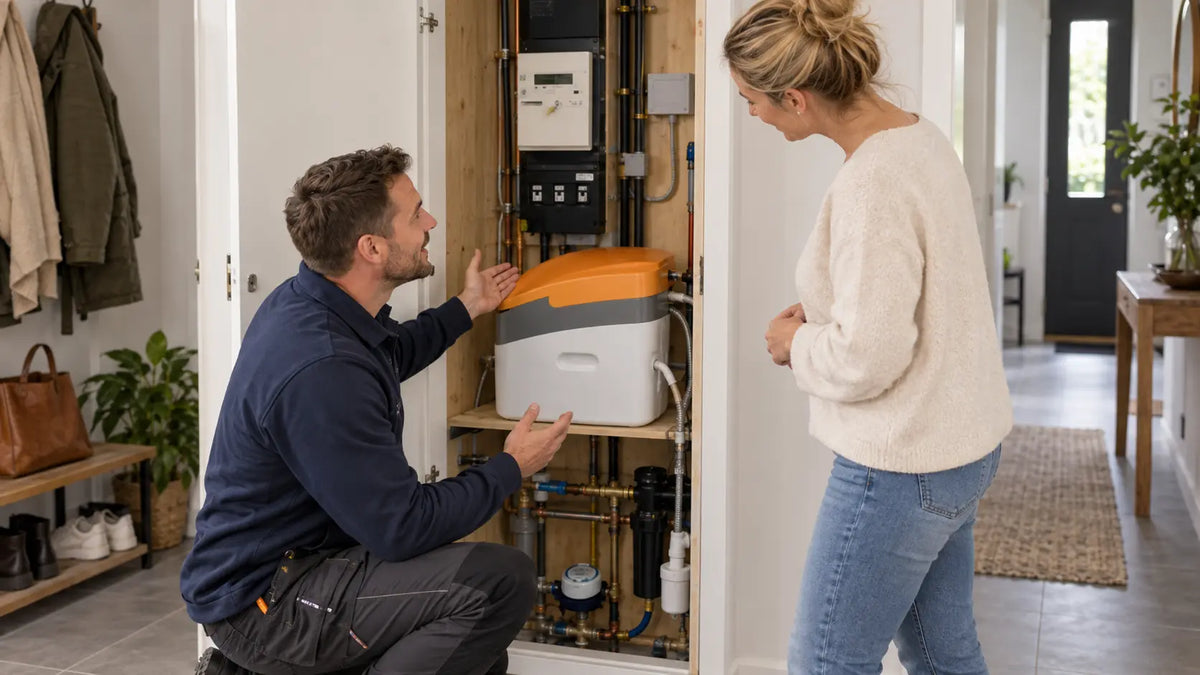
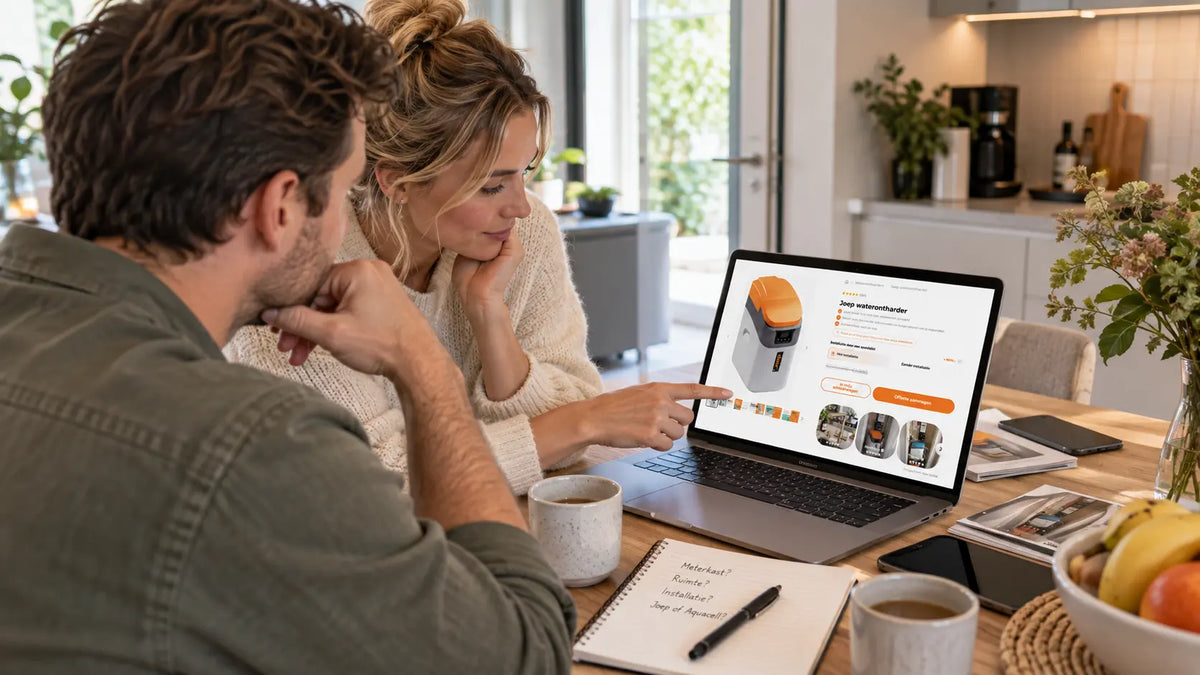
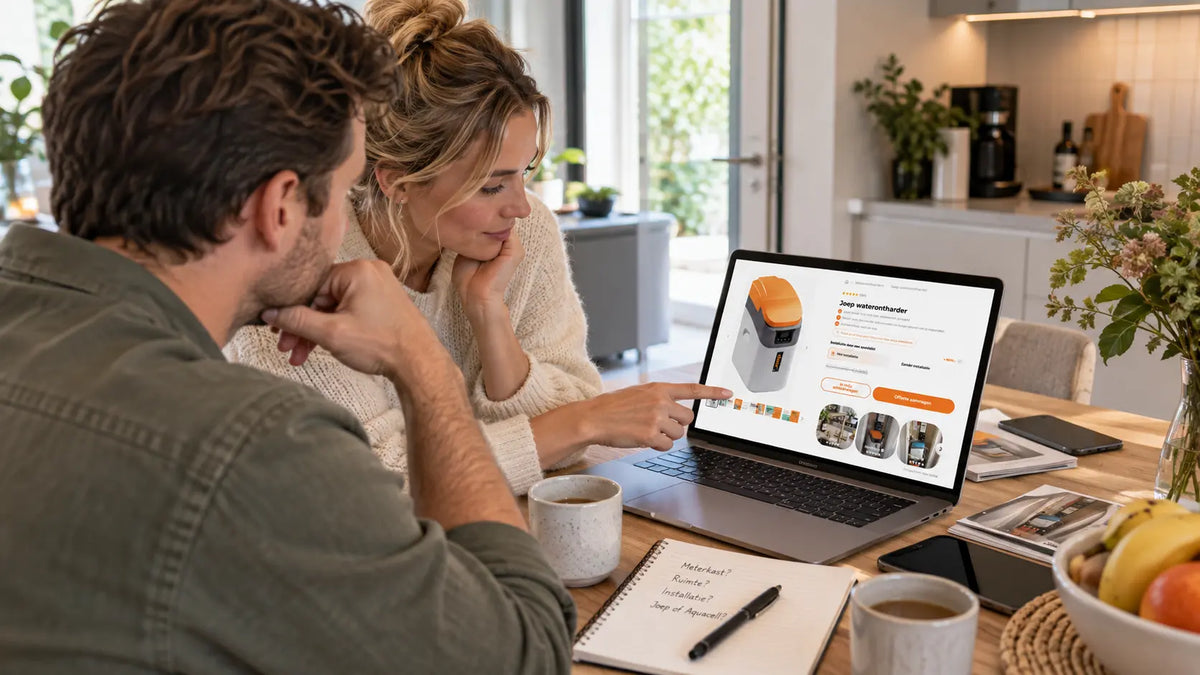
An ion exchanger behind your water meter makes all the water in the house soft, including the water for your coffee machine, kettle, dishwasher, and shower. At PureAqua, the Joep is 1,699 euros and the AquaCell is 2,348 euros, in both cases including installation by our own specialist. That is an investment you don't make for your coffee alone, but one that solves limescale everywhere simultaneously. What that means over several years in terms of salt, maintenance, and payback time, we calculated in our overview of the costs of softening over five years. Note the most important caveat: softened water is soft water, not purified drinking water. PFAS and heavy metals just stay in it.
2. Reverse osmosis at the kitchen sink
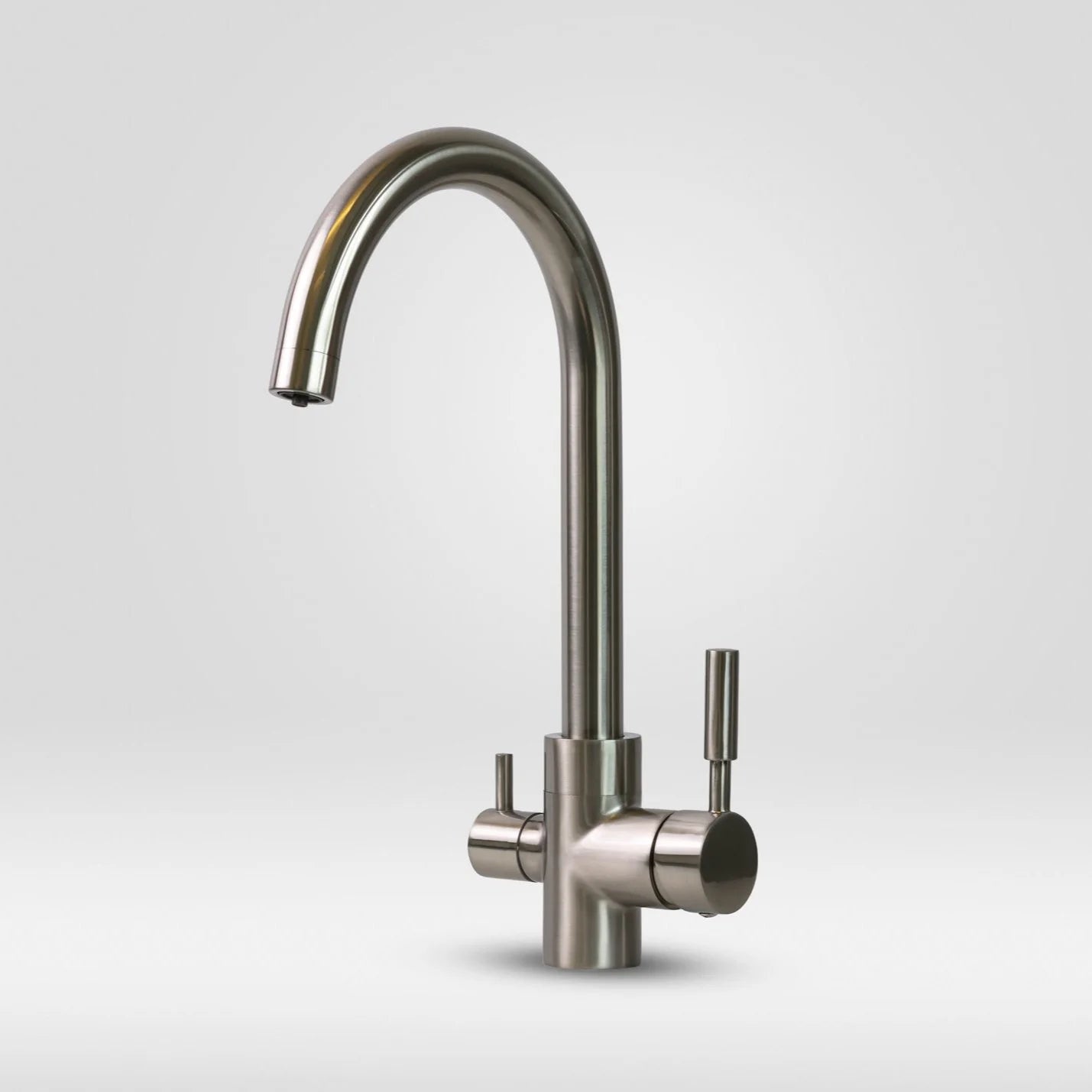
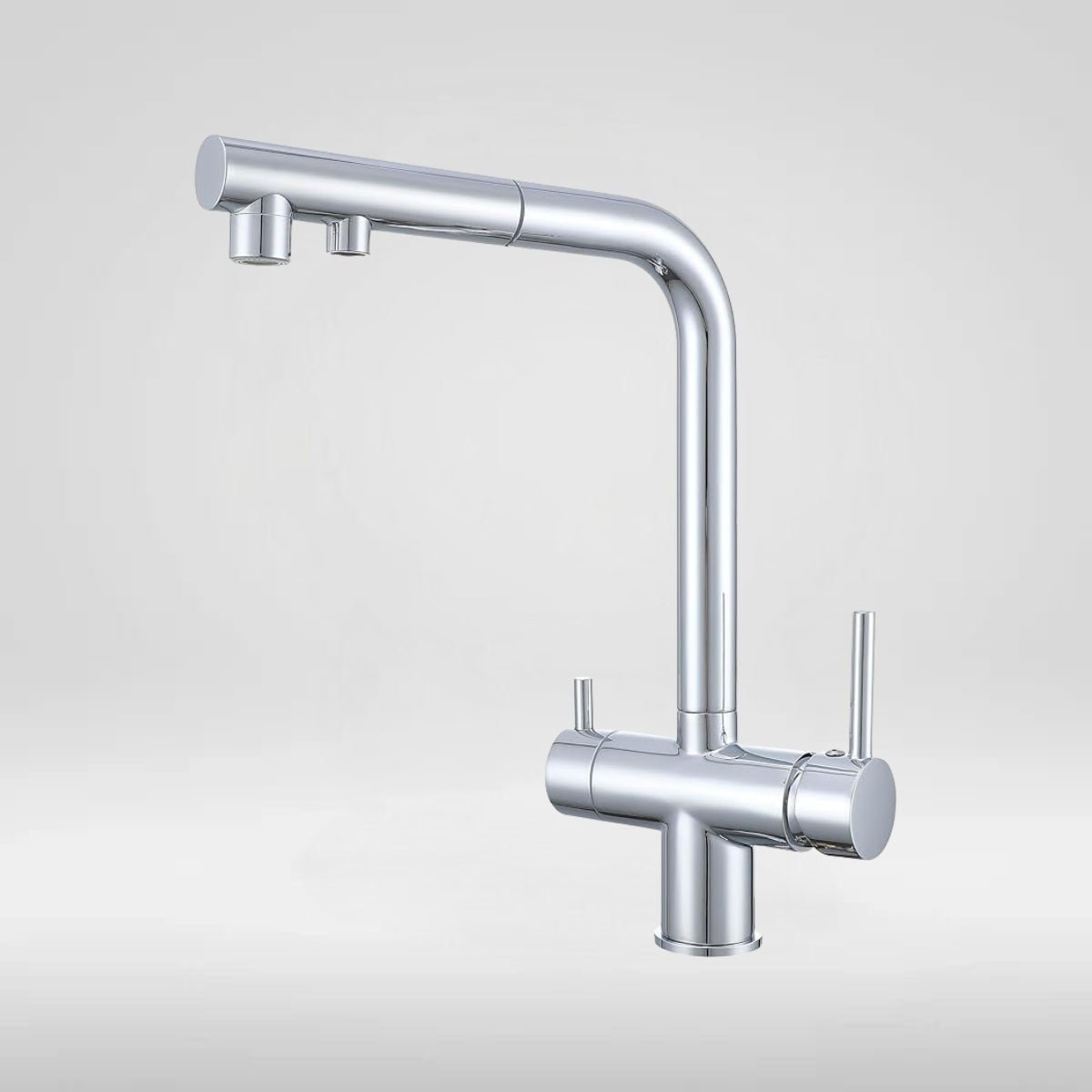
An osmosis system tackles limescale AND the rest. The water goes through a membrane and comes out as good as empty: up to about 99 percent of dissolved substances are left behind. At PureAqua, that water runs via a pure water tap that the filter system comes standard with, via the 4-in-1 tap which also provides filtered boiling and chilled water, or via the Countertop RO of 495 euros that you put on the counter without installation. How that membrane works exactly is explained on our page about reverse osmosis.
When it comes to coffee, there is a nuance that must be stated honestly. Water without any minerals tastes flat, and coffee actually needs a bit of calcium and magnesium to properly extract flavors from the beans. Pure osmosis water is therefore not automatically the best-tasting coffee. That is why our systems optionally include a mineral filter that adds minerals back into the water after the membrane has removed everything. We explained the difference between those types of water quality in our article on osmosis water and demineralized water, and it is precisely the difference between an espresso that tastes full-bodied and one that remains watery.
The maintenance bill for this route is straightforward: a filter set for 75 euros every 12 months keeps the system in good order. For those who do not want to worry about anything, choose the Carefree Pure Water subscription for 29 euros per month with a 299 euro startup fee, which includes the tap, system, filters, and installation.
Cartridge, softener, or osmosis: the comparison
| Cartridge in the machine | Water softener | Reverse osmosis (PureAqua) | |
|---|---|---|---|
| Limescale in the coffee machine | Partially blocked | Yes, throughout the entire house | Yes, for everything you draw from the tap |
| Chlorine and taste | Yes, via activated carbon | No | Yes |
| PFAS, nitrate, heavy metals | No | No | Up to approximately 99 percent removal |
| Also for shower and washing machine | No | Yes | No, only at the tap |
| Startup costs | 0 euros, the machine already has the holder | 1,699 to 2,348 euros including installation | From 495 euros for the Countertop RO, or 299 euros startup fee with the subscription |
| Costs per year | 51 to 90 euros for cartridges | Salt and maintenance | 75 euros for filter set, or 29 euros per month all-in |
| What you forget | Replace on time, otherwise it works against you | Refilling salt | One filter change per year |
Take a good look at the third row. That is the only line in which the three options really differ from each other, and at the same time the reason why people come to us after years of buying cartridges.
Which choice suits your coffee?
- Soft water and a simple machine: leave the little filter in and just descale according to the schedule. You save 51 to 90 euros per year, and your coffee won't notice the difference.
- Hard water above 8 dH and a fully automatic machine: use the brand-name cartridge as long as you have that machine. It extends your descaling interval, and that is worth the money.
- Limescale throughout the house: look into a softener in the meter cupboard. That way your coffee machine benefits, along with the shower screen and washing machine.
- You care about taste and what is in your water: choose reverse osmosis at the tap, optionally with a mineral filter, and leave the cartridge out of the machine.
- Rented home or no desire for installation: the Countertop RO does the same thing without drilling, and moves with you.
If you are doubting between the last two, it helps to first know what is in your own tap water. Our specialists will look into your water hardness, consumption, and kitchen setup free of charge, and will tell you honestly if a 10 euro cartridge is the most sensible answer for you.
Curious about what is in your tap water?
Request free advice. We will look at your water hardness, your coffee machine, and your kitchen, and provide honest advice.
Request free advice View the subscriptionFrequently asked questions
Is a water filter necessary in a coffee machine?
No, a coffee machine works perfectly fine without one. A filter is useful if your water is hard, roughly above 8 dH, because the machine will scale up faster and require more frequent descaling. With soft water below 6 dH, the little filter doesn't provide much benefit. What it does not do in any situation is purify your water: PFAS, nitrate, and heavy metals pass right through.
How often should you replace the water filter of a coffee machine?
Usually every 2 months with normal use, and at the latest after 3 months even if you make little coffee. Manufacturers use two limits simultaneously: a number of liters and a maximum time, and the first one that is reached counts. At six changes per year, that costs 51 to 90 euros, depending on your brand.
How often should you replace an AquaClean filter?
The AquaClean filter from Philips and Saeco works with a counter in the machine: you replace it as soon as the display indicates so, and otherwise after a maximum of 3 months. Always reset the counter afterward; otherwise, the machine will continue to calculate based on a filter that is no longer there. A single AquaClean filter costs 9.95 to 16.70 euros in the Netherlands.
Is a water filter really necessary?
Not for the safety of your drinking water. Both Vitens and Waternet state that Dutch tap water meets legal requirements and that filtering is not necessary for that. People do filter for other reasons: less limescale, a more neutral taste without chlorine, or to remove PFAS and microplastics from their drinking water. The latter only works with reverse osmosis, not with a cartridge.
Is the water filter from Action any good?
A universal filter from a discount store does the same thing as a brand-name filter, namely blocking limescale and chlorine, and is usually half the price. Pay attention to two things: does it fit your holder exactly, and does your machine recognize it? Fully automatic machines that work with a chip or a counter sometimes do not count a universal filter. Don't expect any more from it than from a brand-name filter, as it is the same technology.
Do you still have to descale if you use a water filter?
Yes. A cartridge slows down the formation of limescale but does not stop it. Most machines extend the descaling interval if a filter is installed but will still ask for it after, for example, a set number of liters. Do not ignore that message: limescale on the heating element wastes power and eventually impedes flow.
Can you use osmosis water in your coffee machine?
Yes, and your machine will practically no longer scale up, because there is almost no calcium or magnesium left in it. For the taste of your coffee, pure osmosis water is not ideal: a few minerals actually help with extraction. That is why you can add a mineral filter to a PureAqua system, which puts minerals back after the membrane. This way you get water without limescale and without PFAS, but with enough body for a full-bodied espresso.
Conclusion
A water filter in your coffee machine is a limescale and chlorine filter, nothing more and nothing less. In hard water, it extends your descaling interval, and that is usually worth the 51 to 90 euros per year. With soft water, you are primarily buying peace of mind. And in all cases, it lets through the substances that people are concerned about these days.
If you do want those substances removed, the solution does not start in your machine but at your tap. A water softener tackles limescale throughout the entire house, and an osmosis system delivers water from which up to approximately 99 percent of contaminants have been removed, with the option to add minerals back for taste. Then you pour good water into your machine and no longer need that little filter. Drink different, even in your cup of coffee.
Better coffee starts with better water
See which solution fits your kitchen, or get advice from a specialist in five minutes.
View pure water taps View water softeners